
turtle tank water change siphon is usually the quickest way to swap out dirty water without sloshing buckets across your floor or stressing your turtle with too much tank disruption. If water changes keep turning into a chore you avoid, it’s rarely because you’re “bad at maintenance”, it’s because the setup is fighting you.
Most turtle tanks get dirty fast for a simple reason: turtles eat messy, produce more waste than many fish, and often have strong filtration needs. So the real win is not a perfect deep clean every time, it’s a repeatable routine you’ll actually do each week.
This guide breaks down what makes a siphon “easy” in real life, how to pick one that matches your tank and sink situation, and a step-by-step method that reduces spills, keeps debris moving, and avoids common beginner mistakes.
Why Turtle Tank Water Changes Feel Hard (and What a Siphon Fixes)
A siphon doesn’t magically make your tank clean, but it removes the friction points that cause most people to procrastinate. In practice, the pain usually comes from a few predictable places.
- Heavy buckets and back-and-forth trips: carrying water is awkward, and one slip becomes a mop session.
- Debris stays put: without targeted suction, you stir waste up and it settles again.
- “I don’t know how much I removed” anxiety: people either drain too much or too little, then spend extra time correcting temperature.
- Hoses that lose prime: cheap tubing, air leaks, or poor technique make you restart repeatedly.
That’s why an easy-use turtle tank water change siphon typically has three traits: reliable priming, enough flow to pull waste, and a control point so you can pause without panic.
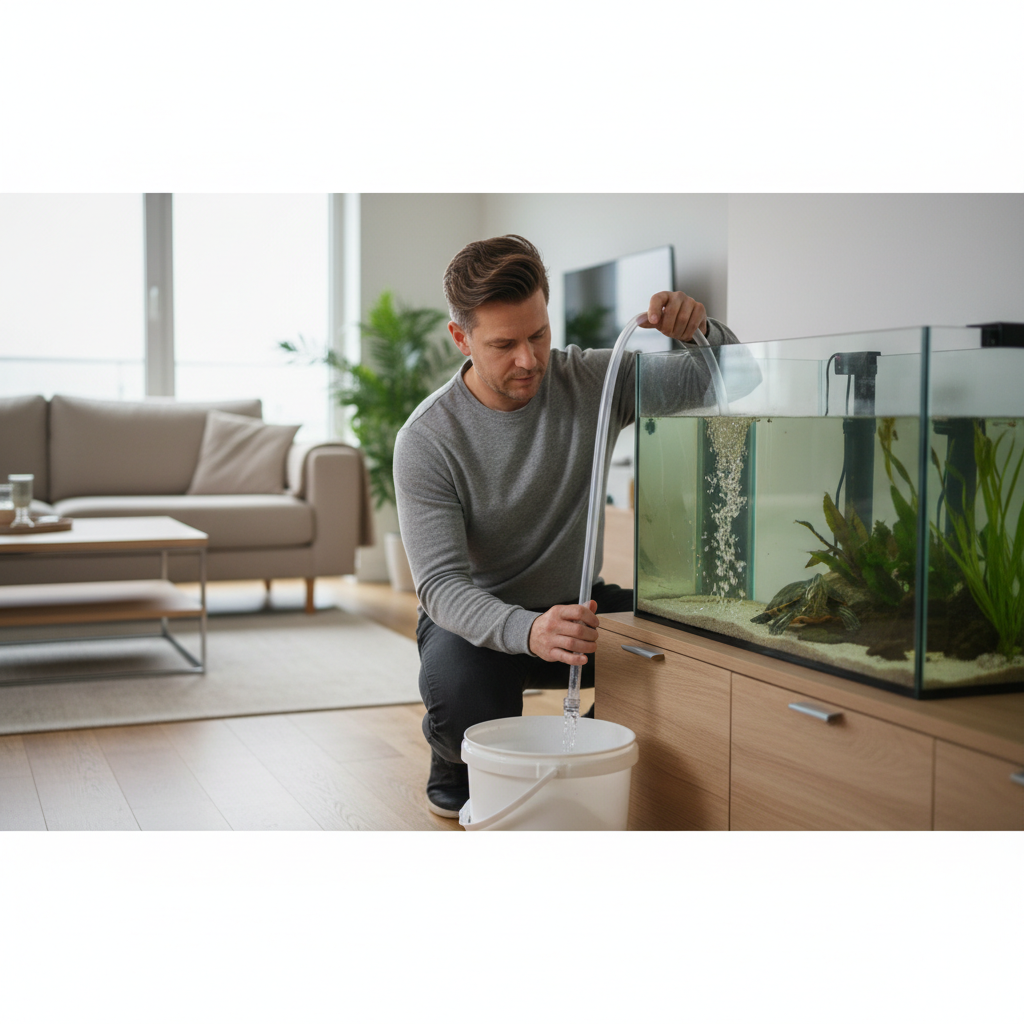
Quick Self-Check: What Kind of Siphon Setup Do You Actually Need?
Before buying anything new, match the tool to your reality: where the tank sits, where you can drain, and how often you want to do this.
- Tank size: under 40 gallons, a basic gravel-vac style siphon can work; larger tanks usually feel easier with higher flow or pump assist.
- Drain destination: bucket only, bathtub, or sink. If you can drain to a tub, you can prioritize length over portability.
- Substrate and decor: bare bottom and basking platforms are different from sand/river rock where waste hides.
- Your comfort level: if starting the siphon annoys you, pick a design with a hand pump or squeeze bulb.
If you’re doing small weekly changes, ease matters more than maximum power. If you’re rescuing a tank that’s overdue, stronger flow and better control save time.
Choosing an Easy Turtle Tank Water Change Siphon (What to Look For)
“Easy use” is mostly about small design details. Here’s what tends to matter when you’re standing there with wet hands.
Features that genuinely help
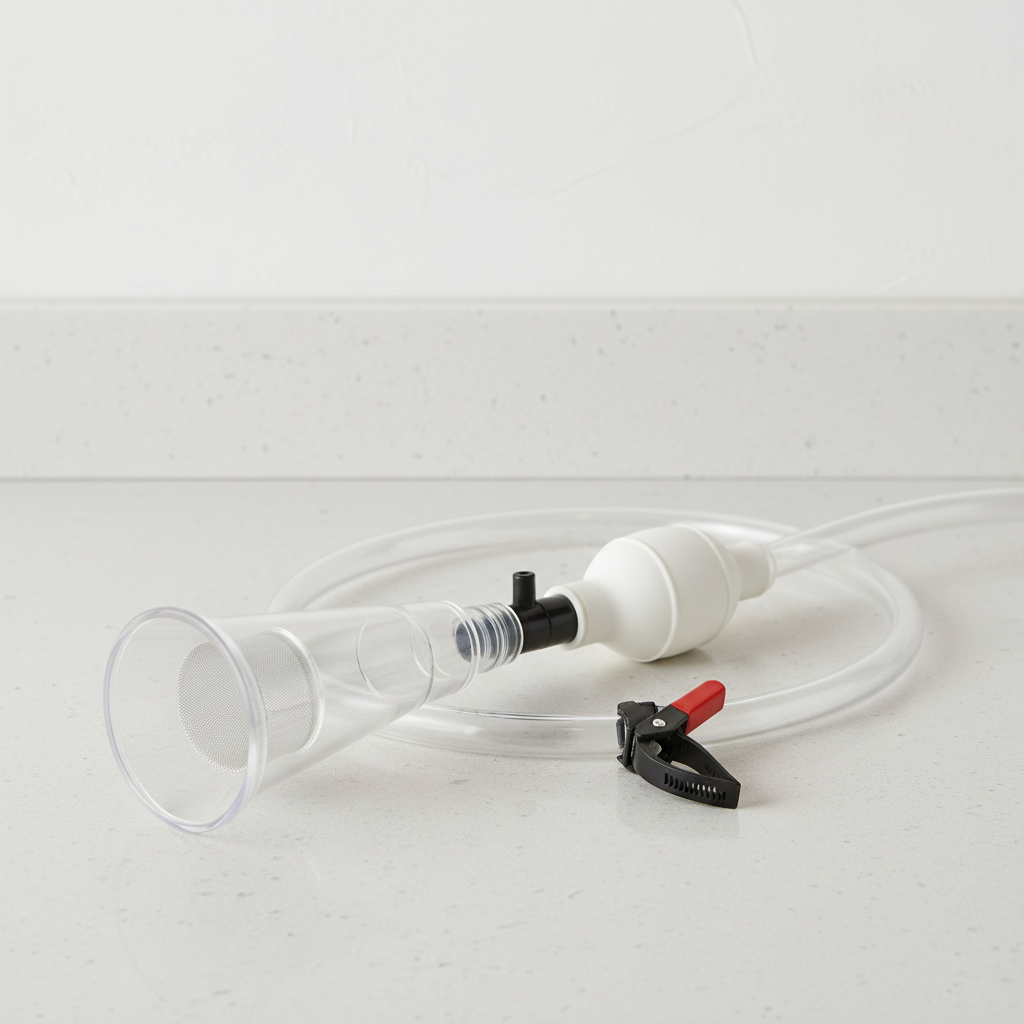
- Priming help: squeeze bulb, hand pump, or built-in valve so you don’t rely on mouth-siphoning (skip that).
- Flow control: a clamp or valve lets you pause when your turtle investigates the tube.
- Debris intake shape: a wider intake pulls soft waste faster, but can grab lightweight decor.
- Hose length and stiffness: too short forces awkward angles, too floppy kinks easily.
- Fine screen or strainer option: useful if you have sand, but it can clog quicker.
Common siphon types, compared
| Type | Why it feels easy | Where it can frustrate | Best fit |
|---|---|---|---|
| Manual gravity siphon (gravel-vac style) | Simple, inexpensive, few parts | Priming can be finicky, slower on big tanks | Small to medium tanks, basic weekly changes |
| Hand-pump siphon | Starts quickly, less restarting | More parts to rinse, seals can wear | People who hate priming, tanks 20–75 gallons |
| Sink-attached water changer (faucet adapter style) | No buckets, fast drain/fill | Needs compatible faucet, long hose management | Apartment/house with accessible sink near tank |
| Electric pump siphon | Strong consistent flow, minimal effort | Can over-drain fast, needs power and cleaning | Large tanks, mobility limits, heavy maintenance |
One practical note: turtles can be curious and pushy. A siphon with an easy “stop” control saves you from panic-grabbing the hose while water keeps running.
Step-by-Step: A Cleaner, Faster Water Change Routine (Minimal Drama)
This is the workflow that usually reduces mess and makes the turtle tank water change siphon feel “easy” instead of fiddly. Adjust the percent based on your tank and water quality, but the sequence holds up.
1) Prep the tank area in 2 minutes
- Unplug heater and filter if the water level will drop below safe operating level.
- Place your bucket lower than the tank, or route the hose to a tub.
- Keep a towel nearby, not because you’ll fail, but because you’ll relax.
2) Start the siphon without splashing
- Submerge the intake fully so it fills with water, then prime using the pump/bulb or your siphon’s method.
- Once flow starts, point the outlet hose securely into the bucket/tub.
- Use a clamp/valve if your siphon includes one, it’s the easiest “oh wait” button.
3) Vacuum waste where it actually collects
- Hit corners, under ramps, and around basking platforms first, that’s where gunk piles up.
- If you use sand, hover slightly above the surface and let lighter waste lift without sucking sand continuously.
- Don’t chase every speck. You’re aiming for repeatable improvement, not perfection.
4) Drain a consistent amount
- Many keepers find 20–30% weekly feels manageable, but it depends on stocking, feeding, and filtration.
- Mark a “stop line” on the glass with a removable tape marker if you tend to over-drain.
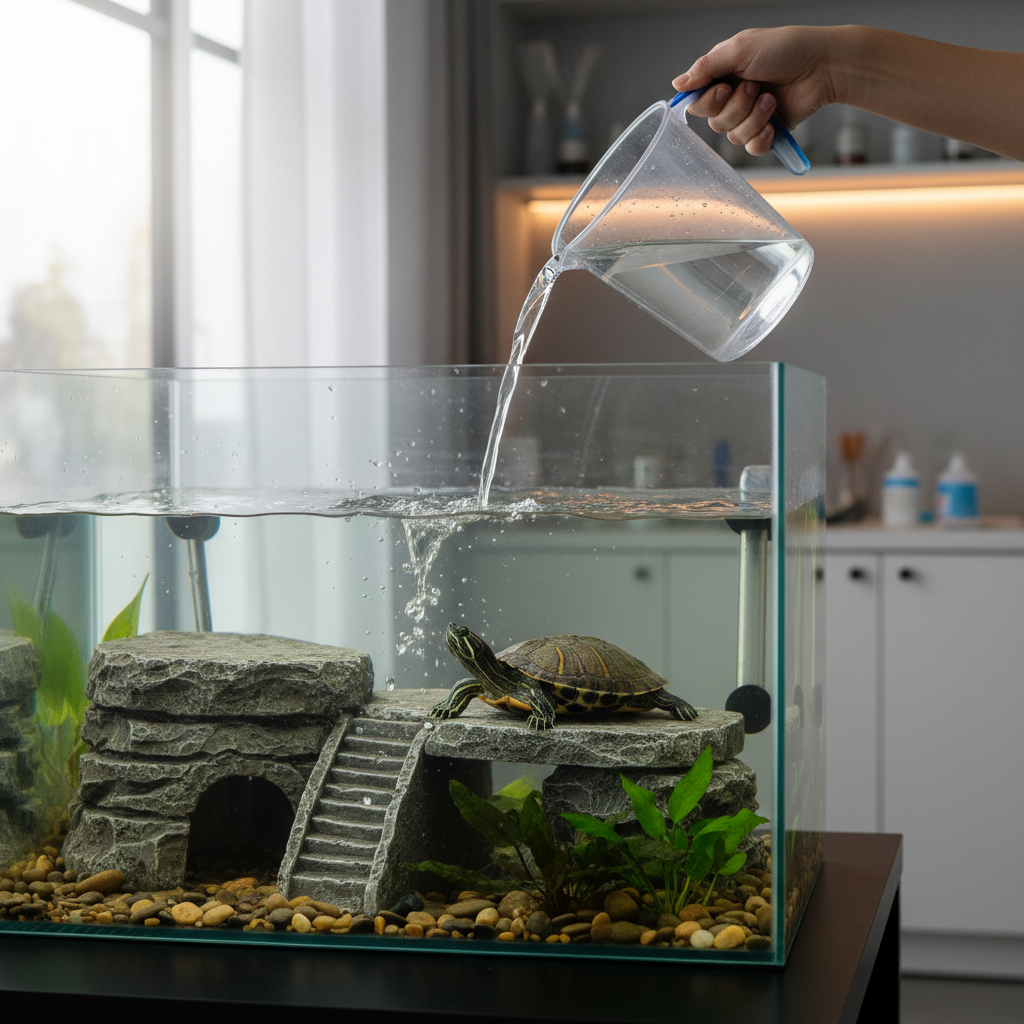
5) Refill slowly and safely
- Bring new water close to tank temperature to avoid stressing your turtle.
- Add water conditioner as directed for your product if your water supply uses disinfectants.
According to the U.S. Environmental Protection Agency (EPA), many municipal systems use disinfectants such as chlorine or chloramine in drinking water; for aquatic animals, people commonly use aquarium water conditioners that neutralize these chemicals, and if you’re unsure what your local water contains, checking your local water quality report can help.
Practical Tips That Make “Easy Use” Actually Easy
A few small habits make a bigger difference than upgrading gear every month.
- Dedicate a bucket and towel to tank maintenance, less cross-contamination and less searching.
- Secure the outlet hose with a clip to the bucket rim, most floods start with a hose that wiggles free.
- Rinse the siphon after use with clean water, then air-dry; stagnant water inside tubing is where smells start.
- Feed in a separate tub if your turtle tolerates it, many owners see clearer water because less food rots in the tank.
Key takeaway: the best turtle tank water change siphon is the one you can start quickly and stop instantly, even when your turtle decides to “help.”
Mistakes to Avoid (They Waste Time and Make Water Dirtier)
Some mistakes don’t look like mistakes until you repeat them for weeks and wonder why the tank never stays clean.
- Over-cleaning media: rinsing filter media under hot tap water can reduce beneficial bacteria. If you need to rinse, many hobbyists use removed tank water, and if you’re uncertain, check your filter maker’s guidance.
- Letting the siphon intake float: you end up draining “cleaner” surface water while debris stays below.
- Doing huge changes to compensate for skipping weeks: big swings in temperature or chemistry can stress turtles; smaller, steadier changes are often easier.
- Ignoring evaporation vs. water change: topping off replaces water volume, not waste removal.
- Chasing crystal-clear water only with chemicals: clarifiers can help in some cases, but they won’t replace removing solids and improving filtration.
When to Get Extra Help (or Rethink the System)
If you’re using a siphon correctly and water still turns foul quickly, the bottleneck may be filtration, stocking, or health. This is where it’s smart to pause and diagnose rather than just doing bigger drains.
- Persistent bad odor within 24–48 hours: often points to trapped waste, overfeeding, or insufficient filtration flow.
- Cloudy water that returns fast: could be a bacterial bloom or too much organic load; testing water parameters helps.
- Your turtle seems lethargic, stops eating, or has skin/eye issues: water quality can contribute, but health problems can have multiple causes, so a reptile veterinarian is the safer call.
According to the American Veterinary Medical Association (AVMA), exotic pets benefit from veterinary care with species-specific expertise; if you suspect illness, it’s usually better to consult a qualified veterinarian than to guess with home treatments.
Conclusion: A Simple Setup You’ll Keep Using
When the process feels painless, maintenance stops being an occasional “project” and becomes a routine. Pick a siphon that starts easily, drains predictably, and gives you control, then stick to smaller regular water changes instead of marathon cleanups.
If you want a concrete next step, do this: choose your drain destination, mark a target drain line on the tank, and run one practice session with plain water so the mechanics feel automatic.
FAQ
How often should I use a siphon for a turtle tank water change?
Many keepers land on weekly partial changes because turtles produce a lot of waste, but the best schedule depends on tank size, filtration, and feeding. If the tank smells or looks dirty quickly, shorten the interval rather than doing huge changes.
Can I use a gravel vacuum siphon if my turtle tank has sand?
Yes, but technique matters. Hover the intake just above the sand and let waste lift into the tube; if you plunge into sand, you’ll remove a lot of substrate and clog the line more often.
Do I need to remove my turtle during a water change?
Usually not for a routine partial change, and many turtles stay calmer if their environment doesn’t change too drastically. If your turtle bites the hose or you’re doing major rearranging, moving to a safe holding tub can reduce chaos.
Why does my siphon keep losing suction?
Common causes include air leaks at connections, the outlet hose slipping above the waterline in the bucket, or kinks in soft tubing. A tighter connection and a hose clip often fix this faster than buying a new siphon.
Is faucet-attached water changing safe for turtles?
It can be, but you still need to manage temperature and dechlorination. People get into trouble when they fill too fast or guess the temperature, so go slower and verify with a thermometer if you’re not confident.
How much water should I remove each time?
A lot of owners aim for 20–30% per session because it’s easy to repeat and limits swings, but crowded tanks may need more. If you’re seeing ongoing issues, water testing and filtration review matter as much as the percentage.
Can I use a turtle tank water change siphon to clean the filter area too?
You can siphon debris near the intake and around the filter return, but don’t vacuum inside the filter housing unless the manufacturer says it’s designed for that. Over-cleaning filter media can reduce biological filtration performance.
If you’re already doing water changes but they still feel messy or time-consuming, it may help to map your “drain and refill path” and choose a turtle tank water change siphon that matches it, a small upgrade like a better priming pump or a simple shutoff valve often changes the whole experience.