
Dog ball launcher for interactive play is one of the easiest ways to keep fetch fun without wearing out your shoulder or your dog’s attention span. It adds distance, variety, and structure, so the game feels like a game again, not a repetitive chore.
If you’ve ever had a dog drop a slobbery ball at your feet 40 times in a row, you know the real issue isn’t motivation, it’s quality. A launcher can help you control pace, reduce bending, and make each throw feel “worth it” for your dog.
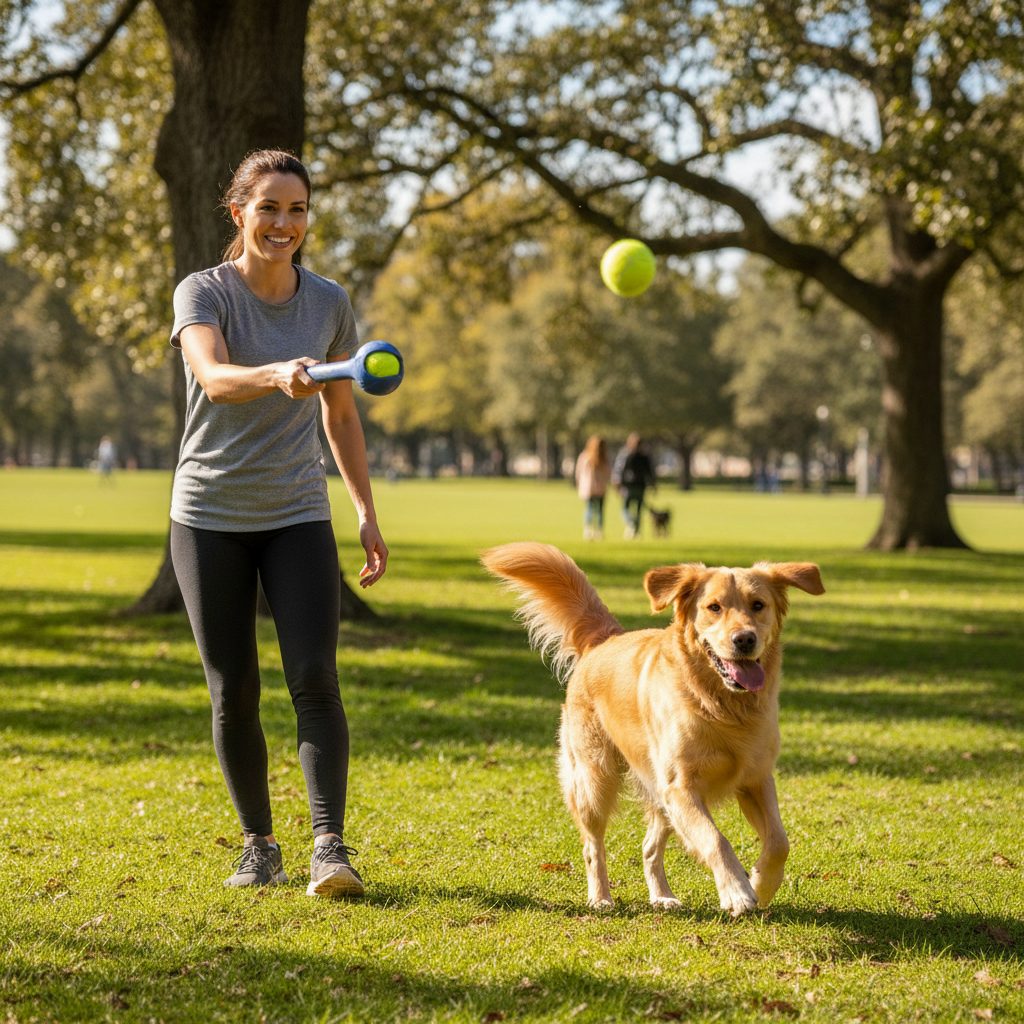
This guide breaks down what actually matters when choosing a launcher, how to use it without accidentally teaching bad habits, and how to set up a routine that keeps dogs engaged while staying mindful about safety.
Why a Ball Launcher Changes Fetch (More Than Just Distance)
Most people buy a launcher for longer throws, then realize the bigger upgrade is how it shapes the whole session. It creates a predictable pattern, which many dogs find calming and motivating.
- Less strain for you: fewer hard overhand throws, less repetitive arm motion, and less bending to pick up a wet ball.
- Cleaner handling: the scoop design means less touching drool and dirt, which matters more than people admit.
- Better pacing: you can slow the game down on purpose, rather than getting dragged into nonstop tossing.
- More “job-like” structure: dogs that love tasks often respond well when each rep looks consistent.
But reality check, if your dog already struggles with impulse control, a launcher can also amplify that chaos unless you add a few simple rules.
Quick Self-Check: Is a Launcher a Good Fit for Your Dog?
Before you buy or break it out every day, do a short gut-check. You’re not trying to judge your dog, you’re trying to predict what kind of setup will work.
Signs it’s likely a great match
- Your dog loves chasing and returning, even if the drop-off is messy.
- They get bored with short throws or limited space.
- You want low-contact play at parks or on trails.
- You’re rehabbing your own shoulder or wrist and want fewer hard throws.
Signs you may need a slower approach
- Your dog fixates on the ball to the point of ignoring everything else.
- They snatch the ball close to your hands, or jump at the launcher.
- They sprint full speed and skid hard on every stop, especially on slick surfaces.
According to the American Veterinary Medical Association (AVMA), regular exercise supports overall health, but activity should fit the animal’s condition and environment. If your dog has joint issues, breathing concerns, or you’re unsure about safe intensity, it’s reasonable to ask your veterinarian what “too much fetch” looks like for your dog.
Choosing the Right Dog Ball Launcher: What Matters in Real Life
Shopping gets noisy fast, because specs don’t tell you how it feels in your hand, or how your dog reacts to it. This is where practical details win.
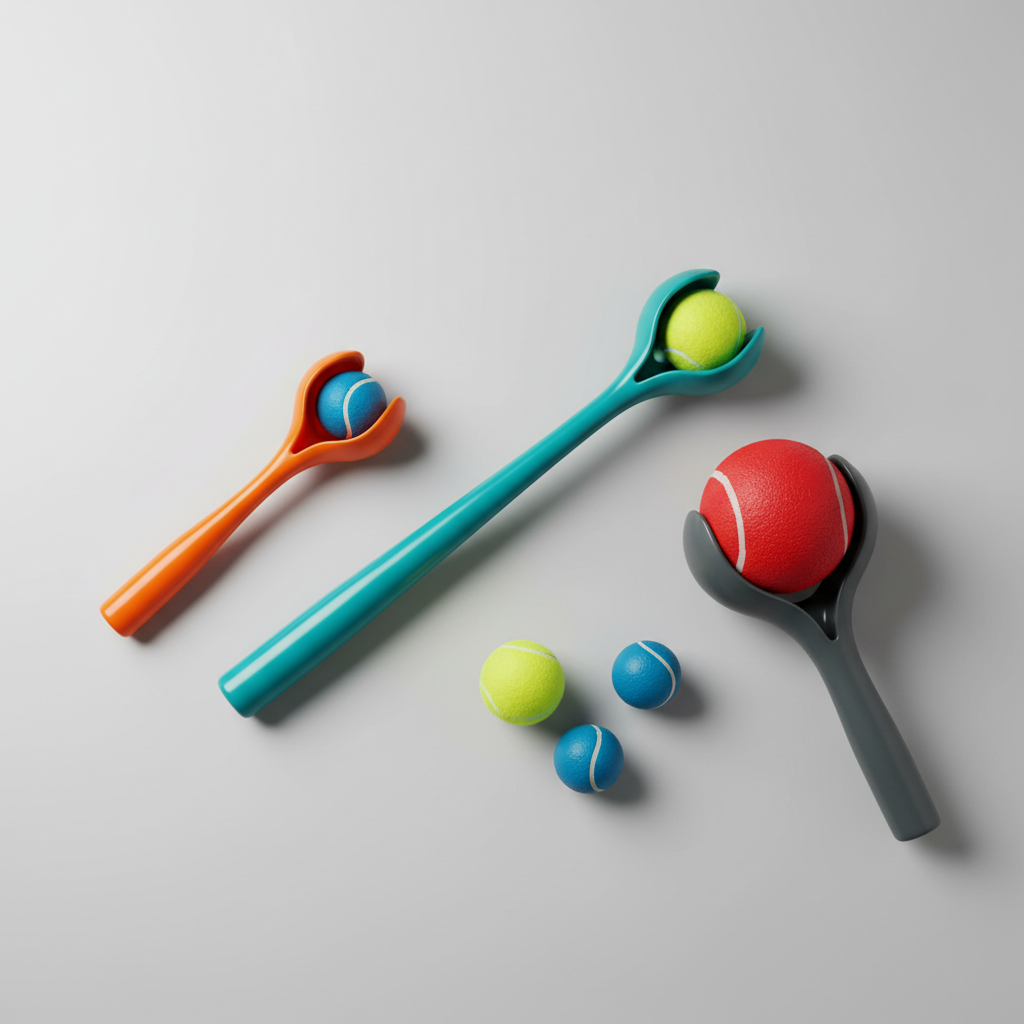
Size and ball compatibility
- Match ball size to your dog’s mouth: too small can be a choking risk, too big can frustrate pickup.
- Check whether it fits standard tennis balls, proprietary balls, or multiple sizes.
- If your dog destroys fuzzy tennis balls, consider rubber fetch balls made for dogs.
Throw control (not just “max distance”)
- Longer launchers often throw farther, but they also magnify small wrist movements.
- If you play in tighter areas, controlled medium throws beat wild long ones.
- A comfortable grip matters more than it sounds, especially in cold weather.
Durability and cleaning
- Flexible plastic tends to survive drops and twists better than brittle plastic.
- Look at the scoop edge: thin edges can crack sooner on hard ground.
- Easy rinse matters, because mud and sand change how balls seat in the cup.
Ball Launcher Options Compared (Manual vs. Automatic)
People often jump straight to “automatic,” but it depends on your goal. Here’s a grounded comparison, without pretending one style fits everyone.
| Type | Best for | Typical tradeoffs | What to watch |
|---|---|---|---|
| Manual launcher | Parks, walks, quick sessions, budget-friendly play | Still requires your timing and attention | Dog jumping at the scoop, over-arousal from rapid throws |
| Hands-free ball thrower (foot-trigger style) | People who want minimal bending | Less distance control, requires setup space | Slipping on grass, dog crowding the device |
| Automatic ball launcher | Yards, routine training games, solo-style enrichment | More noise, more rules, higher cost | Dog hovering at the chute, obsessive looping, power/charging habits |
If your main goal is interactive play, manual launchers usually keep you more involved, which often helps dogs stay responsive instead of zoning in on the machine.
How to Use a Dog Ball Launcher for Interactive Play (Without Creating Chaos)
Dog ball launcher for interactive play works best when you treat it like a short training game, not an endless cardio session. That mindset shift fixes half the common problems.
A simple session structure (10–15 minutes)
- Start with one calm rep: ask for “sit” or “wait,” then throw.
- Reward the return: praise for coming back, not just for chasing.
- Make the drop-off clear: trade the ball for the next throw, or for a small treat if needed.
- End early on a good rep: stop when your dog still wants more, not when they’re frantic.
Teach “wait” before you chase distance
The most interactive version of fetch is not the farthest throw, it’s the cleanest turn-taking. If your dog creeps forward, shorten throws until they can hold position for a second or two.
Use variety to keep brains involved
- Alternate long throws with medium ones.
- Mix in “find it” by tossing into light grass for a short sniff search.
- Add a quick reset cue like “touch” (nose to hand) between reps.
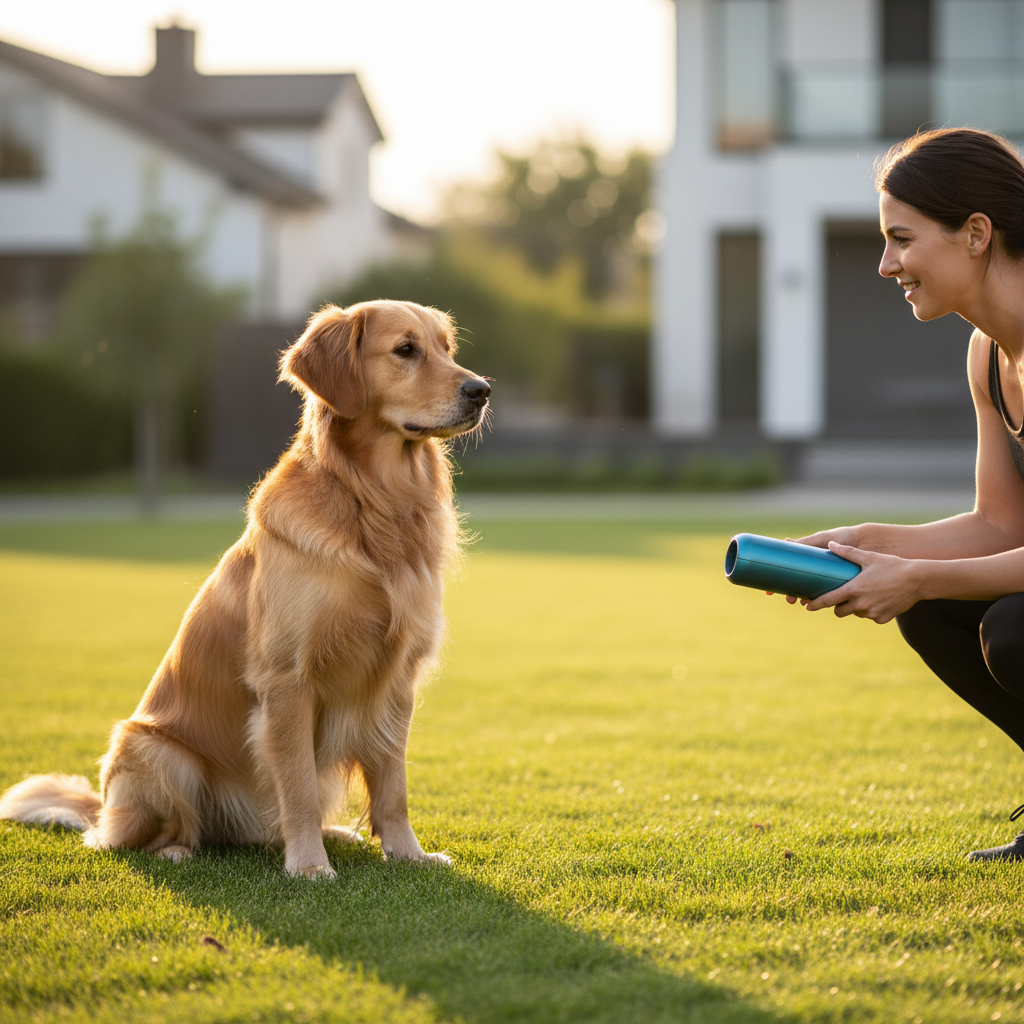
Those tiny changes make the launcher feel less like an adrenaline button and more like a shared routine.
Safety, Surfaces, and Common Mistakes People Don’t Notice
Fetch looks harmless until you see the patterns that cause tweaks and strains. No scare tactics here, just the stuff that tends to matter.
Safer surfaces and spacing
- Grass or dirt usually beats slick turf for abrupt stops.
- Avoid throwing toward fences, roads, or crowded dog areas where cutting corners gets risky.
- Give your dog space to decelerate, not just space to accelerate.
Overuse is the quiet problem
Some dogs self-regulate, many don’t. If your dog keeps escalating, ignores water, or can’t settle afterward, it may be too intense or too long for that day. According to the American Kennel Club (AKC), mental stimulation and training can complement physical exercise, and for many dogs that combination prevents overstimulation better than endless repetition.
Common missteps
- Rapid-fire throwing: it builds frantic arousal and sloppy returns.
- Letting dogs jump at the launcher: it can become a mouthy habit, plus it’s a safety issue.
- Ignoring ball condition: cracked balls or loose felt can be a chewing hazard.
- Using one ball forever: rotating identical balls helps you keep the game moving without tug-of-war standoffs.
When to Get Extra Help (Trainer or Vet)
If your dog gets obsessive, reactive around other dogs during fetch, or struggles to release the ball, you don’t need to “power through.” This is where small expert input saves weeks of frustration.
- Vet check: limping, stiffness after play, coughing, or heat sensitivity are reasons to pause and ask a veterinarian, especially for older dogs or brachycephalic breeds.
- Trainer support: guarding the ball, snapping near hands, or fixating to the point of ignoring cues often responds well to a structured “fetch with rules” plan.
- Behavior pro: if fetch triggers anxiety or conflict with other dogs, a certified behavior consultant can help you rebuild the game safely.
Key Takeaways + A Simple Plan You Can Start Today
If you want this to stay interactive, aim for calm repetition over maximum distance. Keep sessions short, enforce a clean “wait” and “drop,” and vary throws so your dog uses their brain, not just their legs.
- Choose the right ball size and don’t assume tennis balls are always ideal.
- Use a clear turn-taking rule: wait, chase, return, release, repeat.
- Stop before over-arousal, because the last two minutes often decide whether your dog settles later.
Try three short sessions this week, track how quickly your dog calms down afterward, and adjust distance and pace from there. That small feedback loop usually tells you more than any product description.
FAQ
How do I teach my dog to bring the ball back when using a launcher?
Start by rewarding the return itself, not just the chase. Use two identical balls or a treat trade, then only launch again when the dog comes back into your space.
Is a dog ball launcher safe for puppies?
It can be, but intensity matters. Puppies often need shorter, gentler reps and more breaks because joints and coordination are still developing, your veterinarian can help you gauge appropriate exercise for your pup’s age and breed.
What ball should I use with a dog ball launcher for interactive play?
Use a ball that matches your dog’s mouth size and chewing style. Many dogs do fine with tennis balls, but heavy chewers may do better with durable rubber balls designed for fetch.
My dog gets too excited and won’t “drop it,” what should I do?
Lower the arousal level by shortening throws and adding a pause cue like “wait.” Practice “drop” away from fetch first, then bring it back into the game with calm trades.
Should I buy an automatic launcher or a manual one?
If your goal is interaction, manual often wins because you control pace and rules. Automatic can work well in yards for structured routines, but it may encourage repetitive looping for some dogs.
Can fetch with a launcher replace walks?
Sometimes it can cover part of your dog’s exercise, but it usually shouldn’t replace all decompression time. Many dogs still benefit from sniffing and slower movement that walks provide.
How long should a fetch session last with a launcher?
For many dogs, 10–15 minutes stays productive, but it depends on fitness, weather, and temperament. If your dog can’t settle afterward, the session probably ran long or too fast.
If you’re trying to turn fetch into a calmer routine, or you want a dog ball launcher for interactive play that fits your space and your dog’s style, it helps to pick one based on control and ball fit, then build two or three simple rules before you chase bigger distance.