
Cat dental spray for bad breath is often the first thing people try when their cat’s breath turns sour, and it can help—but only if you know what it can realistically do, and what it can’t.
Most “cat breath” problems trace back to plaque buildup and gum irritation, yet a surprising number of cats won’t tolerate toothbrushing. A spray feels easier, and in many homes, “easy” is the difference between doing something consistently and doing nothing.
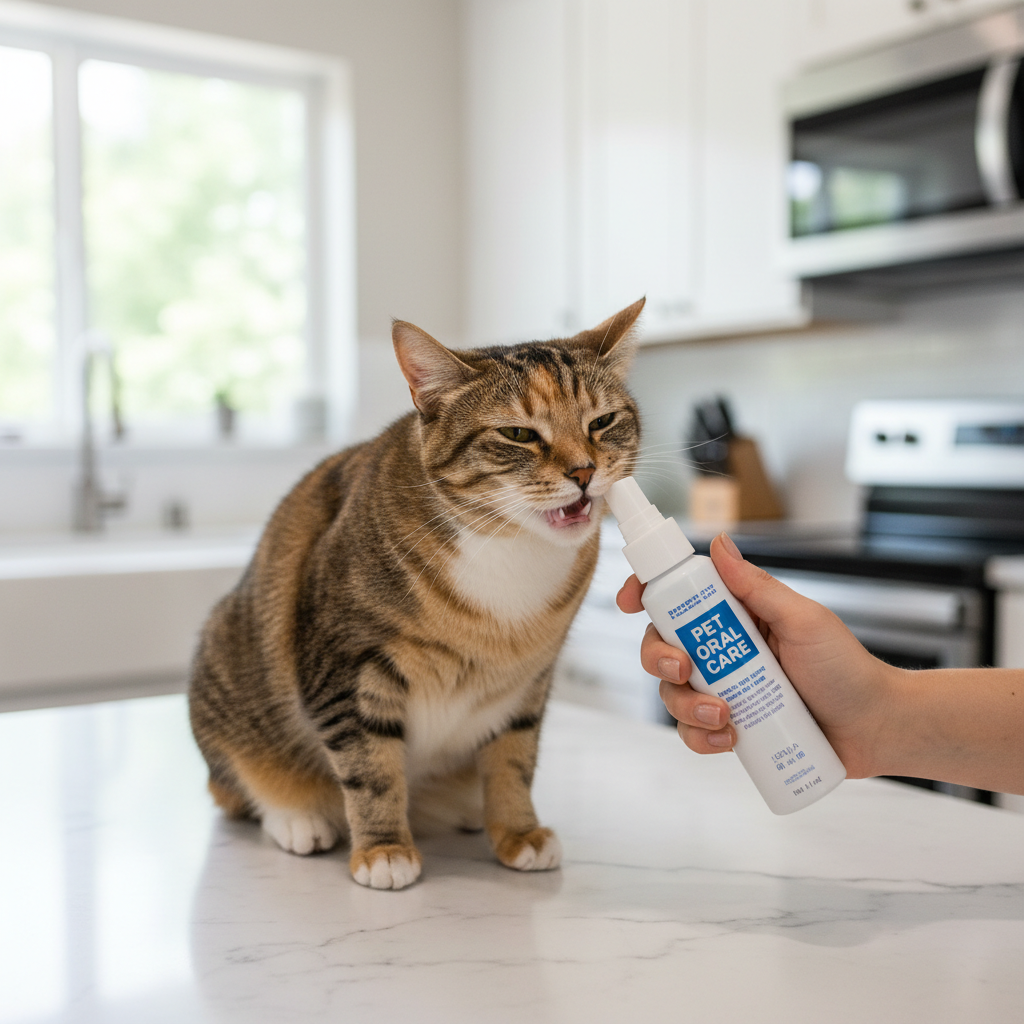
That said, sprays aren’t magic. They’re usually best as a support tool: lowering oral bacteria, slowing plaque, and buying you time while you improve daily habits or schedule a dental exam. This guide helps you choose a spray, use it without a wrestling match, and spot the red flags that mean “call the vet.”
Why your cat has bad breath (and where plaque fits in)
Bad breath can be as simple as food residue and plaque, or it can signal deeper issues. If you’re deciding whether a spray makes sense, start with the most common causes.
- Plaque and tartar: Plaque is a soft biofilm; tartar is hardened plaque. Both can inflame gums and smell foul.
- Gingivitis/periodontal disease: Gum infection and tooth support damage often smell stronger than “regular” plaque.
- Oral pain or lesions: Broken teeth, resorptive lesions, mouth ulcers—cats hide pain, but breath can give it away.
- Diet and habits: Wet food, shared water bowls, and “snack grazing” can increase residue for some cats.
- Non-dental causes: Kidney disease, diabetes, and GI issues can change breath odor. This is why breath alone shouldn’t be your only metric.
According to the American Veterinary Medical Association (AVMA), dental disease is common in pets, and professional veterinary care is important when disease is present—not just home products.
What a dental spray can (and can’t) do for plaque and odor
A spray typically works by changing the oral environment: reducing odor-causing bacteria, disrupting plaque formation, and improving saliva chemistry. In real life, results vary because cats vary—how much tartar is already present, how cooperative they are, and how consistently you apply it all matter.
What it’s usually good for
- Fresher breath within days in many mild cases
- Slowing new plaque when used regularly
- Supporting other tools like brushing, dental diets, and dental treats
Where it hits a wall
- Heavy tartar that already hardened on teeth
- Loose teeth, deep gum pockets, abscess where bacteria live below the gumline
- Systemic illness causing unusual breath odors
If your cat’s mouth already shows thick brown buildup, a spray may improve smell, but it typically won’t “remove” tartar. That usually needs professional scaling from a veterinarian.
Quick self-check: is your cat a good candidate for a spray?
Before you buy anything, take 60 seconds to see which bucket you’re in. You’re not trying to diagnose—just deciding how urgent the situation looks.
- Likely OK to try at home first: mild odor, normal eating, no drooling, gums look mostly pink, minimal visible buildup.
- Try a spray but plan a vet check soon: odor is persistent, you see yellow-brown tartar, gums look red at the edges, cat avoids crunchy food.
- Skip DIY and call your vet: drooling, pawing at mouth, bleeding gums, swelling, weight loss, “rotten” smell, sudden severe odor, or your cat won’t eat.
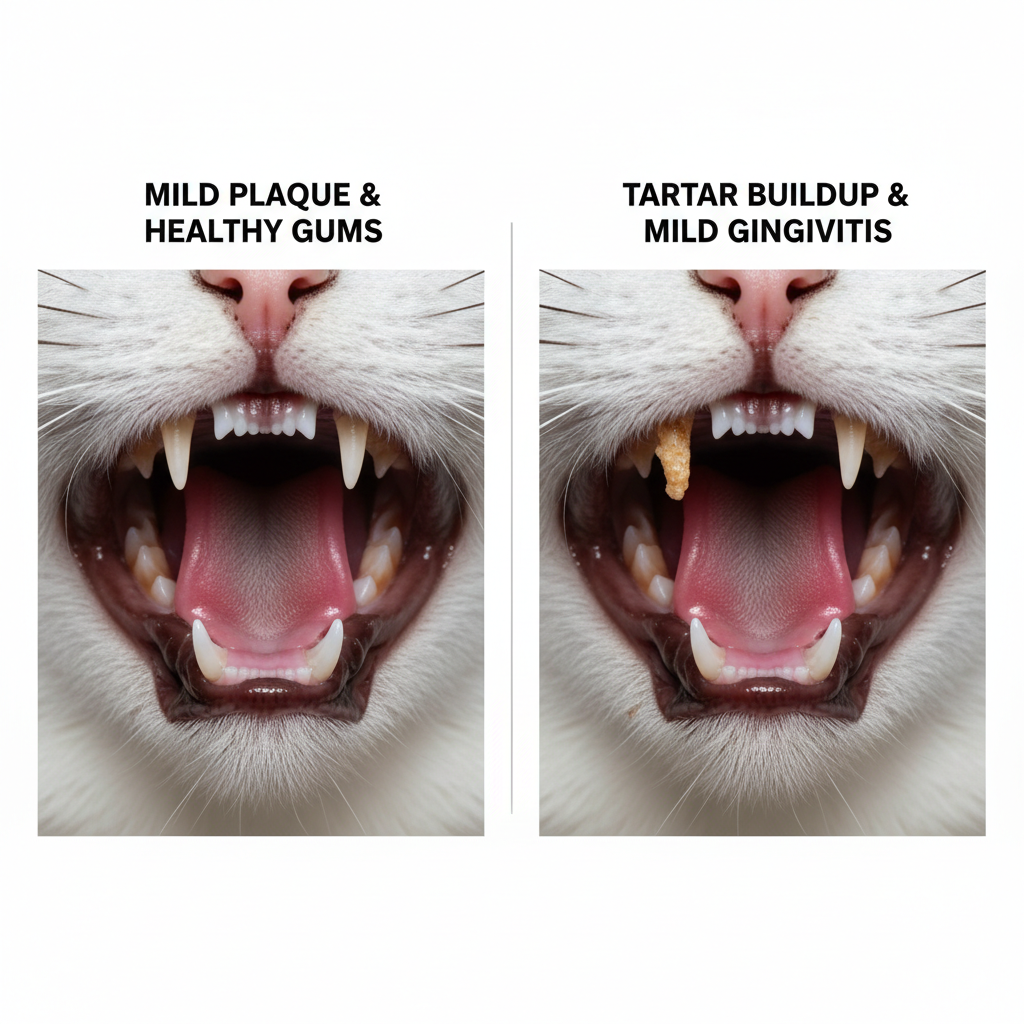
One more practical point: if your cat is extremely stressy about handling, the “best” product is the one you can apply calmly and consistently. Stress can make oral care worse by turning it into a daily fight.
How to choose a cat dental spray for bad breath (ingredients and safety)
When people search for cat dental spray for bad breath, they’re usually balancing two things: “Will it work?” and “Is it safe if my cat licks it?” That’s the right instinct.
Look for these signals
- Cat-specific labeling and clear dosing directions
- Simple ingredient list you can actually read
- Transparent customer support (a real company you can contact)
Helpful ingredient categories (not a promise, but commonly used)
- Enzymes that help break down biofilm on the tooth surface
- Chlorhexidine in appropriate pet concentrations, often used for bacterial control (some cats dislike taste)
- Zinc compounds that can bind odor molecules in some formulas
- Hypochlorous acid (HOCl) used in certain oral care products for antimicrobial support
Be cautious with
- Human mouthwash-style formulas (cats have different sensitivities)
- Essential oils in higher amounts; some can be irritating or unsafe for cats depending on type and dose
- Strong flavors that make your cat foam or panic, even if technically “safe”
According to the Veterinary Oral Health Council (VOHC), products that carry the VOHC Seal have evidence supporting plaque and/or tartar control. Not every good product has it, but the seal can make decisions simpler when you feel stuck.
Dental spray vs brushing vs treats: what to use (and when)
Spray can be a starter tool, but it’s not always the main tool. Here’s a practical comparison to help you build a routine that fits your cat.
| Option | Best for | Limitations | Realistic tip |
|---|---|---|---|
| Dental spray | Mild breath issues, maintenance, cats who hate brushing | Limited on heavy tartar; needs consistent use | Pair with a weekly “mouth look” to track gums and buildup |
| Toothbrushing | Best plaque control at home | Training required; many cats resist | Start with finger touch + pet toothpaste, 10 seconds is fine |
| Dental treats/chews | Light mechanical cleaning, convenience | Calories; some cats swallow whole | Use as a reward after spray or brushing practice |
| Dental diet/kibble | Daily support for plaque in some cats | Not for every medical diet need; not instant | Ask your vet if your cat has weight, kidney, or urinary concerns |
| Professional cleaning | Moderate-severe tartar, gum disease, painful mouths | Cost and anesthesia considerations | Use home care after cleaning, otherwise plaque returns |
How to use a dental spray without stressing your cat
This is where most people fail, not because they’re careless, but because they aim too big too fast. Think “tiny reps,” not “perfect technique.”
A low-drama routine (5 steps)
- Pick the right moment: after a meal or when your cat is relaxed, not during zoomies.
- Start with the bottle: let your cat sniff it, reward, and stop. Do that for a day or two if needed.
- Touch training: briefly lift the lip, reward, end. Keep it short.
- Spray to the side: aim at the outer tooth/gumline area, not straight down the throat.
- Stick to the label: more spray doesn’t mean more benefit, it often means more drool and less cooperation.
If your cat bolts at the sound, spray onto a finger or gauze pad (only if the product label allows) and wipe the outer teeth. It’s not as thorough as brushing, but it’s often more realistic than forcing a spray your cat hates.
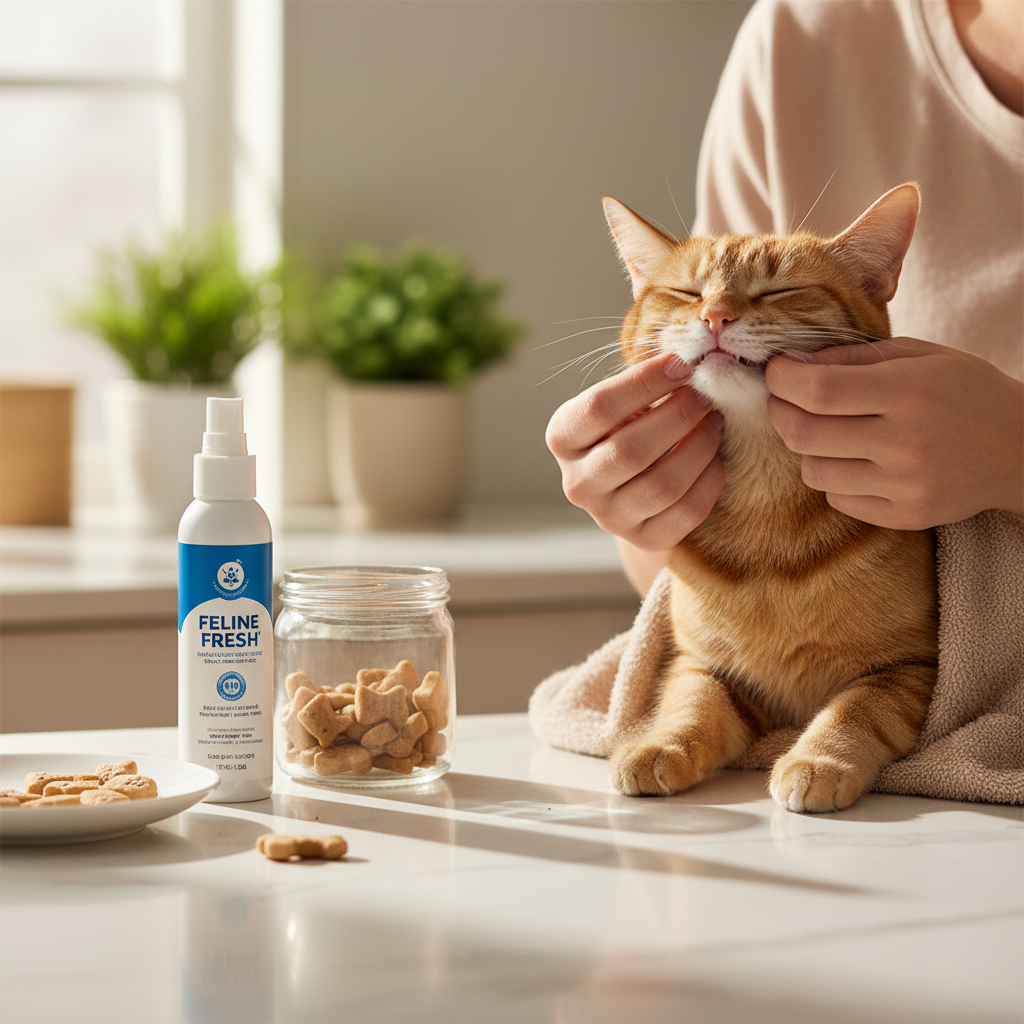
Key point: consistency beats intensity. A mild, regular routine tends to outperform sporadic “big cleanups,” especially for breath control.
Mistakes that make sprays feel useless (and how to avoid them)
- Expecting tartar removal: sprays help with plaque and bacteria, tartar usually needs professional care.
- Skipping the gumline: aim for the outer teeth near gums, that’s where plaque builds fastest.
- Changing products weekly: you’ll never know what works. Give a reasonable trial unless your cat reacts poorly.
- Ignoring diet and water habits: sticky foods, low hydration, and constant snacking can keep odor around.
- Using human products: ingredients safe for people can be risky for cats.
Also, if your cat’s breath improves but returns fast, it can mean there’s underlying gum disease or a painful tooth. That’s not you failing—it’s just the limit of home care.
When to talk to a vet (and what to ask)
If you’re using cat dental spray for bad breath and you still notice strong odor after a couple of weeks, or if symptoms look worse, a vet visit usually saves time and guesswork. According to the American Animal Hospital Association (AAHA), regular dental evaluations are part of preventive care, and early treatment can help avoid progression.
- Ask for an oral exam and whether dental X-rays are recommended, because problems can hide below the gumline.
- Describe behavior changes: dropping food, chewing on one side, hiding, irritability.
- Bring the product label if you’re worried about irritation or sensitivity.
If your cat has chronic conditions (kidney disease, diabetes, heart disease), it’s extra important to confirm any oral product fits your cat’s overall plan.
Conclusion: a spray can help, but make it part of a plan
A dental spray is a reasonable, low-effort tool for many households, especially when you use it consistently and keep expectations grounded. If your cat’s breath is mild-to-moderate and there’s no obvious pain, it can be a practical step while you build better habits.
Two action steps that usually pay off: pick one product and use it daily for a steady trial, and schedule a dental check if you see tartar, red gums, or appetite changes. Fresh breath is nice, but comfort and health matter more.
FAQ
How long does it take a cat dental spray to work for bad breath?
Many mild cases improve within several days, but plaque-related odor often needs consistent use over a couple of weeks. If the smell is strong or returns quickly, a vet exam may be the better next step.
Can cat dental spray remove tartar?
Most sprays help reduce bacteria and slow plaque, but hardened tartar usually does not “dissolve” at home. If you can see heavy buildup, professional cleaning is often the realistic solution.
Is cat dental spray safe if my cat swallows it?
Cat-specific sprays are generally designed with licking in mind, but safety depends on the formula and your cat’s health. Follow the label dosing and check with a veterinarian if your cat has medical conditions or you notice vomiting, drooling, or mouth irritation.
What’s better: cat dental spray or brushing?
Brushing typically offers stronger plaque control, but a spray can be easier to do consistently. In practice, the “better” option is often the one your cat will tolerate daily without stress.
My cat hates the spray sound—what can I do?
Try desensitizing with slow steps, or use a product format that doesn’t involve a sudden noise. If the label allows, applying to a finger or gauze pad and wiping the outer teeth can be a calmer alternative.
Do water additives work the same way as dental sprays?
They can help in some cats, but they’re more variable because intake differs day to day. If your cat drinks little water, a spray or wipe may give you more predictable coverage.
How do I know if bad breath is from kidneys or diabetes?
You can’t confirm that from smell alone. Sweet/fruity, ammonia-like, or suddenly intense odors—especially with drinking/urination changes, weight loss, or low appetite—are good reasons to call your vet for testing.
How often should I use cat dental spray for bad breath?
Most products are intended for daily use, sometimes once or twice per day. Use the manufacturer directions, and if your cat becomes irritated or stressed, scale back and ask your vet about alternatives.
If you’re trying to keep breath under control but brushing feels unrealistic, a thoughtfully chosen spray and a calm routine can be a solid “middle path.” If you want a more tailored plan, your veterinarian can help you combine home care with a dental exam schedule that fits your cat’s age and mouth condition.