
Rabbit playpen outdoor setups can be safe and low-stress, but only if you treat them like predator-proof housing, not a “quick yard pen.” The hard truth is that most escapes and injuries happen in the boring details: the bottom edge, the latch, the shade, the time of day.
If you want your rabbit to enjoy grass, fresh air, and more room to move, you can absolutely make it work, you just need a fence that matches your yard and your rabbit’s habits. Some rabbits dig like a tiny excavator, others climb, some panic and slam into panels.
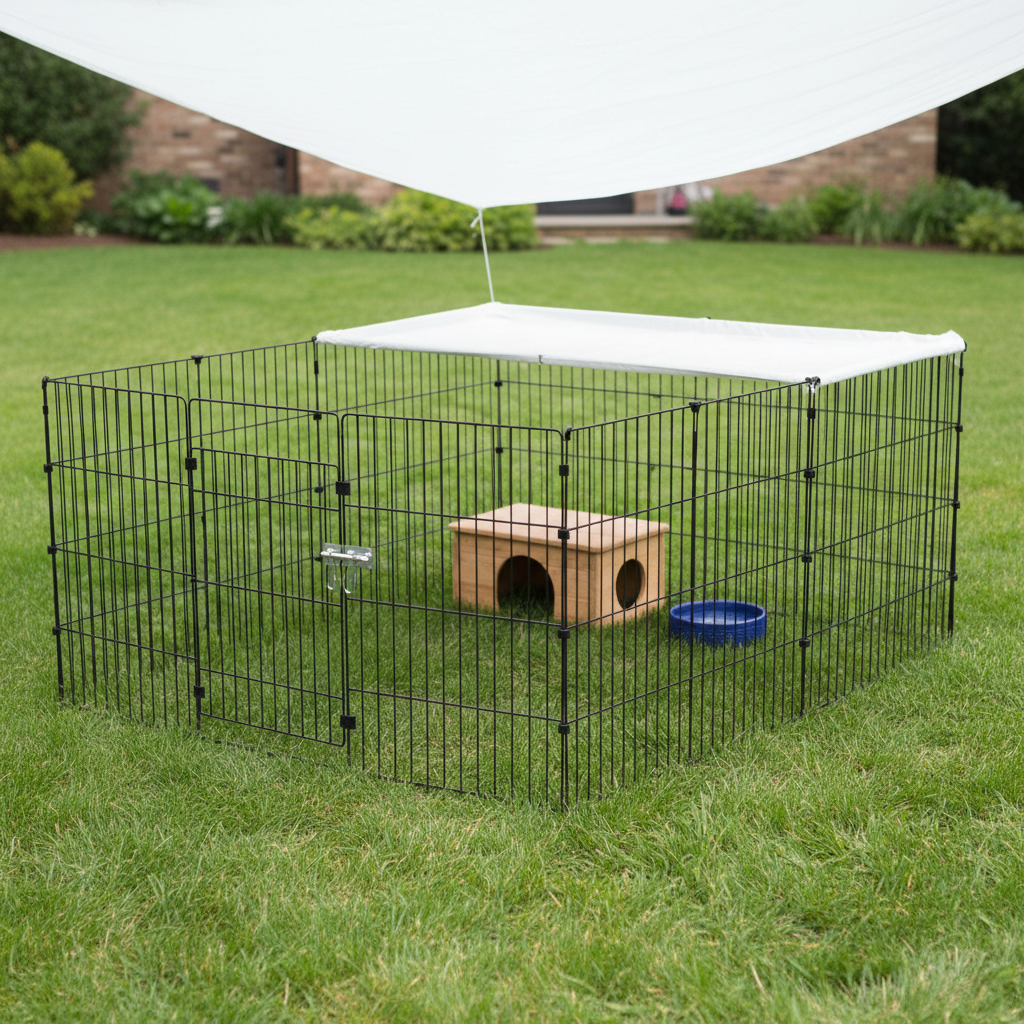
This guide focuses on the real-world stuff owners trip over: choosing a safe fence, adding dig and predator protection, and building a routine so outdoor time stays fun instead of risky. I’ll also point out when an “outdoor playpen” is the wrong tool for the job.
What makes an outdoor rabbit playpen risky (and how to think about it)
An outdoor pen fails in three common ways: something gets in, the rabbit gets out, or the environment stresses the rabbit. If you plan around those three buckets, your decisions get simpler.
- Predators and pets: dogs, coyotes, raccoons, hawks, and even neighborhood cats can trigger panic or cause injury through the fence.
- Escape behavior: digging under, squeezing through, climbing, or popping a loose panel.
- Weather and exposure: heat, direct sun, wet grass, and sudden temperature swings can overwhelm rabbits faster than many people expect.
- Hidden yard hazards: fertilizers, pesticides, toxic plants, mushrooms, sharp garden stakes, standing water.
According to the American Veterinary Medical Association (AVMA), rabbits can be prey for other animals and may face outdoor hazards, so supervision and secure housing matter. That doesn’t mean “never outdoors,” it means the enclosure and your habits carry a lot of the safety load.
Fence and panel choices that usually work better outdoors
For a rabbit playpen outdoor build, materials matter more than size. Indoors, a lightweight pen can be fine. Outside, flex and gaps get exploited quickly, and weather speeds up wear.
Panel material and spacing
- Powder-coated metal exercise pen panels often hold up well outdoors and resist chewing better than plastic.
- Wire spacing: smaller spacing reduces head-stuck risks, especially for young or small rabbits. If spacing feels “roomy,” it’s usually too big.
- Avoid chicken wire as the main barrier in many cases, it can deform, and predators can tear it. It can still be useful as a secondary layer in some setups.
Height and stability
- Height: taller panels help with jumpers, but height alone never fixes digging.
- Rigid connections: choose pens with solid clips or add extra carabiners. “It seems snug” is where escapes start.
- Wind resistance: outdoor pens should be anchored. A startled rabbit plus a tipping panel is a bad combo.
If you’re shopping, look for outdoor language like rust-resistant coating, sturdy hinges, and latches that don’t rely on friction. “Portable” is nice, but not if it bends easily.
A quick self-check: is your yard and rabbit a good match for outdoor playtime?
Before you buy more gear, check fit. Many owners can solve this by changing location or timing, not by adding another accessory.
- My rabbit digs fast (a few minutes and you see a trench) → you need a dig barrier, not just stakes.
- My rabbit bolts when startled (birds, car doors, dogs barking) → you need better visual blocking, plus tighter supervision.
- My yard gets full sun most of the day → you need reliable shade and a heat plan, or limit outdoor time to cooler hours.
- We use lawn chemicals or have unknown plants → you may need a raised run or a fully controlled surface.
- There are hawks or roaming cats in your area → you should assume you need a top cover or a roofed run.
If two or more points hit hard, it doesn’t mean “no,” it means your playpen needs to be closer to a secure run than a casual pen.
How to set up a safer rabbit playpen outdoor (step-by-step)
This is the setup most people end up with after a few “almost escaped” moments. The goal is to reduce the number of weak points, because rabbits find them quickly.
1) Pick the placement first
- Choose a flatter spot, away from fences where predators can lurk.
- Avoid areas with overhead trees that drop sap, nuts, or heavy debris.
- Stay away from grills, fire pits, and garden beds with amendments.
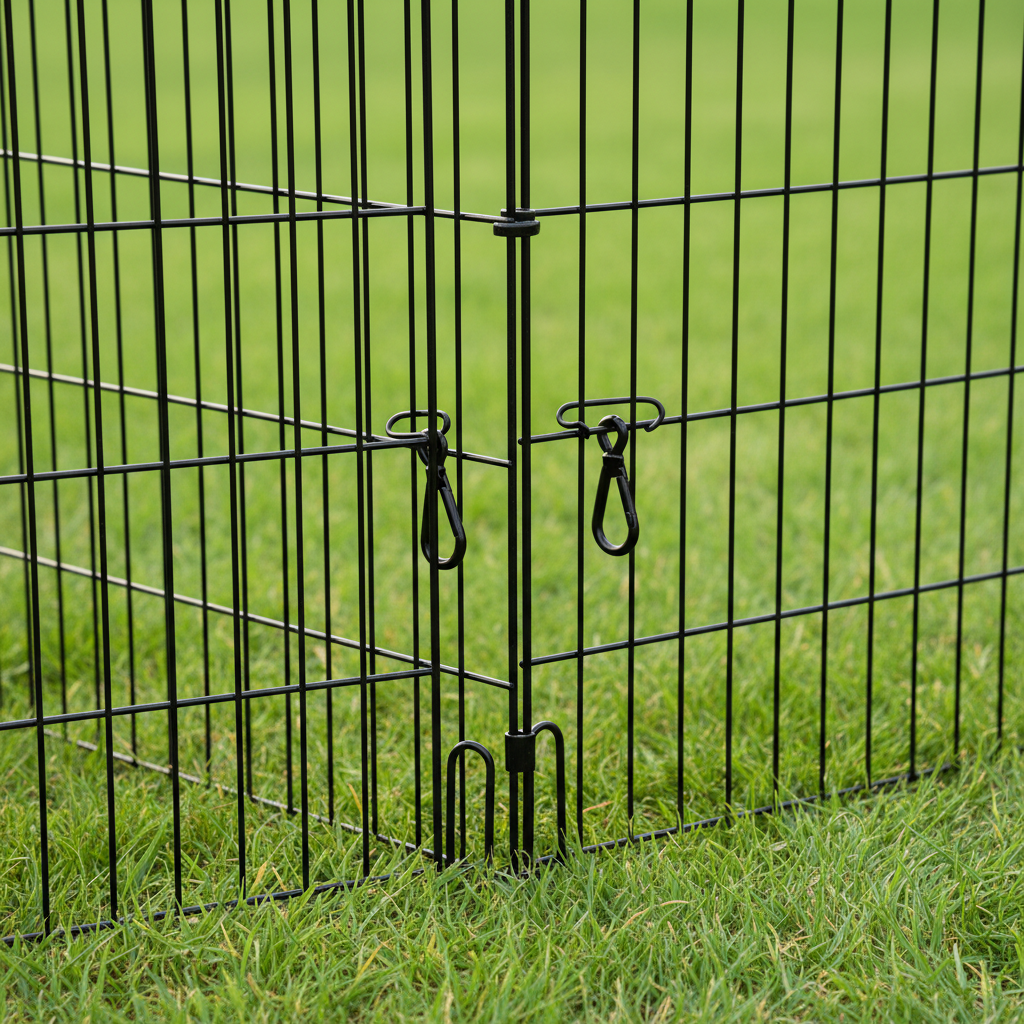
2) Anchor the pen so it can’t shift
- Use ground stakes designed for pet pens, and add more at corners.
- Recheck after the first use, grass and soil give a false sense of “locked in.”
3) Add a dig barrier (this is where many setups fail)
- Fast option: lay a wide strip of welded wire or hardware cloth on the ground extending outward from the pen wall, then cover it with grass clippings or a thin layer of soil so it’s not a tripping hazard.
- Stronger option: bury welded wire a few inches down in an L-shape apron around the perimeter.
- Simple option for short sessions: set the pen on top of a heavy-duty mat, but watch chewing and heat buildup on dark surfaces.
4) Create a “calm zone” inside
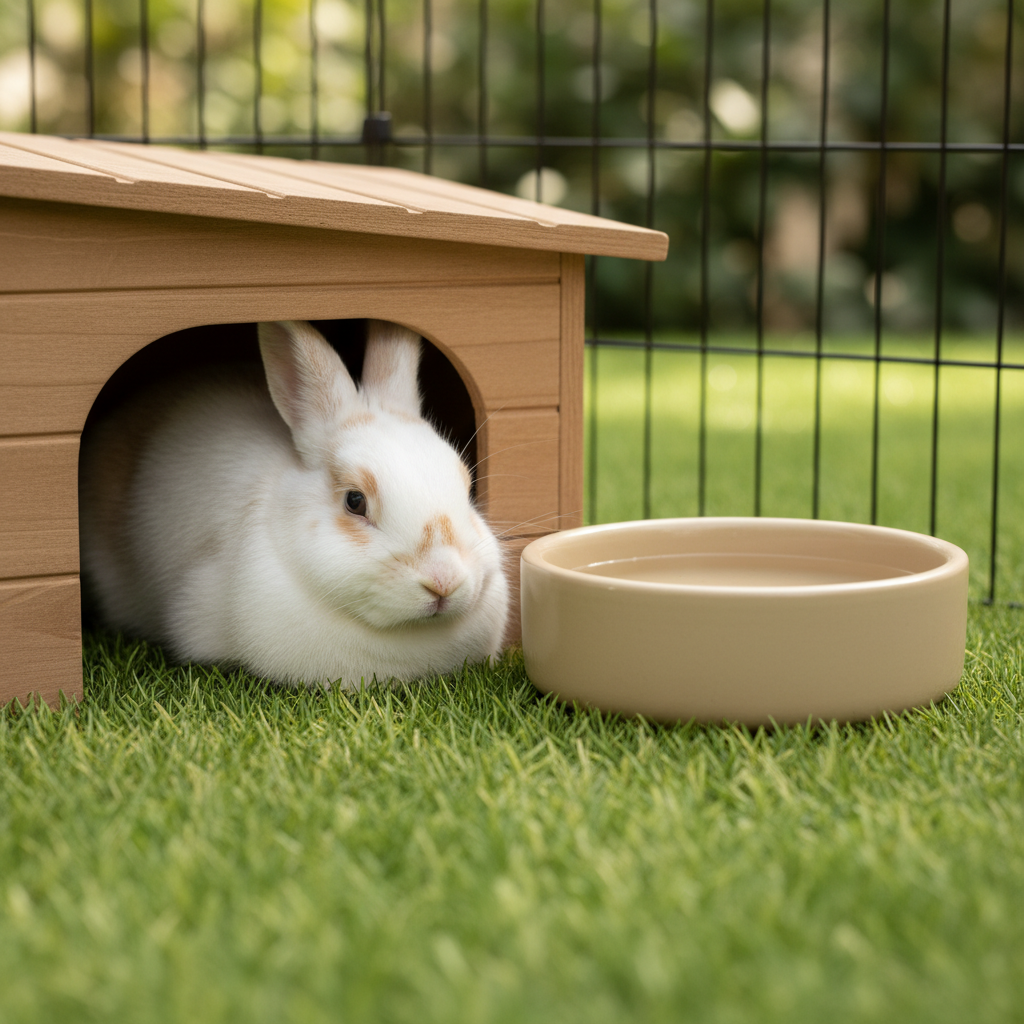
- A hide box or covered tunnel so the rabbit can decompress.
- Shade that stays put, not a towel that slides or flaps in wind.
- Water in a heavy crock bowl so it doesn’t tip.
According to the House Rabbit Society, rabbits are sensitive to heat and stress, and benefit from safe shelter and supervision. Outdoors, the calm zone often matters as much as the fence.
Top cover, shade, and weather: what “safe” usually means outside
People often debate whether a roof is “necessary.” In many neighborhoods, it’s the difference between relaxed playtime and a rabbit freezing in fear. A rabbit playpen outdoor space should feel protected, not exposed.
Top cover options
- Secure mesh cover: helps reduce aerial predator risk and jump-outs, but must be tight and clipped.
- Rigid roofed run: more protective, less portable, usually better for frequent outdoor time.
- Partial cover + visual barrier: can help with stress triggers, but don’t treat it as predator-proof.
Heat and cold boundaries
- If it feels hot to you standing still in the sun, it can be too hot for a rabbit quickly, especially in humid states.
- Offer shade and airflow, avoid enclosed plastic structures that trap heat.
- If your rabbit shows rapid breathing, drooling, weakness, or seems “off,” end outdoor time and consider calling a veterinarian.
According to the American Animal Hospital Association (AAHA), heat illness is a serious risk in pets; rabbits can be especially vulnerable. When in doubt, shorter sessions in cooler parts of the day tend to be safer.
Practical setup options (with a comparison table)
Not everyone needs the same build. Here’s a grounded comparison based on what owners typically prioritize: portability, safety margin, and daily effort.
| Setup type | Good for | Common weak spot | What to add |
|---|---|---|---|
| Basic exercise pen on grass | Short, supervised sessions | Digging under edges | Wire apron, more anchors, hide box |
| Exercise pen + top cover | Jumpers, hawk-prone areas | Loose cover clips, sagging mesh | Extra clips, tighter mesh, shade panel |
| Roofed wooden or metal run | Frequent outdoor time | Moisture damage, latch wear | Weatherproofing, double-latch, inspection routine |
| Raised run / patio setup | Chemical-treated lawns or wet yards | Overheating on solid floors | Cooling tiles, shade, airflow gaps |
If you’re unsure, start with the “exercise pen + upgrades” route. It’s easier to adjust after you learn how your rabbit behaves outdoors.
Mistakes that waste money (and what to do instead)
- Buying taller panels to solve digging: height helps jumping, not tunneling. Put your budget into a ground barrier.
- Assuming “supervised” means safe: supervision helps, but you still need physical prevention. A rabbit can slip out fast, and you won’t out-sprint fear.
- Leaving a rabbit outside “for a bit” alone: many incidents happen quietly. If you need hands-free time, consider a more secure run or keep playtime indoors.
- Using flimsy clips or single-point latches: add redundant closures, especially on gates.
- Skipping daily checks: outdoor gear loosens. A quick tug test on panels and latches saves headaches.
When to ask a professional (vet or behavior support)
If outdoor time consistently triggers panic, aggression, or your rabbit stops eating after sessions, it’s worth checking in with a rabbit-savvy veterinarian. Stress can stack up, and appetite changes can become urgent in rabbits.
Also consider professional help if you suspect parasites, flystrike risk in your region, or if your rabbit has mobility issues that make outdoor footing tricky. These are the situations where “just tweak the pen” may not be enough.
Key takeaways and a simple next step
A safer outdoor pen comes down to three upgrades: stop digging, reduce predator access, and build a calm shaded zone. Once those are handled, your rabbit usually relaxes, and you relax too.
If you want one practical next step, do this: set up the pen, then spend two minutes trying to “break in” the way a rabbit would, push the corners, lift the bottom edge, test the latch, look for gaps near the ground. Fix what feels even slightly loose before your rabbit finds it.
FAQ
- How big should a rabbit playpen outdoor be?
Big enough for a few hops, a stretch, and a hide zone without feeling cramped. In practice, bigger is better only if the perimeter stays secure; a smaller sturdy setup beats a huge flimsy one. - Is it safe to put a rabbit playpen on grass?
Often yes, but grass adds variables: digging, wetness, and chemicals. If you don’t control what’s on the lawn, a raised surface or a protected base can be a safer call. - Do I need a roof on an outdoor rabbit pen?
In many areas it’s strongly recommended, especially if hawks or roaming cats show up. At minimum, provide shade and a hide box, and avoid leaving the rabbit exposed. - What wire is safest for rabbits outdoors?
Many owners prefer welded wire or hardware cloth for strength and consistent spacing. Avoid anything that bends easily or leaves large gaps that a head can push through. - How do I stop my rabbit from digging out?
Use a wire apron or buried L-shaped barrier around the pen. Relying on supervision alone usually turns into a repeating “close call” cycle. - Can I leave my rabbit outside in a playpen while I do chores?
It depends on your enclosure and your neighborhood risk, but many situations still call for close supervision. If you need true hands-free time, upgrade to a roofed run with stronger sides and latches. - What signs mean my rabbit is stressed outside?
Freezing, frantic running, thumping, refusing treats, rapid breathing, or hiding without relaxing. If symptoms persist or your rabbit seems unwell, bring them inside and consider contacting a veterinarian.
If you’re building a rabbit playpen outdoor area and you want a more streamlined setup, it can help to start from a kit that supports add-ons like covers, extra anchors, and tighter mesh, then tailor it to your yard instead of reinventing the whole run from scratch.