
How to stop dog from chewing shoes usually comes down to two things: managing access in the moment, and teaching your dog what to chew instead of guessing and hoping they “grow out of it.” If you only do one, you’ll keep feeling like you’re losing ground.
Shoe chewing is frustrating because it feels personal, but for most dogs it’s just opportunity plus habit. Shoes smell like you, they’re easy to grab, and the texture is satisfying, especially for puppies and young dogs.
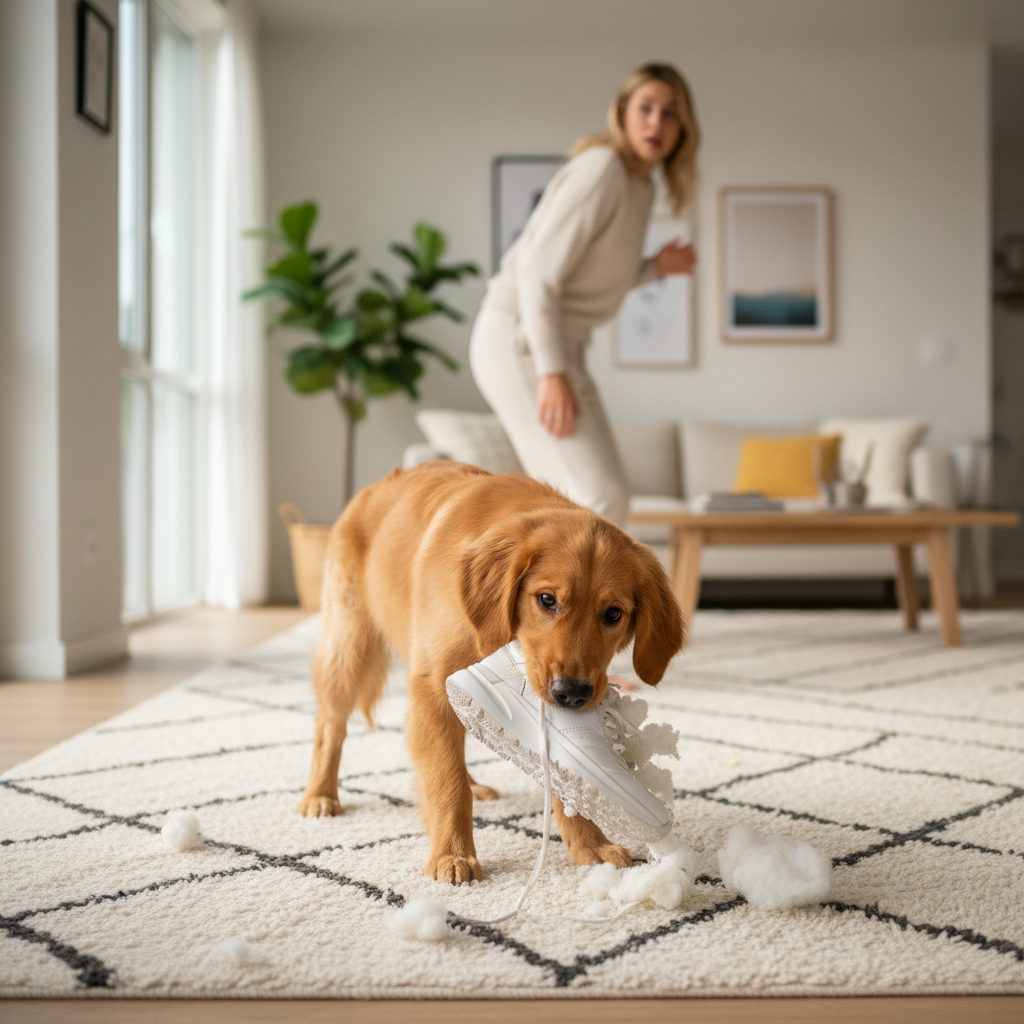
The good news is you don’t need harsh corrections to fix it. With the right setup, a small set of cues, and better chew options, most households see progress quickly, and the rest can be solved with a bit more structure.
Why dogs chew shoes (and what your dog might be “saying”)
Chewing is normal dog behavior. The shoe part is the problem, not the chewing itself. Common drivers tend to look like this:
- Teething or mouth comfort: puppies often seek pressure on gums, and shoes are perfect shape and firmness.
- Boredom and under-stimulation: many dogs chew more when daily exercise and enrichment are inconsistent.
- Stress or separation-related behavior: shoes smell strongly like you, so they become a “soothing” object.
- Reinforcement history: if chewing shoes ever led to a fun chase, attention, or a rewarding texture, the habit sticks.
- Easy access: if shoes live in a pile by the door, your dog is basically being trained by the environment.
According to the American Veterinary Medical Association (AVMA), destructive chewing can be a normal exploratory behavior, but it can also relate to anxiety, boredom, or insufficient outlets, and persistent issues may warrant veterinary guidance.
Quick self-check: what type of shoe chewer are you dealing with?
Before you pick a plan, figure out the pattern. This avoids wasting time on the wrong “fix.”
- Only when you’re gone: more consistent with boredom, loneliness, or separation-related stress.
- Mostly evenings: often a daily routine issue, not enough decompression after busy days.
- Targets new or sweaty shoes: scent-driven, very common with teenagers (6–18 months).
- Chews anything, not just shoes: could be management gaps, teething, or a broader enrichment need.
- Swallows pieces: higher risk, treat as safety-first and consider professional help sooner.
If you’re trying to decide how to stop dog from chewing shoes, this check matters because “train more” won’t help if the real issue is access plus long, unstimulating afternoons.
Immediate prevention: stop the habit from paying off
Training takes time, but you can stop the rehearsal today. The goal is simple: no more unsupervised access to shoes.
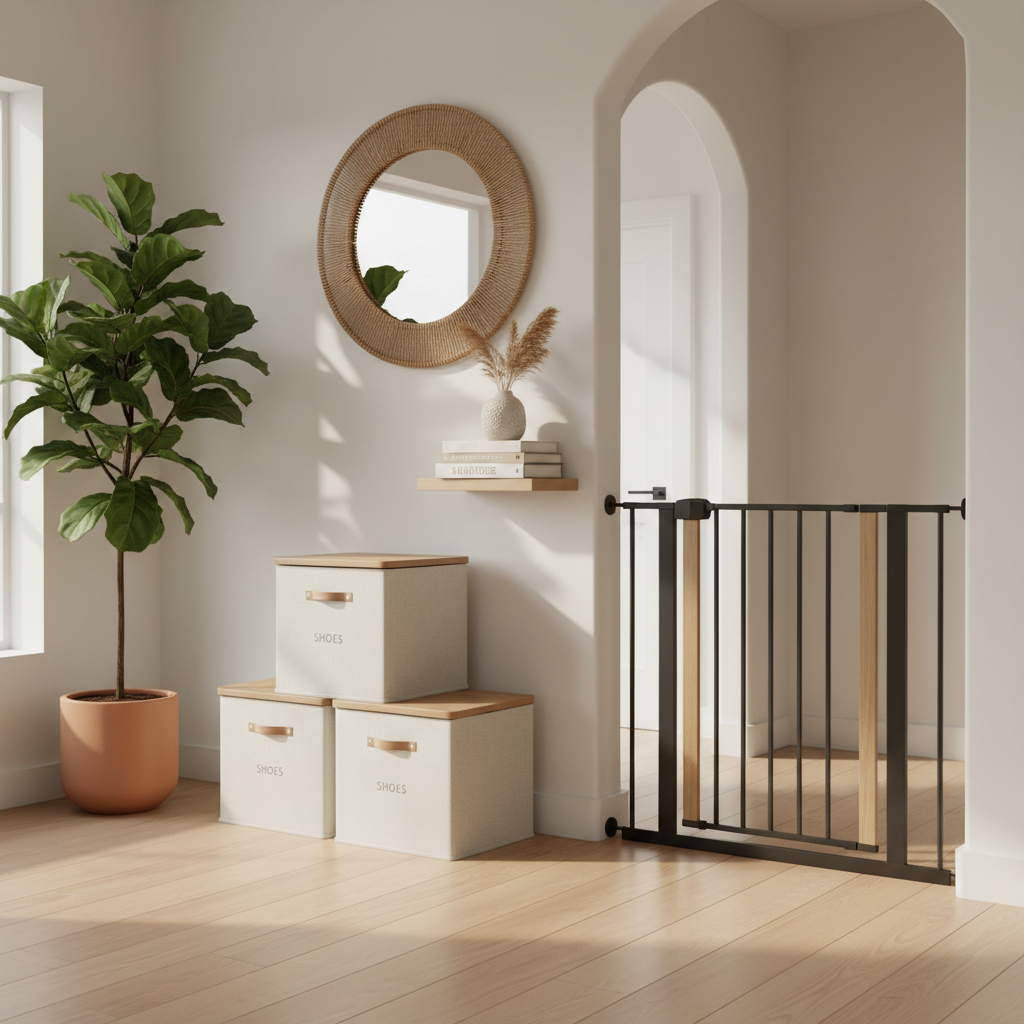
- Move shoes behind a barrier: closed closet, lidded bin, or a baby gate at the entry.
- Use a leash indoors when needed: for a week or two, “umbilical cord” your dog to you during high-risk times.
- Create a chew station: a basket of legal chews in the spots your dog normally steals shoes.
- Crate or pen for downtime: only if your dog is crate-comfortable, pair with a safe chew or stuffed toy.
According to the American Kennel Club (AKC), management tools like crates, pens, and baby gates are practical ways to prevent unwanted chewing while you teach appropriate alternatives.
One caution: bitter sprays can help some dogs, but many ignore them, and they don’t teach a replacement behavior. Think of spray as a bonus layer, not the plan.
Teach “Leave It” and “Drop It” (the two cues that save shoes)
For most homes, this is the turning point. These cues work because they give you a calm, repeatable script instead of yelling or chasing.
How to teach “Leave It” (simple version)
- Hold a treat in a closed fist, present it at your dog’s nose level.
- Wait for your dog to stop investigating, even for a second, then say “Yes” and reward from the other hand.
- Repeat until your dog quickly backs off, then add the cue “Leave it” right before showing your fist.
- Gradually progress to an open palm, then to low-value items on the floor.
How to teach “Drop It” (trade, don’t battle)
- Offer a toy, let your dog take it, then present a treat to their nose.
- When they release the toy, mark with “Yes”, give the treat, and hand the toy back.
- This “trade and return” builds trust, which usually reduces keep-away behavior.
When your dog grabs a shoe, avoid turning it into a chase game. Use “Drop it,” trade for something better, and then immediately give a legal chew so your dog still gets to chew.
Replace the urge: choose chews that actually compete with shoes
This is where many people get stuck. If your dog loves leather and rubber, a random plush toy won’t compete. Offer a chew that matches the sensory payoff.
| Dog type / situation | Chew options that often work | Notes |
|---|---|---|
| Puppy teething | Rubber chew, chilled teething toy | Supervise, rotate options to keep interest |
| Power chewer | Durable rubber toy, long-lasting chew | Avoid anything that splinters; size matters |
| Bored after work | Stuffed food toy, lick mat, puzzle feeder | Use part of dinner, reduces extra calories |
| Anxious when alone | High-value stuffed toy only for departures | Create a “leaving routine” that predicts good things |
Safety matters here. Any chew can become a choking or blockage risk depending on your dog’s chewing style, so supervise, choose appropriate size, and if your dog tends to swallow chunks, ask your veterinarian what’s safest.
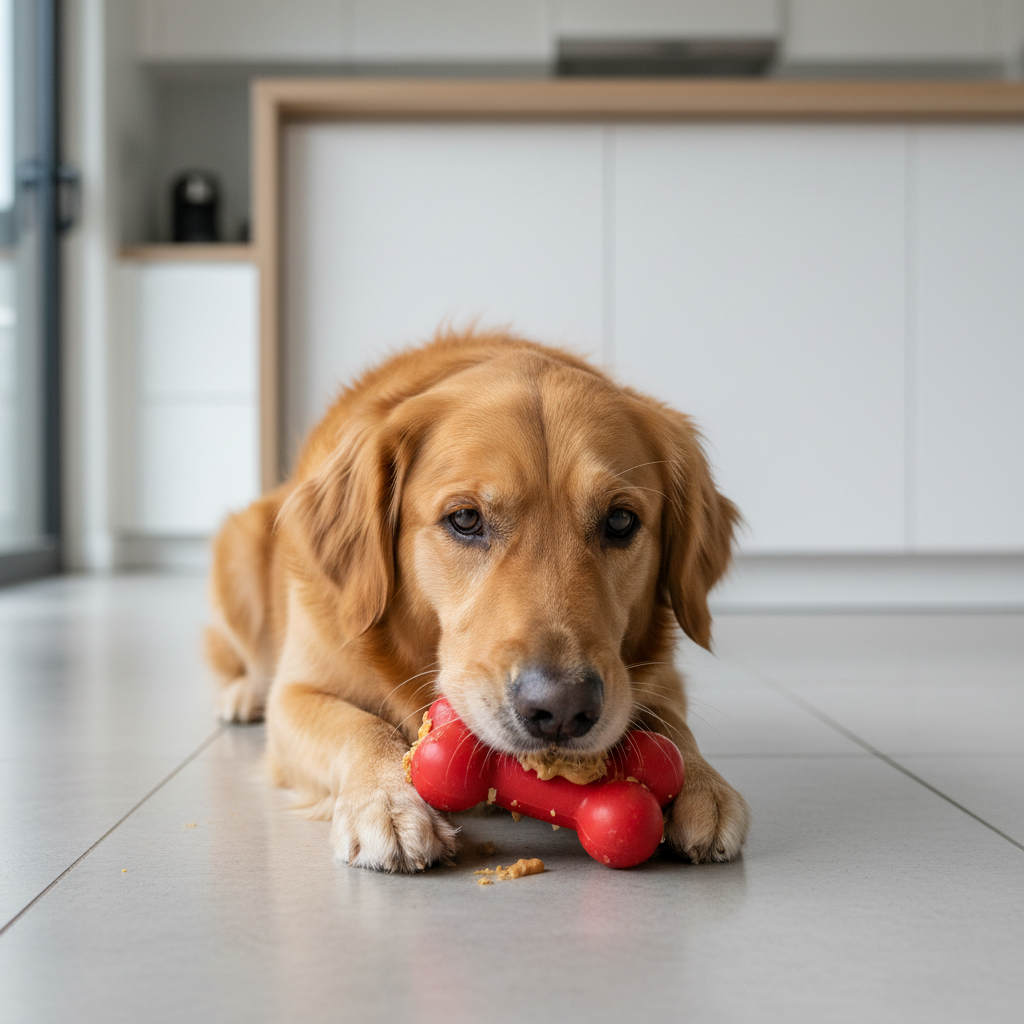
If you’re still wondering how to stop dog from chewing shoes, this replacement step is often the missing piece, because it channels the same need into a safe target.
A simple 7-day reset plan (realistic, not perfect)
This plan assumes your dog already has basic exercise and you can supervise in short windows. Adjust for your schedule, consistency beats intensity.
- Day 1–2: Lock down access with bins, gates, closed doors. Put a chew basket near the shoe area.
- Day 3–4: Practice cues for 3–5 minutes, twice daily: “Leave it,” then “Drop it” trades.
- Day 5: Add real-life reps, hold a shoe briefly, cue “Leave it,” reward, then put shoe away.
- Day 6: Build a calm routine after walks: water, decompression, then 10–15 minutes with a stuffed toy.
- Day 7: Test tiny freedoms one room at a time, only when you can watch, pull back if your dog regresses.
Key point: freedom is earned through weeks of success, not one good afternoon. If your dog slips, that’s feedback about management, not “stubbornness.”
Common mistakes that keep shoe chewing alive
- Chasing your dog: it often turns shoe theft into a game.
- Punishing after the fact: dogs usually can’t connect the correction to chewing that happened minutes ago, and it can increase anxiety.
- Leaving “decoy shoes”: it teaches that shoes are chew items, just sometimes you get yelled at.
- Too many toys, none valuable: rotate 4–6 options, keep the best for high-risk times.
- Assuming exercise alone fixes it: many dogs need brain work too, sniffing and problem-solving count.
According to the ASPCA, punishment can create fear and may worsen behavior problems; reward-based training and prevention are typically more effective for many households.
When it’s time to involve a vet or trainer
If shoe chewing comes with panic behaviors, it may not be a simple training issue. Consider extra help if you see any of these:
- Chewing happens only when alone, plus drooling, scratching doors, or attempts to escape.
- Your dog breaks teeth, swallows pieces, or vomits after chewing, potential medical risk.
- The behavior escalates quickly despite solid management and daily enrichment.
- Your household feels unsafe trying to remove objects, growling or guarding appears.
A certified positive-reinforcement trainer can build a plan around your home setup, and a veterinarian can rule out pain, GI issues, or discuss anxiety support when appropriate. In tougher separation-related cases, a veterinary behaviorist may be the right next step.
Conclusion: protect shoes, keep chewing (just the right stuff)
How to stop dog from chewing shoes is less about “stopping chewing” and more about guiding it: remove access, teach “leave it” and “drop it,” and provide chews that genuinely satisfy your dog. Give it a week of consistency, then tighten the screws where your dog still gets tempted.
Two actions to start today: put every shoe behind a door or in a bin, and run 5 minutes of “Leave it” practice before dinner when your dog is already motivated.
FAQ
Why does my dog only chew my shoes and not my partner’s?
Usually scent and access. If your shoes are near the door, gym bag, or bedroom floor more often, your dog learns that’s the easy target. Your scent can also be more interesting depending on routine and materials.
Will bitter apple spray stop shoe chewing?
It can help with some dogs, but it’s inconsistent and often wears off. It works best as a temporary aid while you remove access and teach an alternative, not as the main solution.
My puppy chews shoes even after a long walk, why?
Walks tire the legs, not always the brain. Puppies also chew for teething comfort. Try short training games, sniffing time, and a safe chew right after the walk, when arousal is still high.
How do I get a shoe back without my dog running away?
Don’t chase. Walk to the treat jar, say “drop it,” and trade for something better, then give a legal chew. Over time, the trade becomes predictable and the keep-away routine fades.
Is it okay to give an old shoe as a chew toy?
In many homes it backfires, because dogs don’t reliably distinguish “old shoe” from “new shoe.” If you want a fabric-style chew, pick a dog-specific toy that looks and smells different.
What if my dog chews shoes only when I’m at work?
That pattern can point to boredom or separation-related stress. Increase pre-work enrichment, limit access with a safe setup, and consider a trainer if you also see distress signs like vocalizing, destruction near exits, or frantic pacing.
How long does it take to break the habit?
Some dogs improve in days once access disappears, but habit change often takes a few weeks of consistency. If your dog still finds shoes regularly, the environment is probably providing “practice reps.”
Could shoe chewing be a medical issue?
Sometimes. If your dog suddenly starts chewing intensely, seems restless, or eats non-food items, it’s worth checking with a veterinarian to rule out pain, GI upset, or other concerns.
If you’re trying to solve shoe chewing and want a more “set it up once” approach, a trainer can help you fine-tune management, cues, and enrichment around your layout and schedule, especially if the behavior happens when you’re not home.