
Snake bedding moisture proof setups are really about controlling three things at once: humidity where your species needs it, liquid spills you don’t want, and the lingering damp that turns “fine” substrate into a smelly mess.
If you’ve dealt with wet corners, sour odor, or mystery moisture under the water bowl, you already know the problem isn’t just aesthetics, it can push bacteria and mold growth, and it may raise respiratory risk in some situations.
This guide breaks down why bedding gets wet, how to tell whether you have a spill problem or a ventilation problem, and a few realistic routines that keep the enclosure cleaner without drying out snakes that actually need higher humidity.
Why snake bedding gets damp (and why it keeps coming back)
Most “wet bedding” complaints come from a handful of repeatable causes, and the fix depends on which one you actually have.
- Water bowl spills and splashing: large snakes, unstable bowls, or bowls placed on loose substrate often create a permanent wet ring.
- Condensation: warm enclosure air hitting a cooler lid or glass can drip back down, especially after misting or room temperature swings.
- Over-misting or over-soaking: common with keepers trying to solve shedding issues, but the enclosure ends up uniformly damp.
- Poor airflow: high humidity plus limited ventilation can trap moisture in the substrate for days.
- Bioactivity or waste load: urates and feces hold moisture and spike odor, even if the bedding doesn’t look soaked.
According to the AVMA (American Veterinary Medical Association), good husbandry and sanitation are key parts of disease prevention in reptiles, which is why “mild dampness” is worth treating as a real management issue, not a cosmetic one.
Quick self-check: spill, humidity, or ventilation?
Before you change everything, try a simple diagnosis. It keeps you from buying new substrate when the real issue is a wobbly water dish.
10-minute checklist
- Is moisture localized under/around the bowl or one hide? That usually points to spills, condensation drip lines, or a damp hide setup.
- Is moisture evenly spread across the enclosure? That usually points to over-misting, saturated substrate, or airflow limits.
- Do you smell odor first before you see wetness? That often means waste soaking in, or a bacterial bloom in warm, slightly damp bedding.
- Does the glass fog for hours after misting? That’s a ventilation and temperature-differential clue.
- Is shedding incomplete even though it’s wet? Sometimes the enclosure is “wet” but not “humid” in a useful way, or there’s no proper humid hide.
If you’re unsure about target humidity for your species, a reptile veterinarian or a reputable species care sheet can help, because “dry” and “humid” mean different things for a ball python versus a kingsnake.
Choosing bedding that stays cleaner without trapping water
No substrate is truly “waterproof,” but some handle moisture in a way that’s easier to manage. For snake bedding moisture proof goals, you want predictable drying and easy spot removal.
How common options behave
| Substrate | Moisture behavior | Best use case | Common downside |
|---|---|---|---|
| Aspen shavings | Absorbs quickly, dries fairly fast if airflow is decent | Drier setups, spot-cleaning focused | Molds if kept wet, not great for consistently high humidity |
| Coconut fiber (coir) | Holds moisture evenly, resists drying | Humidity-tolerant species, humid hides | Can stay damp too long, odor can build if overloaded |
| Cypress mulch | Holds moisture but with more airflow between pieces | Moderate-to-higher humidity enclosures | Quality varies, can be messy, may hide waste |
| Paper (unprinted) | No “drying,” you replace it | Quarantine, medical monitoring, easy sanitation | Less naturalistic, limited burrowing |
In practice, many keepers do well with a hybrid approach: a drier main substrate plus a humid hide so the snake can choose, instead of soaking the entire enclosure.
Moisture-proofing the setup (without wrecking your humidity)
This is where most people overcorrect. The goal isn’t “bone dry,” it’s controlled moisture in the right place.
Water bowl strategies that actually work
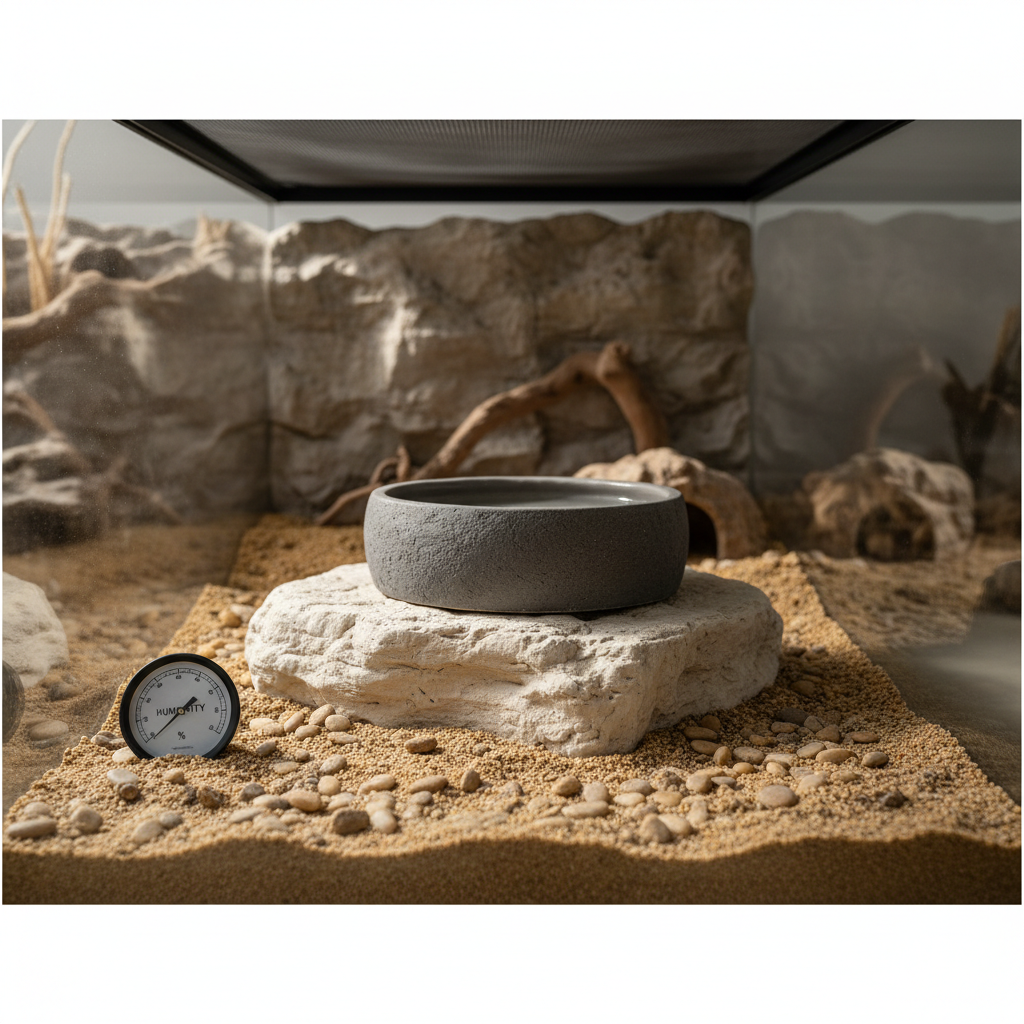
- Use a heavier bowl (ceramic or thick resin) and choose a wider base than the snake’s body can lever.
- Place the bowl on a solid platform (tile, slate, or a flat plastic stand) so spills don’t soak immediately into bedding.
- Move the bowl away from the hottest spot to reduce rapid evaporation and condensation cycles, unless your species needs that humidity boost.
- Check for “under-bowl swamp” during routine spot cleaning, not only during deep cleans.
Ventilation and microclimates
- Increase cross-ventilation when persistent dampness is enclosure-wide, but do it gradually so you don’t crash humidity.
- Stop chasing humidity with constant misting; a humid hide often gives better results with less wet bedding.
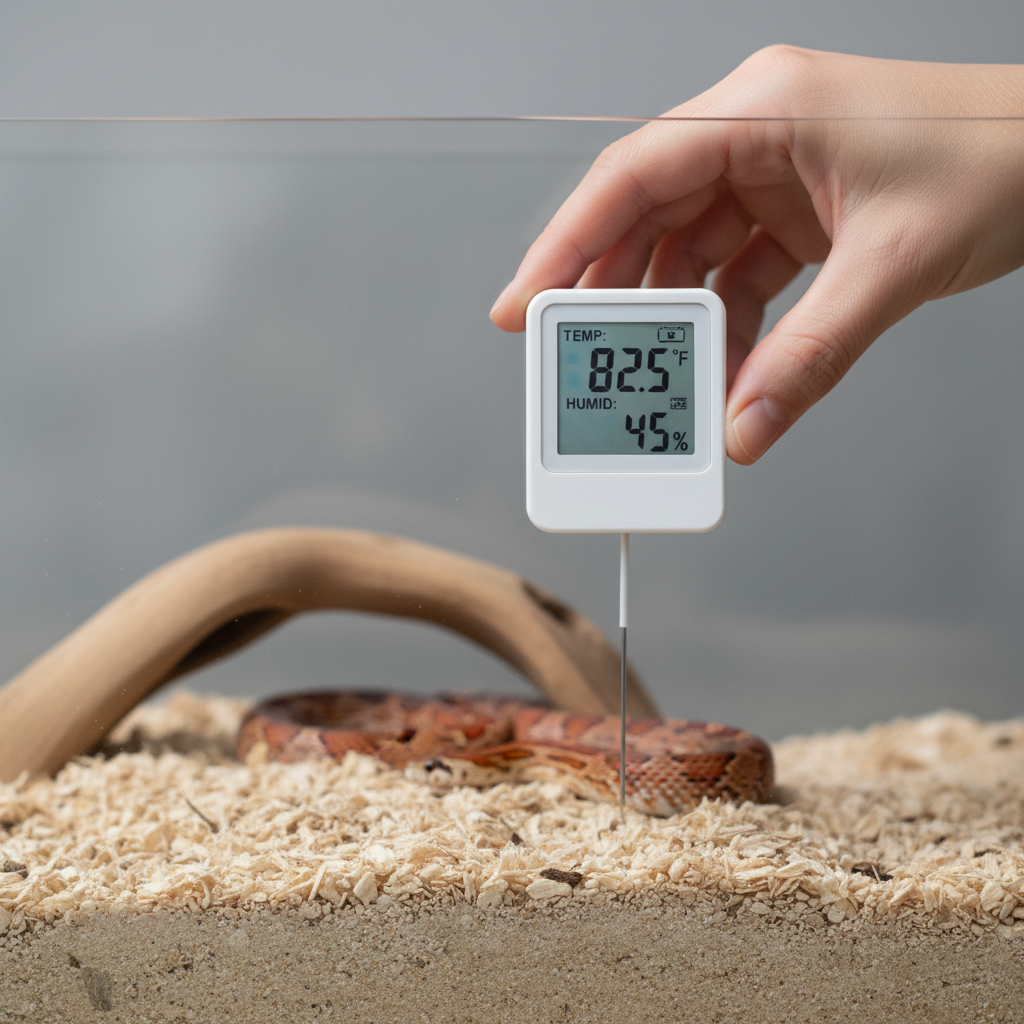
- Use a hygrometer you trust and place it where the snake spends time, not only near the lid.
According to CDC, reptiles can carry germs that spread to people, so keeping the enclosure clean and managing wet waste promptly matters for human hygiene too, especially in homes with kids or immunocompromised family members.
Cleaning routine: keep it dry, keep it simple
A solid routine beats occasional “full resets.” If you’re aiming for snake bedding moisture proof conditions, consistency matters more than intensity.
Daily (2–3 minutes)
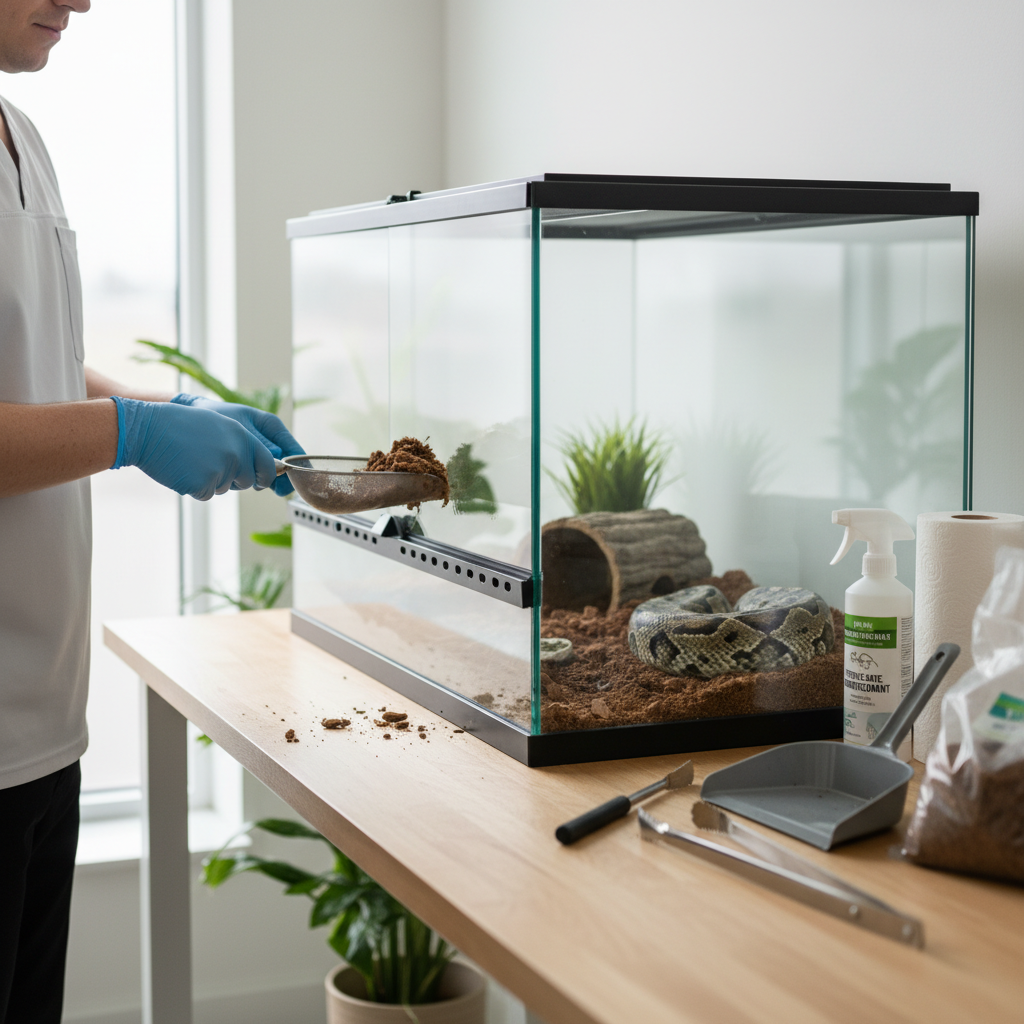
- Remove feces/urates right away, plus a small buffer of surrounding bedding.
- Stir and air-fluff any slightly damp area so it doesn’t cake.
- Wipe small spills on platform surfaces before they wick downward.
Weekly (10–20 minutes)
- Lift the water bowl, clean it, and inspect the underside area.
- Replace any substrate that feels cool and wet to the touch, even if it “looks fine.”
- Quick-check humidity and temperature at both warm and cool sides.
Deep clean (as needed, often every 3–6 weeks, varies)
- Move the snake to a secure temporary tub.
- Remove all substrate and wash enclosure surfaces with a reptile-safe disinfectant, follow label directions, rinse if required, then fully dry.
- Restart with dry substrate, then add moisture only where your plan calls for it, usually humid hide first.
Be cautious with strong household cleaners, fumes can irritate reptiles. When in doubt, ask a reptile veterinarian what disinfectants fit your setup.
Common mistakes that keep bedding wet (even when you “clean a lot”)
- Misting the whole enclosure to fix shedding: many snakes do better with a properly maintained humid hide than constant spraying.
- Using too deep a moisture-holding substrate: a thick layer of coir can stay damp underneath while the top looks dry.
- Ignoring temperature gradients: a cold corner can become a condensation magnet.
- Overfeeding enclosure humidity with a huge water bowl: bigger isn’t always better if it drives chronic dampness.
- Not separating “clean” from “dry”: you can disinfect a tank and still restart it with wet substrate, then you’re back to odor in days.
When to get professional help
If you see wheezing, persistent open-mouth breathing, unusual lethargy, or repeated incomplete sheds despite reasonable humidity, it’s worth talking to a reptile veterinarian. Those signs can have multiple causes, and guessing wrong often wastes time.
Also consider help if you’re seeing recurring mold, mites, or unexplained skin irritation, because the solution may involve more than substrate choice, it may include enclosure design, ventilation changes, and targeted treatment.
Key takeaways and a realistic next step
Most moisture problems improve once you stop treating the whole enclosure like a humidifier and start treating it like zones: a stable water area, a dry main area, and a humid hide when the species benefits from it.
- Local wet spot usually means bowl stability or a drip/condensation issue.
- Overall dampness usually means misting habits or airflow limits.
- Odor before wetness often means waste load or slow-drying substrate.
If you want one action that pays off fast, put the bowl on a solid platform and commit to weekly under-bowl checks, it fixes a surprising percentage of “mystery moisture.”
FAQ
How do I make snake bedding moisture proof without drying out my snake?
Think “controlled moisture,” not zero moisture. Keep the main substrate dry, then provide a humid hide or localized moisture zone for species that need it, so humidity supports shedding without soaking the whole tank.
Is mold in snake bedding always dangerous?
It can be a red flag for poor drying and sanitation, and some molds may irritate airways. If you spot mold, remove affected substrate, clean the area, and review ventilation and misting habits; if your snake shows respiratory signs, consult a veterinarian.
What substrate stays the driest for snakes?
Aspen often stays drier in low-to-moderate humidity setups, assuming spills get handled quickly. For higher humidity species, “driest” may not be the goal, a substrate that manages moisture without going swampy can be more practical.
Should I use a heat lamp to dry wet bedding?
Extra heat can dry substrate but may also spike temperatures or create unsafe hot spots. It’s usually safer to remove damp bedding and fix the cause, rather than trying to bake it dry in place.
Why is the bedding wet only under the water bowl?
That’s commonly from tiny spills, condensation on the bowl, or the snake pushing it. A heavier bowl and a tile platform help a lot, plus routine checks under the bowl prevent the “hidden swamp” from building.
How often should I replace snake bedding if humidity is high?
It varies with species, enclosure size, and waste load. Many keepers spot-clean daily and do partial replacements weekly, then deep clean on a schedule that matches odor and moisture behavior, not just the calendar.
Can wet bedding cause respiratory infections in snakes?
Wet, stagnant conditions may contribute to stress and poor air quality, which can increase risk in some situations, but respiratory infections have multiple causes. If you notice wheezing, mucus, or open-mouth breathing, a reptile vet visit is the safest call.
Is paper bedding better for keeping things clean?
For quarantine or medical monitoring, paper can be easier because you replace it quickly and see waste immediately. For long-term naturalistic setups, it’s less enriching, so many people use it as a temporary “reset” tool.
If you’re dealing with recurring damp substrate and want a more hands-off routine, consider simplifying the setup for a few weeks: paper bedding, a stable bowl platform, and one humid hide, then add complexity back once moisture stays predictable.