
Rabbit litter box corner setups are popular for a simple reason: many rabbits naturally pick one corner to pee, and you can use that habit to keep the rest of the enclosure cleaner.
But the “corner + low entry” combo isn’t just a cute product style. In real homes, it usually solves very specific problems: older rabbits that struggle to hop in, rabbits with big feet that miss the rim, or messy diggers who kick litter everywhere.
This guide breaks down when a low-entry corner pan makes sense, how to choose the right size and height, what to put inside it, and what to adjust when litter training feels stuck.
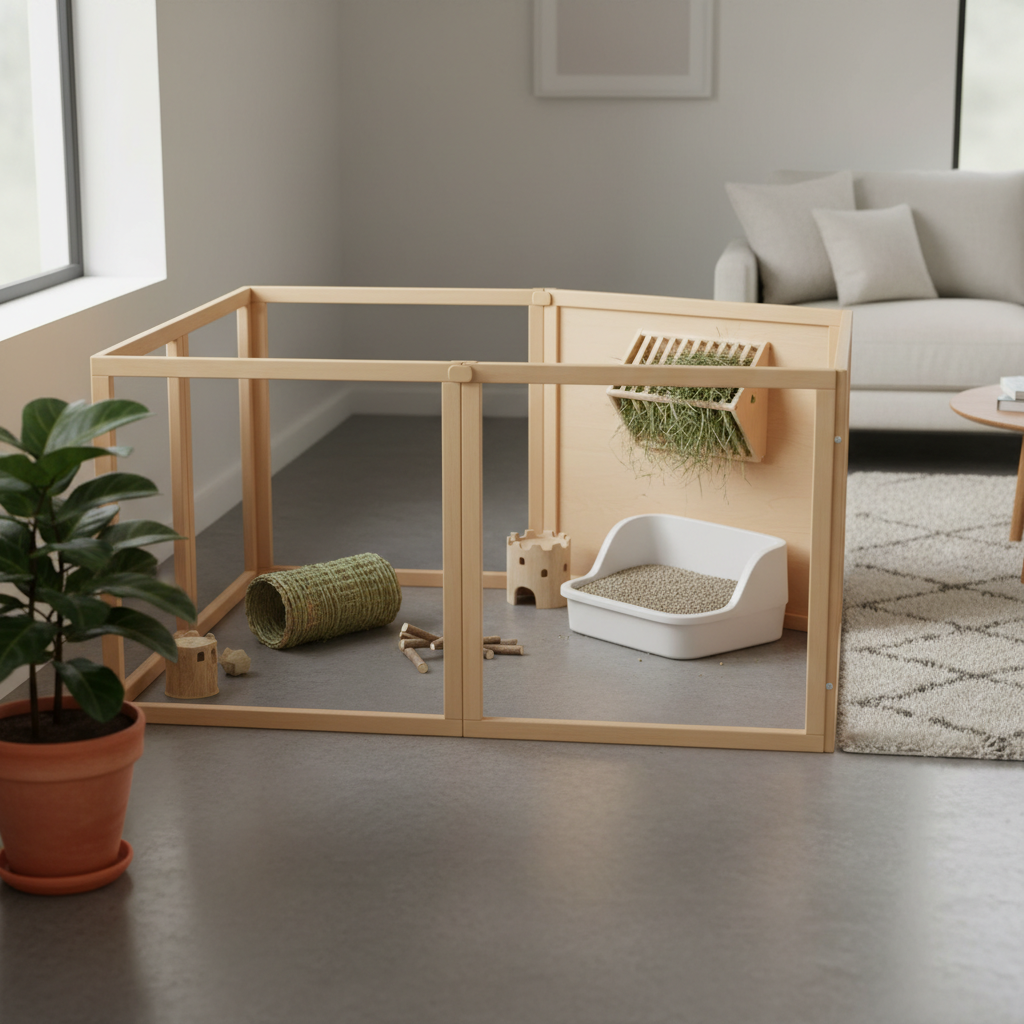
Why “corner” and “low entry” matters (and when it doesn’t)
A corner pan works best when your rabbit already shows a strong corner preference. Many rabbits do, but not all, and some switch corners when you change flooring, add a hideout, or move the pen.
Low-entry designs help when the step-over height is the bottleneck. If your rabbit stands at the edge, pees partially in and partially out, or seems reluctant to hop in, that lowered front lip can be the difference between “mostly trained” and “finally consistent.”
- Older rabbits or those with mobility limits may avoid high sides.
- Large breeds often need more floor space than typical triangular corner pans provide.
- Long-haired rabbits can track wet litter, so better absorbency matters more than the pan shape.
On the other hand, if your rabbit pees wherever it eats hay, the real fix may be hay placement, not the pan style.
Quick self-check: are you a good fit for a low-entry corner pan?
If you’re trying to decide whether to switch, run through this fast checklist. You’re looking for patterns, not perfection.
- Your rabbit pees in one main corner at least 70% of the time.
- You see “edge-peeing” where urine hits the rim or dribbles outside.
- Your rabbit hesitates before entering, especially on slick floors.
- You’re cleaning frequent misses near the same corner wall.
- You’re supporting a senior rabbit, or you suspect sore hocks or stiffness (a vet can help confirm).
If none of these sound familiar and your rabbit pees in the middle of the pen, a bigger rectangular box often trains faster than a corner triangle.
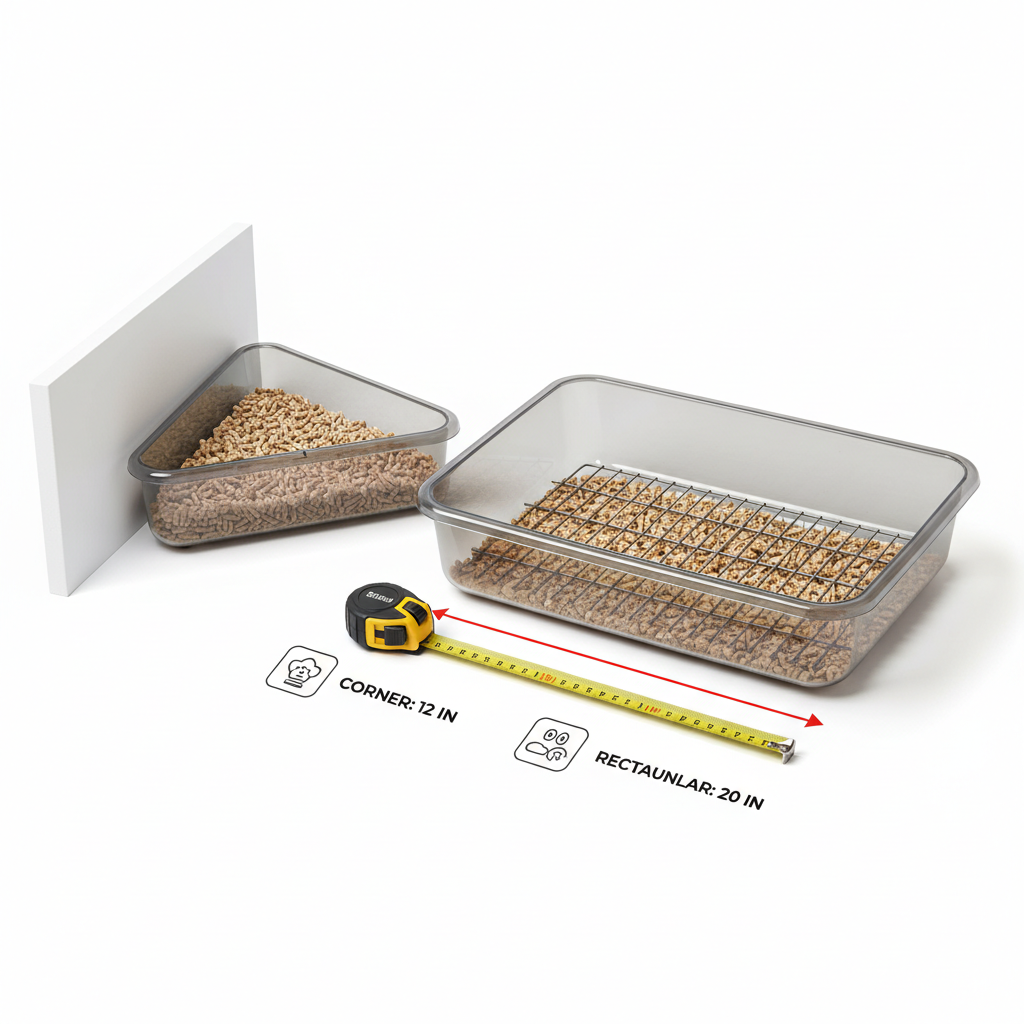
Choosing the right rabbit litter box corner size and entry height
Most frustrations come down to size. A rabbit can be “trained” and still miss if the pan forces an awkward stance.
Size: room to sit, turn, and pee
- Minimum rule of thumb: your rabbit should fit fully inside with enough space to turn around without climbing the sides.
- If your rabbit regularly pees with both back feet outside the pan, it’s not stubborn—your box is probably too small.
- For bigger rabbits, a corner pan may look neat but can become a daily cleanup task. A large rectangular box placed in the corner often works better.
Entry height: low in front, still tall enough elsewhere
A low-entry lip typically helps with access, but you still want higher sides on the other edges to prevent spray and litter kick-out. If your rabbit backs into the corner to pee, taller back walls matter.
Surface and stability
If the pan slides, your rabbit may stop trusting it. Choose a design with a grippy base, or place it on a rubber mat that’s safe for pets and easy to wipe down.
What to put inside: litter, pads, hay placement (the stuff that actually changes results)
The pan is only half the system. The contents and setup decide whether a rabbit litter box corner stays usable for days or turns gross by tonight.
According to House Rabbit Society, paper-based litter can be a safer choice than clumping clay cat litter, which rabbits may ingest while grooming.
- Base layer: paper pellets, paper crumble, or kiln-dried pine pellets (avoid aromatic softwood shavings in many cases; if unsure, ask a rabbit-savvy vet).
- Top comfort layer (optional): a small handful of hay, especially for rabbits that like to eat while using the box.
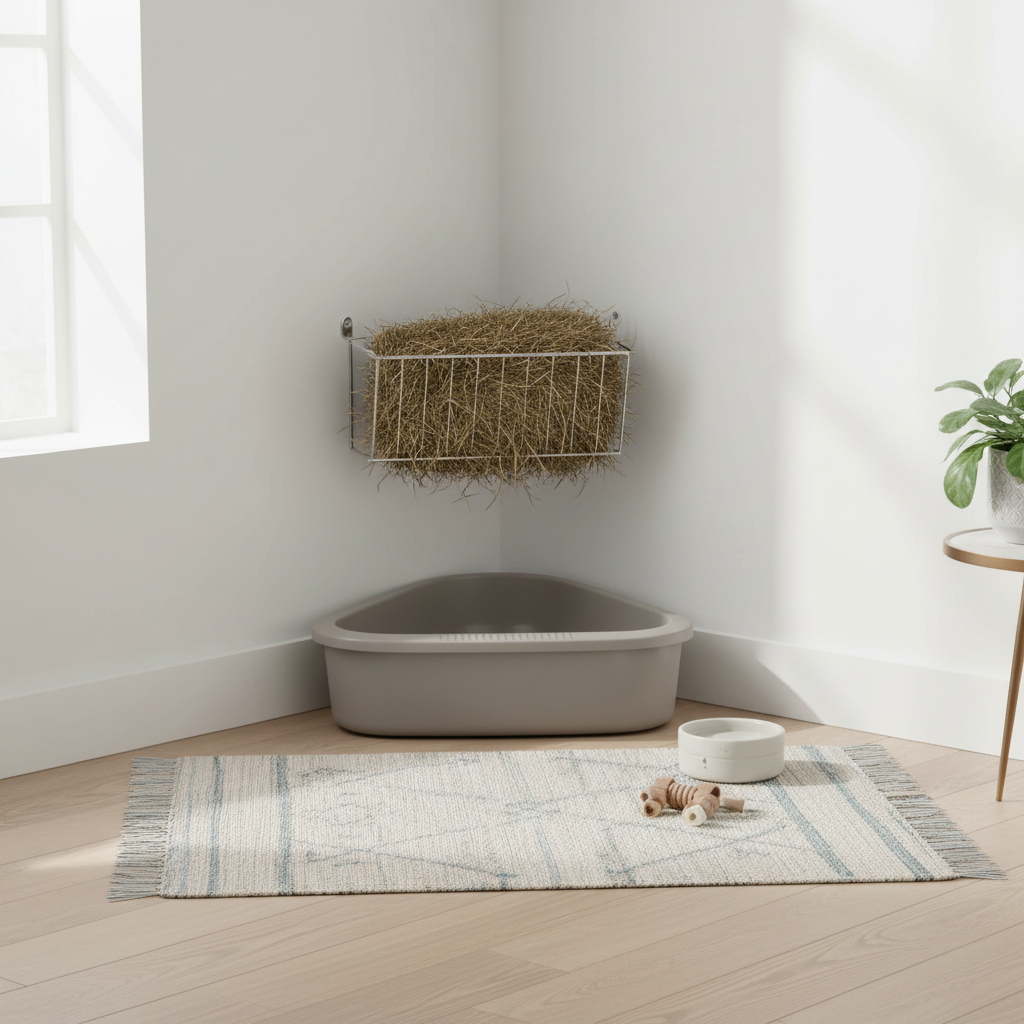
- Hay placement: put hay in or directly above the box; many rabbits poop where they eat hay, so this can “pull” habits into the pan.
- Avoid: clumping clay, scented litter, and dusty options that can irritate sensitive noses.
If you use a grate (some corner pans include one), watch your rabbit’s behavior. Some rabbits tolerate it, others avoid it or get sore. If you notice redness, limping, or reluctance to enter, consider a different setup and talk with a professional.
Setup steps that usually improve corner accuracy in 48 hours
When a rabbit misses, people often buy a third box. Sometimes that helps, but you can usually get more improvement by tightening the setup.
- Lock the location: place the box in the corner your rabbit already chooses, not the corner that looks best.
- Make the “wrong corner” boring: clean accidents with an enzyme cleaner, then block access briefly with a hideout or pen panel.
- Make the box rewarding: keep hay right there, refresh it often, and consider a small treat after the rabbit uses it (especially during re-training).
- Reduce slipping: add a washable rug or traction mat leading to the entry.
- Lower the chaos: if you free-roam, temporarily shrink the space until habits stabilize, then expand again.
One small but real-world tip: keep the box “clean enough.” If it gets soaked, some rabbits choose a new corner rather than stepping into wet litter.
Corner pan vs rectangular box: an honest comparison
If you’re stuck between “it fits the corner” and “it actually works,” this table helps you choose without overthinking.
| Option | Where it shines | Common downside | Best for |
|---|---|---|---|
| Low-entry corner pan | Encourages corner use, easy access | Often too small for large rabbits | Small to medium rabbits with strong corner habits |
| High-sided corner pan | Better spray control | Harder entry for seniors | Rabbits that pee high or back into the corner |
| Large rectangular box in a corner | Roomy, fewer misses, easier to line | Takes more floor space | Big rabbits, messy diggers, multi-rabbit homes |
| Disposable tray + litter | Fast cleanups, convenient travel option | Ongoing cost, can shift around | Temporary setups, recovery pens |
Mistakes that keep happening (and what to do instead)
- Too little litter: urine pools and smells faster. Add enough absorbent material so the top stays relatively dry between changes.
- Cleaning with ammonia-based products: the smell can resemble urine and may invite repeat marking. Use an enzyme cleaner and rinse well.
- Expecting “one box forever”: new rugs, new roommates, puberty, or stress can trigger setbacks. That’s normal; adjust the setup rather than punishing.
- Using a tiny triangular box for a big rabbit: it looks neat in photos, but real life gets messy. Size up or switch styles.
- Ignoring posture changes: if your rabbit suddenly misses after being consistent, discomfort might be involved. Don’t assume it’s behavior.
When to get professional help (health and behavior flags)
Accidents can be training, but they can also be a health sign. According to the American Veterinary Medical Association (AVMA), changes in urination habits can be associated with medical issues in many pets, and it’s reasonable to ask a veterinarian when patterns shift.
- Your rabbit strains to urinate, produces very small amounts, or seems painful.
- You see blood-tinged urine repeatedly, or a sudden strong odor change that persists.
- Frequent accidents appear “out of nowhere” after months of consistency.
- Your rabbit stops using the box and also eats less or seems lethargic.
For bonding issues in multi-rabbit homes, a rabbit-experienced rescue or behavior consultant can help you troubleshoot territory problems without guessing.
Key takeaways + what to do next
If you want a cleaner setup fast, match the box to your rabbit’s body and habits, not your floor plan. A low-entry corner pan is most useful when access and edge-misses are the real problem, and it works best when hay pulls your rabbit into the box consistently.
- Action step 1: confirm your rabbit’s “chosen corner,” then place the box there with hay above it.
- Action step 2: if misses continue, upgrade size before you buy extra accessories.
FAQ
What size rabbit litter box corner should I buy for an adult rabbit?
Pick one your rabbit can sit fully inside and turn around comfortably. If your rabbit’s back end hangs out, you’ll see repeat misses no matter how “trained” they are.
Is a low-entry litter box better for senior rabbits?
Often, yes. A lower front lip can reduce hesitation and messy half-in, half-out peeing. If you suspect arthritis or sore hocks, it’s worth discussing comfort changes with a rabbit-savvy vet.
Why does my rabbit pee next to the corner box instead of inside it?
Most commonly: the box is too small, the litter feels uncomfortable, or the box shifts when they step in. Stabilize it, add traction, and consider sizing up before assuming stubbornness.
Can I use cat litter in a rabbit litter box?
Many cat litters aren’t a good match for rabbits, especially clumping clay and scented options. Paper-based or pellet-style options are commonly used; if you’re unsure, ask a veterinarian who treats rabbits.
How often should I clean a corner litter box?
It depends on rabbit size, diet, and absorbency, but you’re aiming to prevent soggy spots. Many people spot-clean daily and do a fuller change every few days, adjusting based on odor and wetness.
Do corner litter boxes work for large breeds like Flemish Giants?
Sometimes, but many corner pans are simply too small. A large rectangular box placed in the corner usually provides better posture and fewer accidents.
Should I put hay inside the litter box or next to it?
Inside or directly above tends to work well because rabbits often poop while eating hay. If your rabbit eats hay elsewhere, move the hay first and let the habit follow.
If you’re setting up a rabbit litter box corner area and want a more “set it up once, then tweak lightly” approach, it can help to choose the pan size, litter type, and hay placement as one system, not separate purchases, that’s usually where the cleanest results come from.