
Ferret treat small bite sounds simple, but picking the “healthy” option gets tricky fast when labels look like cat treats, ingredients read like candy, and your ferret acts like every bite is a life-or-death negotiation.
If you use treats for bonding, nail trims, litter training, or meds, the wrong bite can quietly add up, stomach upset, weight gain, even encourage picky eating. The right bite does the opposite, it keeps training smooth without messing with the diet your ferret actually needs.
This guide breaks down what “healthy” usually means for ferrets, how to size a small bite, which ingredients are red flags, and a few realistic treat ideas that work in everyday American homes.
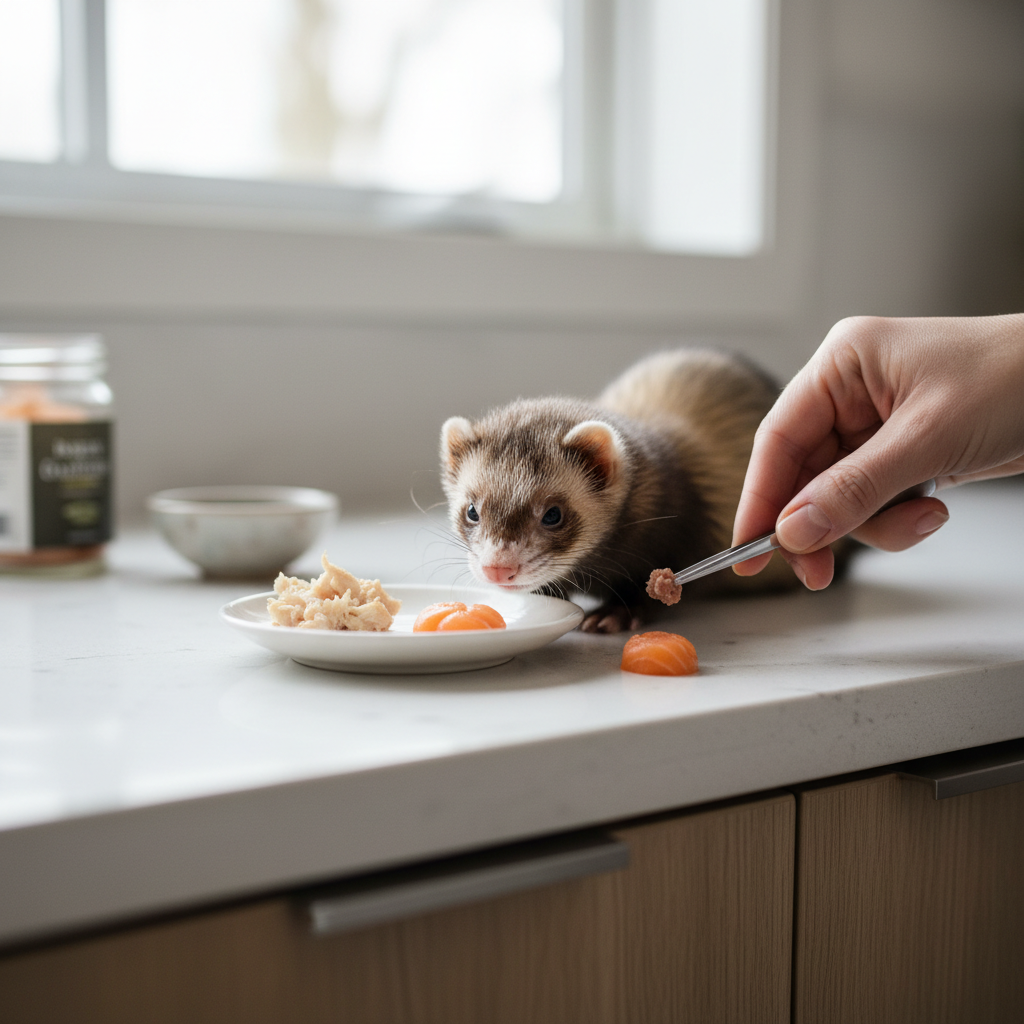
What “Healthy” Means for a Ferret Treat (Not for a Dog or Cat)
Ferrets are obligate carnivores, meaning their bodies are built to run on animal-based protein and fat, not carbs. So a treat that’s “healthy” for many pets can be a mismatch here.
In most households, a healthy small bite treat for ferrets usually means:
- Meat-first ingredients (real animal protein, minimal fillers)
- Very low sugar and low starch (no sweeteners, limited plant matter)
- Easy to chew and swallow without crumbling into dusty bits
- Minimal ingredients, especially if your ferret has a sensitive stomach
According to the American Veterinary Medical Association (AVMA), pet treats should be fed in moderation and not replace a complete, balanced diet. For ferrets, that “moderation” tends to matter more because even small carb-heavy extras can throw off the routine quickly.
Why “Small Bite” Is a Bigger Deal Than People Expect
A “small bite” is partly about calories, but it’s also about behavior. Ferrets often stash food, chew fast, and turn treat time into a habit. Big, rich treats can create big, messy consequences.
- Training works better when the reward is tiny and frequent, not huge and rare.
- Portion control gets easier, especially for ferrets prone to weight gain.
- Safety improves because oversized pieces can be gulped, and crumbly treats can irritate or be inhaled.
Practical sizing: many owners do well with pieces about the size of a pea or smaller, then adjust for your ferret’s chewing style. If your ferret “grabs and runs,” go even smaller.
Ingredient Red Flags: What to Avoid in Store-Bought Treats
Most “ferret treats” on shelves are still closer to generic pet snacks than species-specific nutrition. You don’t need perfection, but you do need to dodge the common troublemakers.
Common ingredients that often cause problems
- Sugar and sweeteners (sucrose, corn syrup, molasses, honey): can encourage cravings and poor diet balance
- Grains and starches (wheat, corn, rice, potato): ferrets typically digest these poorly
- Fruit (raisins, banana, apple): sounds “natural,” but adds sugar and fiber ferrets don’t need
- Dairy: many ferrets handle it poorly, diarrhea is common
- Highly flavored jerky (smoke flavor, spices, garlic/onion powders): not worth the risk
According to the FDA, some pet jerky-style treats have been associated with illness complaints in the past, and while that doesn’t mean every jerky treat is unsafe, it’s a good reason to stick to simple ingredients and reputable brands, and to stop any new treat if you notice vomiting, diarrhea, or lethargy.
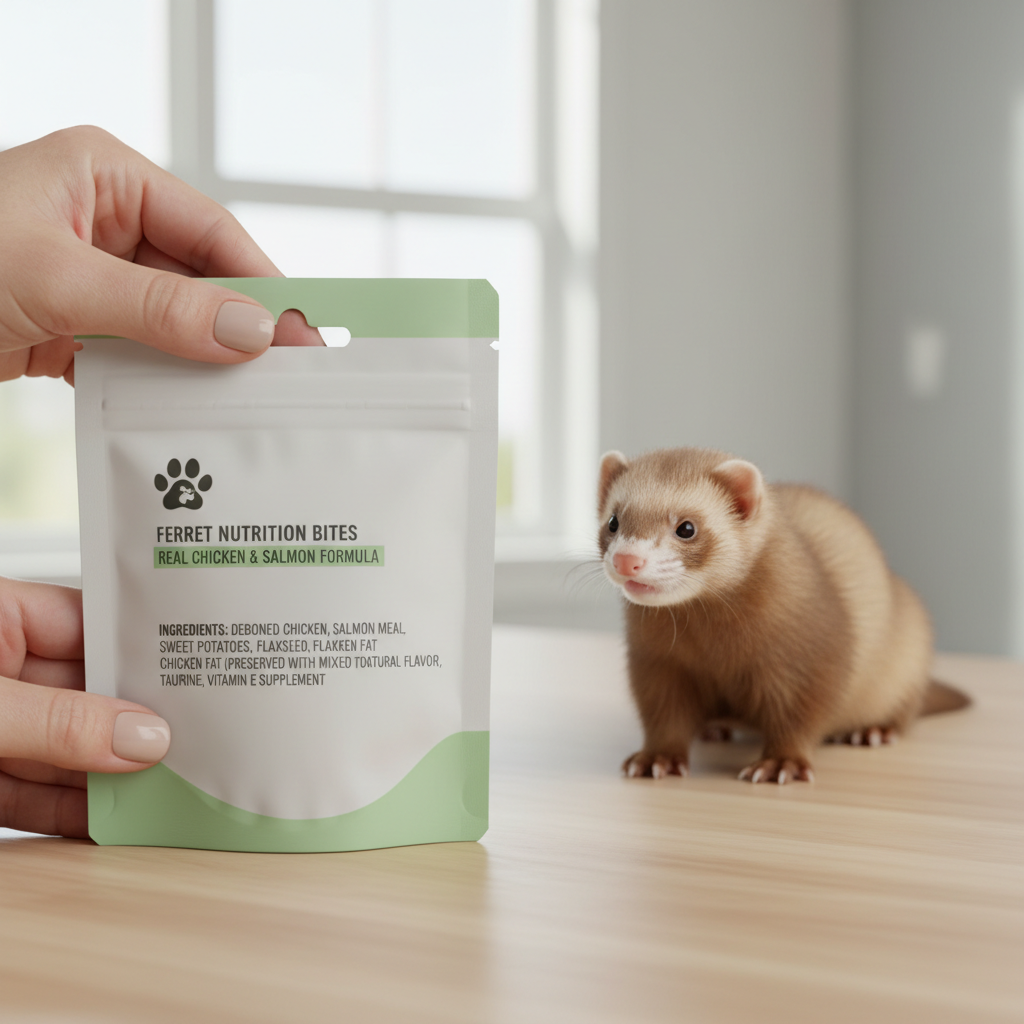
Quick Self-Check: Is Your Treat Choice Actually Working?
If you’re not sure whether your current ferret treat small bite is “healthy enough,” this quick check usually tells the story in a week.
- Stool changes: looser, smellier, or more frequent after treat time
- Energy and appetite shifts: skipping regular food but begging for treats
- Skin/coat: dull coat can have many causes, but frequent sugary treats rarely help
- Behavior: treat obsession, nipping for snacks, or refusing training without them
- Stashing: hiding pieces that later spoil, especially moist treats
If two or more show up, your best move is not “try another random treat,” it’s to simplify: smaller bites, fewer ingredients, less frequency.
Healthy Ferret Treat Options (Realistic, Not Fancy)
You can keep this simple. The safest “healthy” direction is usually animal-based, unseasoned, and tiny portions.
Simple options many ferrets accept
- Freeze-dried single-ingredient meats (chicken, turkey, salmon) broken into tiny pieces
- Plain cooked egg (small smear or crumb, not a whole serving)
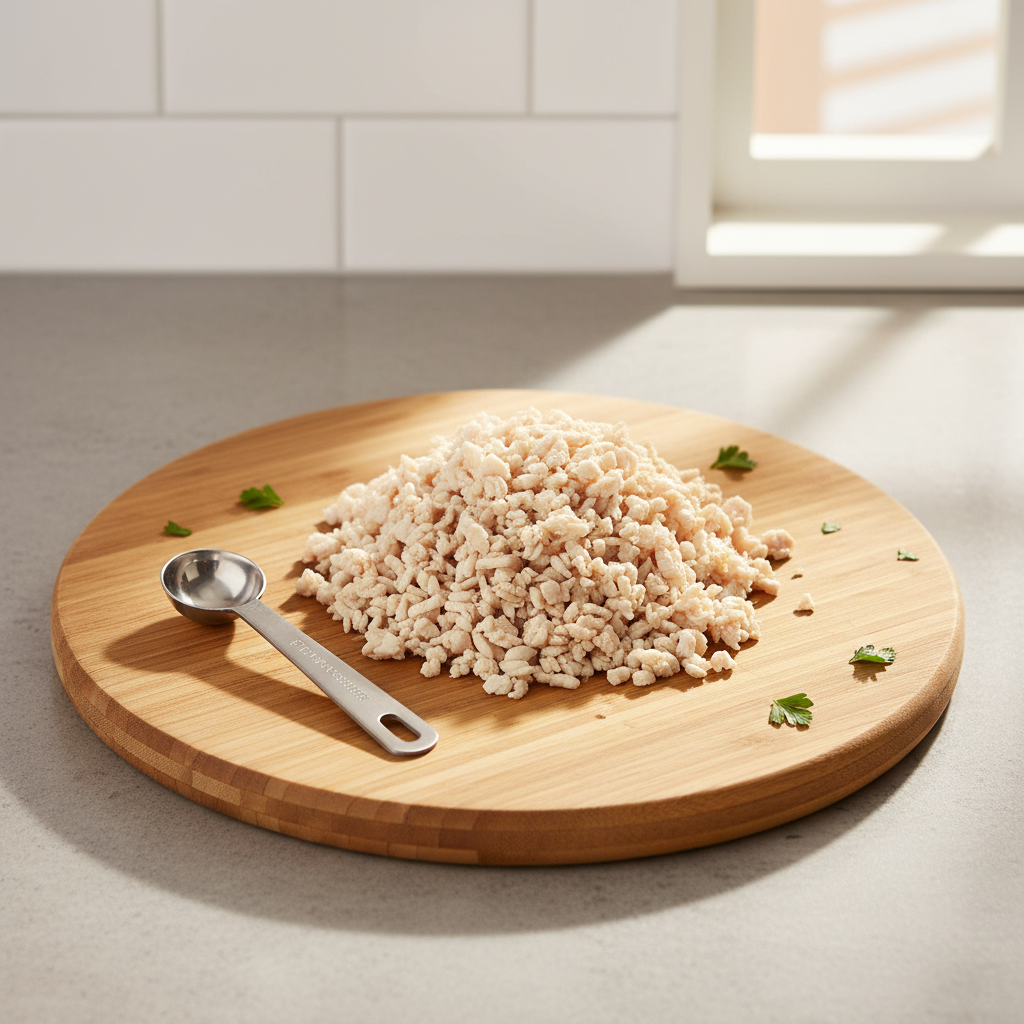
- Unseasoned cooked meat (chicken thigh, turkey) minced fine
- High-protein ferret-appropriate paste used sparingly for meds or grooming days
One thing I’ll say plainly: treats that look like colorful biscuits, yogurt drops, or fruit chews might be easy to find, but they’re rarely aligned with what ferrets do well on.
Portion and Frequency: A Practical Guide (With Table)
Most treat problems aren’t about one bite, they’re about repetition. Keep the bite small, keep the pattern predictable, and you avoid the “my ferret won’t eat dinner” spiral.
Here’s a practical baseline many owners use, then adjust based on your ferret’s weight, age, and vet advice.
| Goal | Type of Treat | Small Bite Size | Typical Frequency | Notes |
|---|---|---|---|---|
| Training (litter, recall) | Freeze-dried meat | Rice-grain to pea size | 3–10 bites per session | Count bites, not “handfuls” |
| Nail trims | Meat paste | Thin smear | Only during trims | Good for distraction, easy to overdo |
| Bonding / enrichment | Minced cooked meat | Pea size | 1–3 bites/day | Remove leftovers to prevent stashing |
| Special occasion | Egg | Small crumb | Occasional | Some ferrets get loose stool if too much |
If your ferret is on a therapeutic diet or has a history of GI issues, treat choices get more sensitive, it’s worth checking with a ferret-experienced veterinarian.
Step-by-Step: How to Introduce a New Small Bite Treat Without Drama
Ferrets can be suspicious. If you swap treats too fast, you might think they “hate” it when they just need time.
- Start with one new option and keep everything else stable for a few days.
- Offer a micro piece, then walk away for a minute, some ferrets prefer to inspect privately.
- Pair with a routine they already like, such as post-play calm time.
- Watch the next stool before you increase the amount.
- Don’t “bribe-feed” by skipping meals, it can backfire into picky eating.
If you’re using the treat for training, keep the ferret treat small bite consistent for a couple weeks, changing flavors constantly often reduces motivation because the animal keeps reassessing what you’re offering.
Common Mistakes That Make “Healthy Treating” Go Sideways
- Using treats to replace meals: it feels like bonding, but it can destabilize diet habits.
- Over-relying on paste treats: convenient, yes, but easy to overserve because it doesn’t look like “food.”
- Not accounting for stashing: moist treats hidden in bedding can spoil and smell, and some ferrets still try to eat them later.
- Assuming “grain-free” means ferret-safe: many grain-free snacks still use potato, pea, or tapioca starch.
- Ignoring dental and chew behavior: if your ferret swallows without chewing, go smaller and softer, and ask a vet about dental checks.
When to Get Professional Help (It’s Not Overreacting)
Treats seem minor until they aren’t. If any of the following happens, it’s safer to pause treats and talk to a veterinarian, ideally one who sees ferrets regularly.
- Repeated vomiting, persistent diarrhea, or dark/tarry stool
- Sudden refusal of normal food for more than a day
- Rapid weight change, dehydration signs, or unusual lethargy
- Choking, gagging, pawing at the mouth after a treat
According to the American Animal Hospital Association (AAHA), changes in appetite, vomiting, and diarrhea are common signs that warrant veterinary attention across companion animals, and ferrets can decline quickly, so “wait and see” sometimes costs time.
Key Takeaways (Keep This Part Simple)
- Healthy usually means animal-based, low sugar, low starch, minimal ingredients.
- Small bite matters for safety, training, and preventing treat-driven picky eating.
- If your ferret’s stool or appetite changes, scale back and simplify the treat plan.
- When in doubt, ask a ferret-experienced vet, especially for chronic GI issues.
Conclusion: A ferret treat small bite works best when it’s boring in the ingredient list and tiny in the portion. If you pick one meat-forward option your ferret tolerates well and keep it truly small, you get the benefit of treats without turning snack time into a health project.
If you want an easy next step, choose one single-ingredient meat treat, portion it into pea-size bits, and use it only for one purpose this week, training or nail trims, then reassess stool, appetite, and behavior before expanding.
FAQ
What is the healthiest ferret treat small bite for daily training?
Many owners do well with single-ingredient freeze-dried meat broken into tiny pieces, because it stays high-protein and doesn’t add much sugar or starch. Keep bites very small so you can reward often without overfeeding.
Can I give my ferret fruit as a “healthy” snack?
In many cases, fruit adds sugar and fiber that ferrets don’t handle well. A tiny taste likely won’t cause an emergency for every ferret, but it’s rarely a smart routine treat, especially if stool gets loose afterward.
Are “grain-free” cat treats okay for ferrets?
Sometimes, but read past the front label. Grain-free products often replace grains with potato, pea, or tapioca starch, which still pushes carbs up. If you use cat treats, look for meat-first, low-carb options and keep portions tiny.
How many treats per day is too many for a ferret?
There’s no universal number because it depends on size, activity, and the treat itself. A good real-world rule is to count total bites, if you’re doing multiple sessions per day, make each reward smaller rather than adding more pieces.
What signs tell me a treat is upsetting my ferret’s stomach?
Loose stool, increased odor, vomiting, or a sudden change in appetite after introducing a treat are common clues. If symptoms repeat, stop the treat and consider asking a veterinarian, especially if your ferret seems tired or dehydrated.
Is cooked chicken a safe treat for ferrets?
Plain, unseasoned cooked chicken in tiny pieces is commonly used as a treat. Avoid skin seasoned with salt or spices, and don’t leave leftovers around because many ferrets stash moist food.
What treats help with nail trimming without overfeeding?
Paste treats can work because they distract, but they’re easy to overserve. Use a thin smear rather than a big squeeze, and reserve it for trims only, so it stays special and doesn’t become a daily habit.
If you’re currently juggling picky eating, loose stools, or a treat routine that keeps ballooning, you may prefer a simpler plan with one or two ferret-appropriate options and a clear portion strategy, it’s usually easier to stick to and easier to troubleshoot.