
cat interactive puzzle feeder slow eat is one of the simplest ways to slow down a cat that inhales meals, while also giving their brain something to do besides yelling at you at 5 a.m.
If your cat eats too fast, you’ve probably seen some version of this: loud gulping, frantic pacing around the bowl, then a “why did I do that” moment that can include spit-up or begging again. Not every fast eater has a medical issue, but the pattern is common enough that it’s worth addressing early.
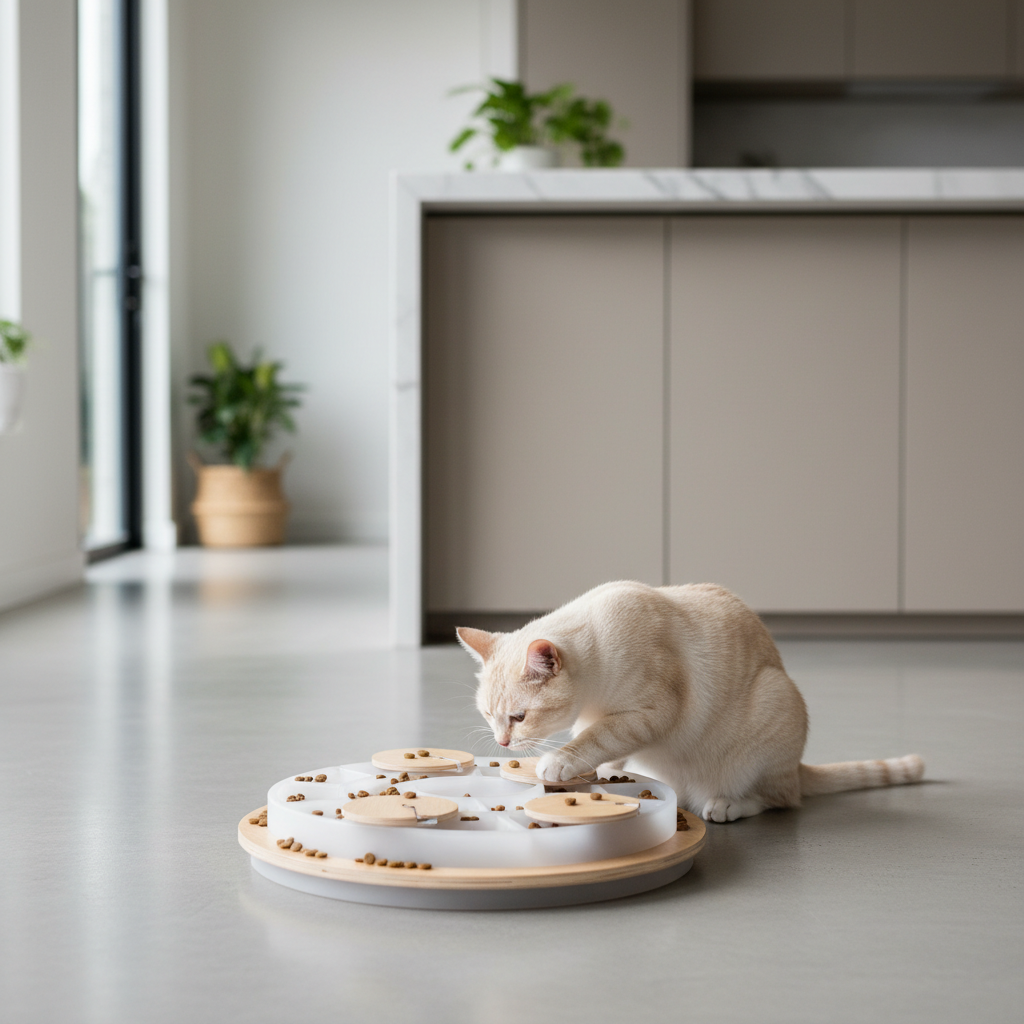
This guide breaks down why cats rush food, how to tell if slow feeding is the right move, and how to pick and introduce a puzzle feeder without creating a new problem, like frustration or food refusal.
Why some cats eat too fast (and why slow feeding often helps)
Fast eating is usually a mix of habit, emotion, and environment, not “bad behavior.” In many homes, the bowl becomes the day’s main event, so of course your cat treats it like a race.
- Competition or food insecurity: multi-cat homes, past history of scarcity, or even just the feeling that food might disappear.
- Boredom and low enrichment: if meals are the only stimulation, eating becomes a self-soothing routine.
- Learned speed: kittens that were weaned early or had to compete may keep that pattern.
- Meal schedule mismatch: long gaps between meals can make cats frantic at the bowl.
- Possible health contributors: parasites, dental pain, GI discomfort, or conditions that increase appetite can play a role, so keep your radar on.
According to the American Animal Hospital Association (AAHA), vomiting can be a sign of many conditions, and persistent changes in appetite or recurring vomiting are reasons to speak with a veterinarian. A puzzle feeder is a tool, not a diagnosis.
Quick self-check: is a puzzle feeder the right fit for your cat?
Before you buy anything, get clear on what you’re trying to fix. A cat interactive puzzle feeder slow eat approach tends to work best when the main issue is speed, boredom, or mild food anxiety.
Green lights
- Your cat finishes meals in under 1–2 minutes and seems keyed up beforehand
- You see occasional regurgitation after fast eating (not frequent vomiting for other reasons)
- Your cat is curious, food-motivated, and enjoys batting toys or hunting kibble
Use extra caution
- Your cat is underweight, elderly, or has limited mobility
- Your cat has a history of stress around food and may quit eating when frustrated
- You feed mostly wet food and the feeder you want is hard to clean thoroughly
Pause and consult a vet if you notice this
- Repeated vomiting, weight loss, diarrhea, lethargy, or sudden appetite changes
- Signs of dental pain: dropping food, pawing at mouth, bad breath that’s new
Types of cat puzzle feeders (and what each does well)
Puzzle feeders aren’t all the same. Some slow eating by adding physical obstacles, others by turning meals into a “find and earn” game, and a few do both.
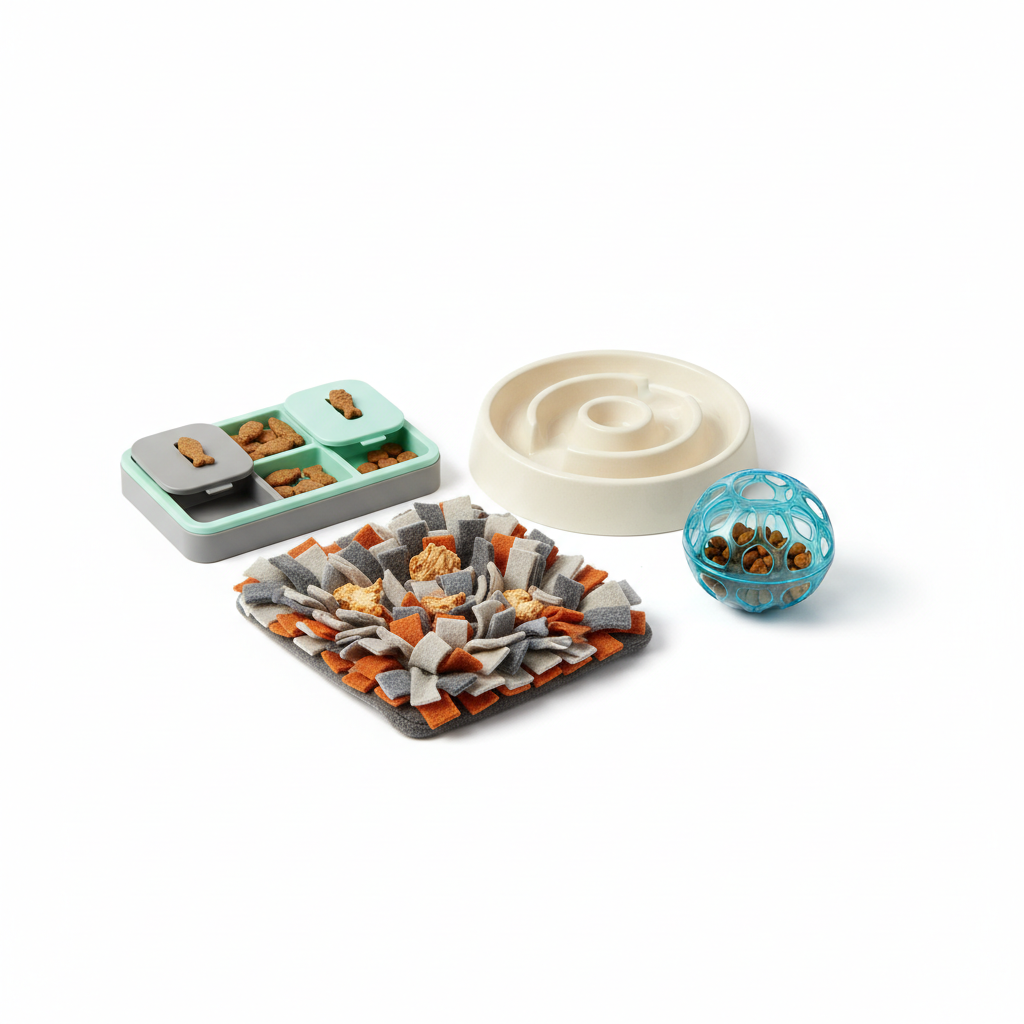
What to choose: a practical comparison
| Type | Best for | Watch-outs |
|---|---|---|
| Slow feeder bowl (ridges/maze) | Beginners who just need slower pacing | Some cats learn the “best lane” fast; wet food can get messy |
| Rolling dispenser ball | High-energy cats who like chasing | Can be loud on hard floors; may frustrate timid cats |
| Puzzle tray with cups/sliders | Food-motivated problem-solvers | Too hard at first can cause food refusal |
| Snuffle mat (for dry food) | “Nose work” style hunting, calmer pacing | Needs frequent washing; not ideal for cats that shred fabric |
| Food scattering / multiple mini piles | Budget option, anxious cats who need easy wins | Not great if you have dogs or multiple cats competing |
How to introduce a puzzle feeder without stressing your cat
Most failures happen here. People buy a “Level 3” puzzle, dump a full meal in, and then feel confused when the cat stares like you’ve betrayed them. Go slower than you think you need.
- Start easy: leave some pieces exposed so success happens in seconds, not minutes.
- Mix methods: give 70–80% of the meal normally, and the rest in the puzzle for the first few days.
- Set a time limit: if your cat can’t access food after 10–15 minutes, help them “win” or switch back, especially for kittens and seniors.
- Control the environment: quiet spot, no dog hovering, and ideally no other cat looming nearby.
- End on a good note: you want curiosity, not a standoff.
According to the American Veterinary Medical Association (AVMA), environmental enrichment supports animal welfare by encouraging natural behaviors. For many cats, “working” for food scratches that hunting itch in a safe, indoor way.
Real-world setups that work (by scenario)
There isn’t one perfect layout. The goal is slower eating and calmer behavior, not turning dinner into an obstacle course every night.
If your cat gulps and then spits up
- Use a shallow slow-feeder bowl or a wide puzzle tray, avoid deep cups that push whiskers inward.
- Split daily food into 3–5 smaller servings, even if two are “mini meals.”
- Prioritize consistency over difficulty; easy puzzles used daily beat hard puzzles used once.
If you have multiple cats
- Feed separately, ideally with a door between them, at least during the transition.
- Use two different puzzle types so one cat can’t “specialize” in stealing from the other.
- Watch body language, a cat that looks away, crouches, or freezes may be intimidated.
If your cat eats fast and demands food all day
- Put part of breakfast in a rolling dispenser and stash it in a safe room to “extend” the meal.
- Rotate puzzles every few days; novelty matters more than complexity for many cats.
- Pair with play: a 3–5 minute wand-toy session before meals can take the edge off.
Common mistakes that make slow feeding backfire
A cat interactive puzzle feeder slow eat plan can backfire when the tool is mismatched to the cat, or when owners push difficulty too quickly.
- Too hard, too soon: frustration can look like walking away, pawing angrily, or meowing at you instead of the feeder.
- Ignoring cleaning needs: wet food residue in crevices can become a hygiene issue; choose designs you’ll actually wash.
- Assuming “more slow” is always better: if meals drag out and your cat can’t finish, you may create stress and weight loss risk.
- Not measuring portions: puzzle feeding can hide how much you’re offering; use a measuring cup or a kitchen scale for consistency.
- Using the puzzle as punishment: the feeder should feel like a game, not a barrier between your cat and food.
Safety and health notes (what matters, what’s hype)
Most puzzle feeders are safe when they match your cat’s ability and are kept clean, but a few points deserve attention.
- Whisker comfort: many cats prefer wide, shallow surfaces; whisker stress can make some cats avoid eating.
- Material choices: smooth, non-porous materials are usually easier to sanitize; replace items that crack or develop sharp edges.
- Time-to-finish: in many households, 10–20 minutes for a meal is plenty; if it becomes a 60-minute project, dial it back.
- Wet food handling: don’t leave wet food sitting out for long periods, especially in warm rooms, when in doubt, use smaller servings.
According to the FDA, pet food handling hygiene matters for household safety; washing hands and cleaning feeding items helps reduce contamination risk. If your cat has a medical condition or special diet, it’s smart to ask your veterinarian which feeder styles fit that plan.
Conclusion: a calmer meal is the real win
If your cat’s meals feel like a speed-eating contest, a well-matched puzzle feeder can slow things down and add healthy enrichment, without turning feeding time into drama. Keep it easy at first, measure portions, and treat “curiosity with progress” as your benchmark.
Action steps: pick one beginner-friendly feeder, introduce it with partial meals for a week, then adjust difficulty based on how your cat behaves, not how the product label ranks it.
FAQ
What is the best cat interactive puzzle feeder slow eat option for beginners?
A simple slow-feeder bowl or an easy puzzle tray usually works well because your cat gets quick rewards. Starting with something that guarantees success reduces the chance they quit.
Can puzzle feeders help with vomiting from eating too fast?
They can help when the issue is regurgitation tied to gulping, but vomiting can have many causes. If it’s frequent, includes weight loss, or seems sudden, a vet check is the safer move.
How long should it take my cat to finish a meal with a puzzle feeder?
Many cats do fine in the 10–20 minute range. If your cat can’t finish or gets visibly frustrated, lower the difficulty or offer part of the meal normally.
Do puzzle feeders work for wet food or only kibble?
Some trays and slow-feeder bowls work with wet food, but cleaning becomes more important. If you dread washing it, you’ll stop using it, so pick a design with fewer tight crevices.
My cat just tips the puzzle over. Is that “cheating”?
It’s normal problem-solving, but if it defeats the purpose, choose a heavier base, a non-slip mat, or a feeder that anchors in place. You want slower eating, not a food spill.
Should I use a puzzle feeder if my cat is overweight?
It can support portion control and reduce boredom eating, but weight management still depends on calories and diet quality. If you’re unsure about target weight or calories, a vet can help set a safe plan.
Can I leave a puzzle feeder out all day for free-feeding?
For dry food, some people do, but it can make intake hard to track and may encourage grazing. If your goal is slowing meals and reducing begging, timed mini-meals often work better.
If you’re trying to reduce gulping without turning meals into a battle, consider building a small “feeder rotation” and keeping one option very easy, so your cat always has a low-stress way to succeed while you dial in the right pace.