
Cat grooming brush long hair needs aren’t just about looks, they’re about comfort: less pulling, fewer mats, and a coat that stays smooth instead of clumping overnight.
If you share your home with a long-haired cat, you’ve probably seen the same cycle, a few skipped brushing days turn into little tangles, then the tangles become tight mats, and suddenly grooming feels like a wrestling match. The right tool won’t make your cat “love” brushing, but it can make the process shorter and gentler.
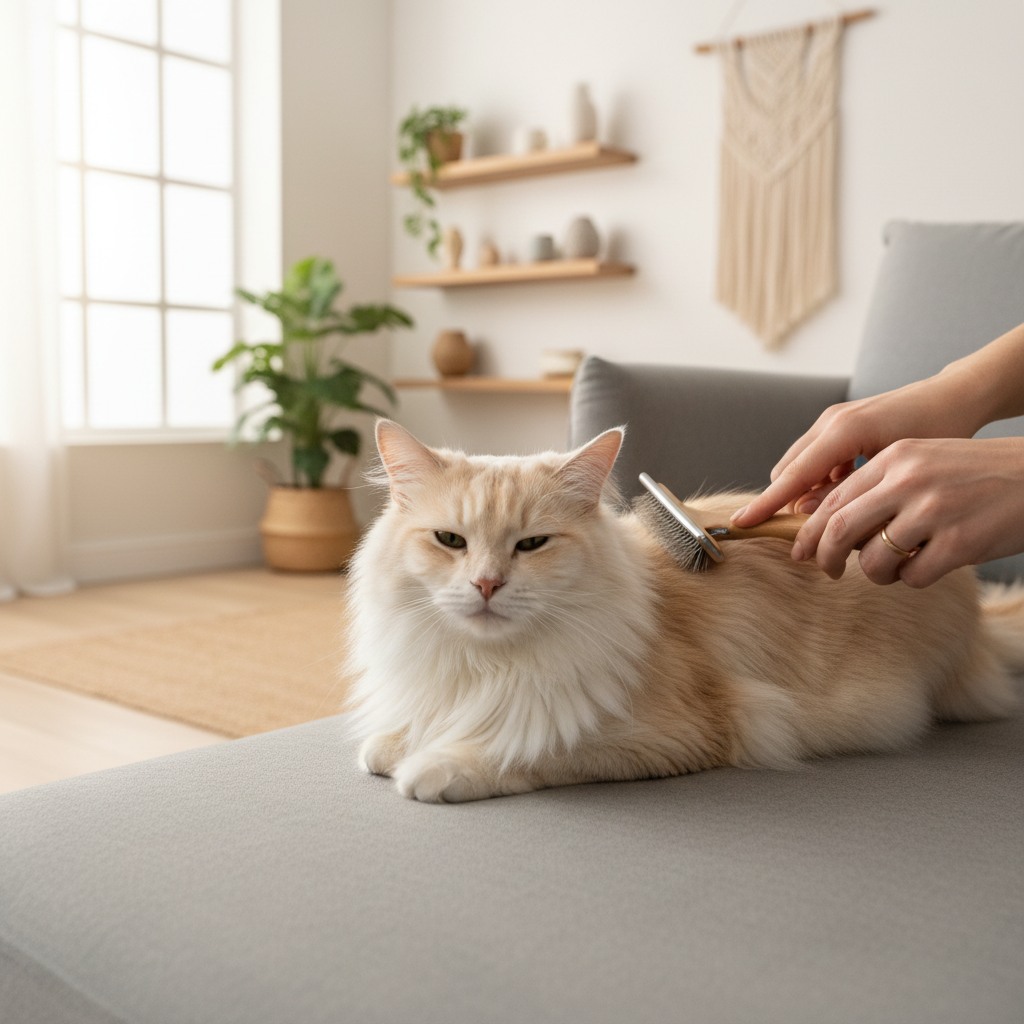
This guide focuses on real-world selection and technique, what brush types actually do, how to tell what your cat’s coat needs, and a simple routine that fits into normal life. I’ll also flag common mistakes that cause most “my cat hates brushing” stories.
Why long-haired cats get mats (and why “smooth” is harder than it looks)
Long hair acts like Velcro. It traps loose undercoat, collects static, and grabs onto tiny bits of dust, litter, and dander, especially around the armpits, belly, behind the ears, and the “pants” on the back legs.
A few factors usually stack together:
- Seasonal shedding that pushes out undercoat faster than you can remove it.
- Friction zones (collars, harnesses, constant lying on one side, rubbing around furniture).
- Moisture from saliva, water bowls, or drool, which makes tangles tighten.
- Sensitivity in certain areas, so you avoid them, and those areas mat first.
According to the American Veterinary Medical Association (AVMA), regular grooming supports skin and coat health and helps you notice issues early. In practice, long-haired coats simply punish inconsistency more than short coats do.
Brush types that matter for long hair (and what each one is really for)
People often buy one brush and expect it to solve everything. For long hair, most households do better with a “two-tool mindset”: one for detangling, one for de-shedding and smoothing.
Slicker brush (fine bent wires)
Great for light tangles and surface fluff. A slicker can also lift loose undercoat, but it can scratch if you press too hard or keep going in one spot.
- Best for: daily/near-daily maintenance, feathering areas
- Watch out for: “slicker burn” from pressure or over-brushing
Stainless steel comb (wide + narrow teeth)
This is the truth-teller. A comb reveals what a brush hides. If the comb cannot pass through, you still have tangles, even if the top looks smooth.
- Best for: checking your work, finishing, working small tangles
- Watch out for: snagging if you yank instead of “teasing” knots
Undercoat rake (widely spaced long teeth)
Useful when shedding ramps up and the undercoat packs in. On some coats it’s a lifesaver, on others it can over-thin if used aggressively.
- Best for: dense undercoat, seasonal blowouts
- Watch out for: overdoing it in one session
De-shedding blade/tool (specialized edge)
These can be effective, but they’re also easy to misuse on long-haired cats, especially if your cat’s coat is silky rather than plush. If you go this route, use a light hand and limit frequency.
- Best for: heavy shedding when used sparingly
- Watch out for: coat breakage, skin irritation
Pin brush (rounded pins)
Feels gentle and can make the coat look pretty, but it often misses the undercoat where mats begin. Think of it as a finishing brush, not a problem-solver.
- Best for: smoothing and distributing natural oils
- Watch out for: false “all good” feeling while mats build underneath
Quick self-check: what does your cat actually need right now?
If you’re unsure which tool to prioritize, use this quick checklist. It saves money and, more importantly, saves your cat’s patience.
- Comb test: Can a wide-tooth comb slide through the chest, armpits, belly edge, and behind the ears? If not, you need detangling before de-shedding.
- Coat density: When you part the fur, do you see a thick “cottony” layer? That suggests undercoat buildup.
- Mat type: Small tangles that separate with fingers are manageable at home; tight mats that feel like hard patches often need careful removal.
- Skin signals: Redness, dandruff, scabs, or a strong odor means slow down and consider veterinary guidance.
- Cat behavior: If your cat tolerates 60 seconds but not 10 minutes, plan micro-sessions instead of forcing a marathon.
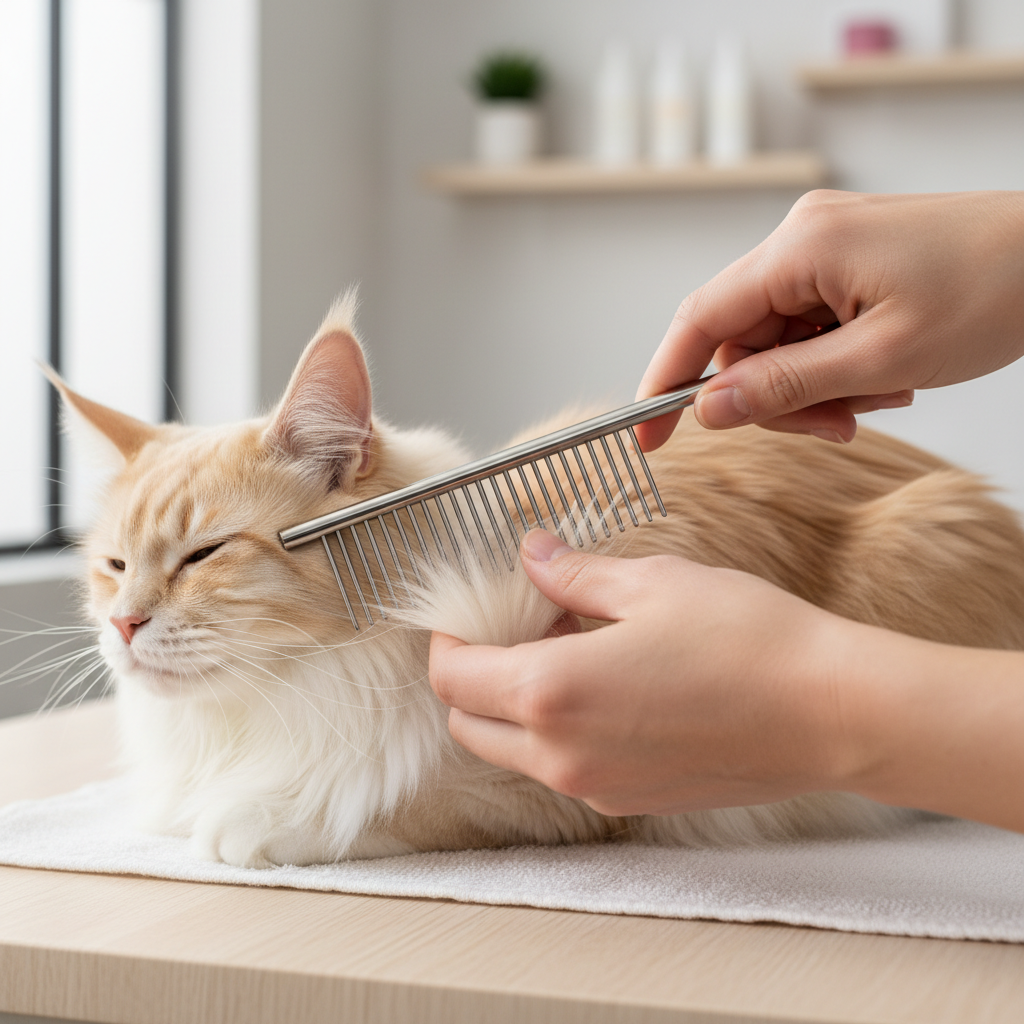
Key point: If you’re buying a cat grooming brush long hair solution because of mats, start with a comb plus a gentle detangling brush, not a heavy de-shed tool.
How to choose a cat grooming brush long hair owners won’t regret
Selection gets easier when you focus on a few practical features, not marketing claims.
- Rounded tips or polished teeth: Less scratchy, especially for slickers and rakes.
- Comfort grip: If your wrist hurts, you’ll brush less often, and then mats win.
- Tooth length: Long enough to reach through the topcoat, short teeth often “skate” on the surface.
- Easy cleaning: One-button self-clean can help, but only if the brush still performs well.
- Coat match: Plush double coats often do well with rakes; silky coats often prefer comb + slicker with a very light hand.
Simple comparison table (realistic expectations)
| Tool | What it’s best at | When it disappoints | Use frequency (typical) |
|---|---|---|---|
| Slicker brush | Surface tangles, daily maintenance | Deep mats close to skin | 3–7x/week |
| Steel comb | Finding/finishing tangles, checking coat | Fast bulk de-shedding | 2–7x/week |
| Undercoat rake | Dense undercoat removal | Silky coats, sensitive skin | 1–3x/week |
| Pin brush | Cosmetic smoothing and shine | Mats underneath | As needed |
A smoother-coat routine you can actually keep up with
The best routine is the one your cat tolerates and you repeat. Most long-haired cats do well with short, predictable sessions that end before they get annoyed.
Step-by-step (5 minutes, flexible)
- Start where your cat likes it: usually cheeks, head, top of back. One minute is fine.
- Work outward: move to shoulders and sides, then the “problem zones” last.
- Use the right sequence: slicker or gentle brush for light detangle, then comb to confirm, then optional rake if undercoat is heavy.
- Hold the fur at the base: with your free hand, especially near mats. This reduces pulling on skin.
- Stop on a good moment: one clean pass with the comb is a win. You can do the belly tomorrow.
If you’re trying to fix a rough patch quickly, split it into micro-sessions: 60–90 seconds, a break, then another short round later. Many cats handle this far better than “let’s get it all done.”
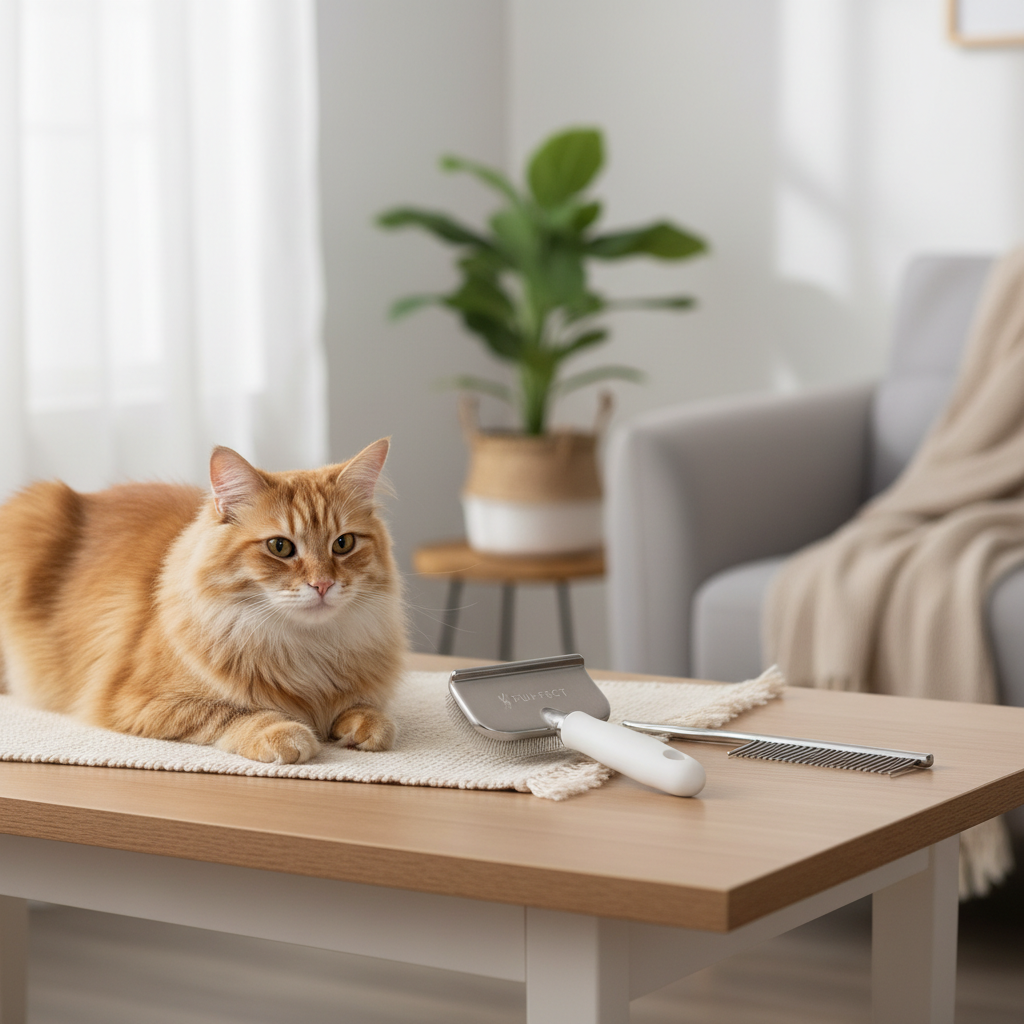
Practical tip: Keep the comb as your “final checkpoint.” A smooth-looking coat is nice, but a comb that glides through is what prevents mats from returning in two days.
Common mistakes that make brushing harder (even with a good tool)
- Brushing only the topcoat: the surface looks neat while undercoat felts underneath.
- Pressing harder to go faster: pressure adds discomfort, discomfort creates avoidance, and avoidance creates more mats.
- Skipping high-friction zones: armpits and behind ears are small areas, but they create most “sudden” mat emergencies.
- Trying to cut mats with scissors: it’s easy to nick skin because cat skin can lift into the mat. If you’re unsure, don’t do it.
- Using de-shed tools too often: over-thinning can irritate skin or change coat texture, especially on some long-haired cats.
According to the American Animal Hospital Association (AAHA), grooming and coat checks can help spot skin problems early. If you notice sores, hot spots, or persistent dandruff, brushing technique alone might not be the main issue.
When to call a groomer or vet (and not feel bad about it)
Some situations are more about safety than effort. Professional help is often the kinder option when mats are tight, widespread, or close to delicate skin.
- Large, dense mats: especially if they feel like hard plates or pull the skin when touched.
- Mats in risky areas: armpits, groin, belly, around nipples, near the tail base.
- Skin changes: redness, bleeding, swelling, strong odor, or your cat cries out when you touch the area.
- Behavior escalation: biting, panicking, or extreme stress during grooming.
For medical concerns, it’s reasonable to ask your veterinarian what’s safe for your specific cat, especially if your cat is older, has arthritis, or has a history of skin conditions.
Conclusion: smoother fur comes from the right combo, not a single “magic” brush
A cat grooming brush long hair routine works best when you match the tool to the job and keep sessions short enough that your cat stays mostly calm. A slicker plus a steel comb solves a surprising number of “rough coat” problems, and an undercoat rake can help when shedding spikes, if you use it lightly.
If you want a simple next step, do the comb test tonight and identify one problem zone. Fix that zone with two short sessions this week, then build outward. Smooth isn’t a one-time project, it’s a rhythm you can maintain.
FAQ
What is the best brush for a long-haired cat with mats?
Many households do best with a steel comb for targeted detangling plus a gentle slicker for daily maintenance. If mats are tight to the skin, a professional groomer is often safer than trying to force a brush through.
How often should I brush a long-haired cat?
It varies by coat type and season, but 3–5 short sessions per week is common, with more during heavy shedding. If you can run a comb through the friction zones without snagging, you’re usually on track.
Is a de-shedding tool safe for long-haired cats?
It can be, but it’s easy to overuse and irritate skin or thin the coat too much. If you try one, use light pressure, limit frequency, and stop if you see redness or your cat becomes unusually reactive.
Why does my cat still get tangles even when I brush?
Often the brushing stays on the topcoat. Add a comb as a “check,” and focus on armpits, behind ears, and the back legs where friction and movement tighten tangles quickly.
Can I use human hair brushes on my cat?
Sometimes a soft human brush can work as a finishing tool, but it usually won’t reach the undercoat or prevent mats. For long hair, pet-specific combs and slickers tend to be more effective.
How do I make brushing less stressful for my cat?
Keep sessions short, start in favorite areas, and stop before your cat gets upset. Many cats accept “micro-grooms” better than long sessions, and a treat afterward can help build a routine.
When are mats a medical concern?
If mats pull the skin, hide sores, smell bad, or your cat seems painful, it’s worth speaking with a veterinarian or groomer. Under the mat, there may be irritation or infection that needs professional care.
If you’re trying to pick a cat grooming brush long hair care feels manageable with, it often helps to describe your cat’s coat type and the exact areas that mat most, then choose tools around that reality instead of a generic “all-in-one” promise.