
Rabbit chew ball hay stuffed toys can be a simple way to keep indoor rabbits busy without turning your baseboards into a snack, but only if the ball, hay, and stuffing choices match your rabbit’s chewing style.
A lot of “chew toys” look cute, then fall apart in a day, or worse, encourage rabbits to nibble materials you never wanted in their mouth. A hay-stuffed chew ball sits in a sweet spot: it’s enrichment, it supports natural foraging, and it can channel chewing into something you control.
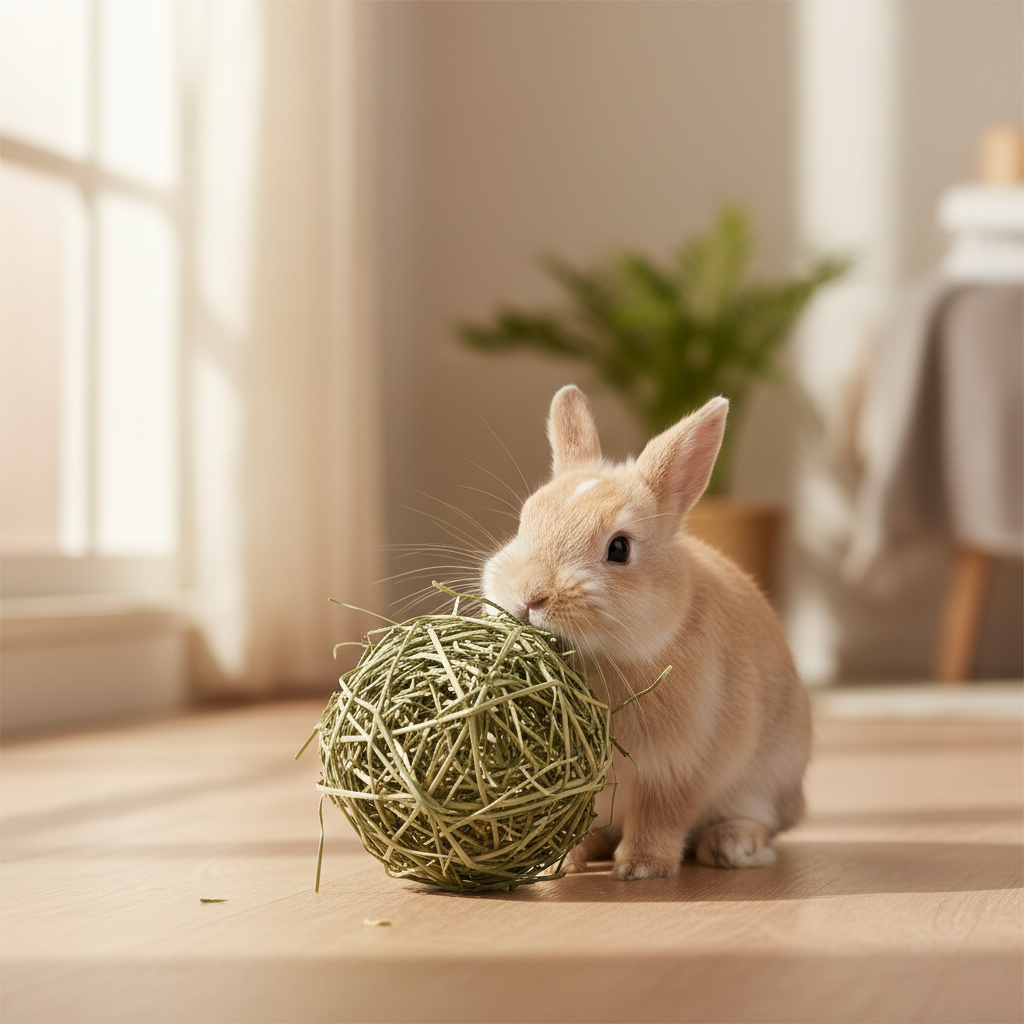
What follows is the practical, real-world version: why these toys work, how to pick safe materials, what to stuff inside, and how to avoid the common “my rabbit ate the toy” panic. You’ll also get a quick comparison table and a step-by-step stuffing routine you can actually repeat.
Why rabbits love hay-stuffed chew balls (and why owners should care)
Rabbits chew for a few overlapping reasons, and it’s rarely “because they’re naughty.” A chew ball stuffed with hay and a few safe add-ins hits multiple needs at once.
- Foraging drive: Rabbits are built to graze and search. Pulling hay strands out of a ball scratches that itch.
- Time-on-task enrichment: Many rabbits get bored fast with a plain wood block. A stuffed ball adds effort and payoff.
- Redirected chewing: If your rabbit targets carpet edges or furniture legs, giving an “approved” outlet often helps.
- Routine building: A daily “stuff and offer” habit can reduce anxious, attention-seeking chewing.
According to the American Veterinary Medical Association (AVMA), environmental enrichment supports animal welfare by encouraging natural behaviors. For rabbits, chewing and foraging are near the top of that list.
Choosing a safe chew ball: materials, size, and build quality
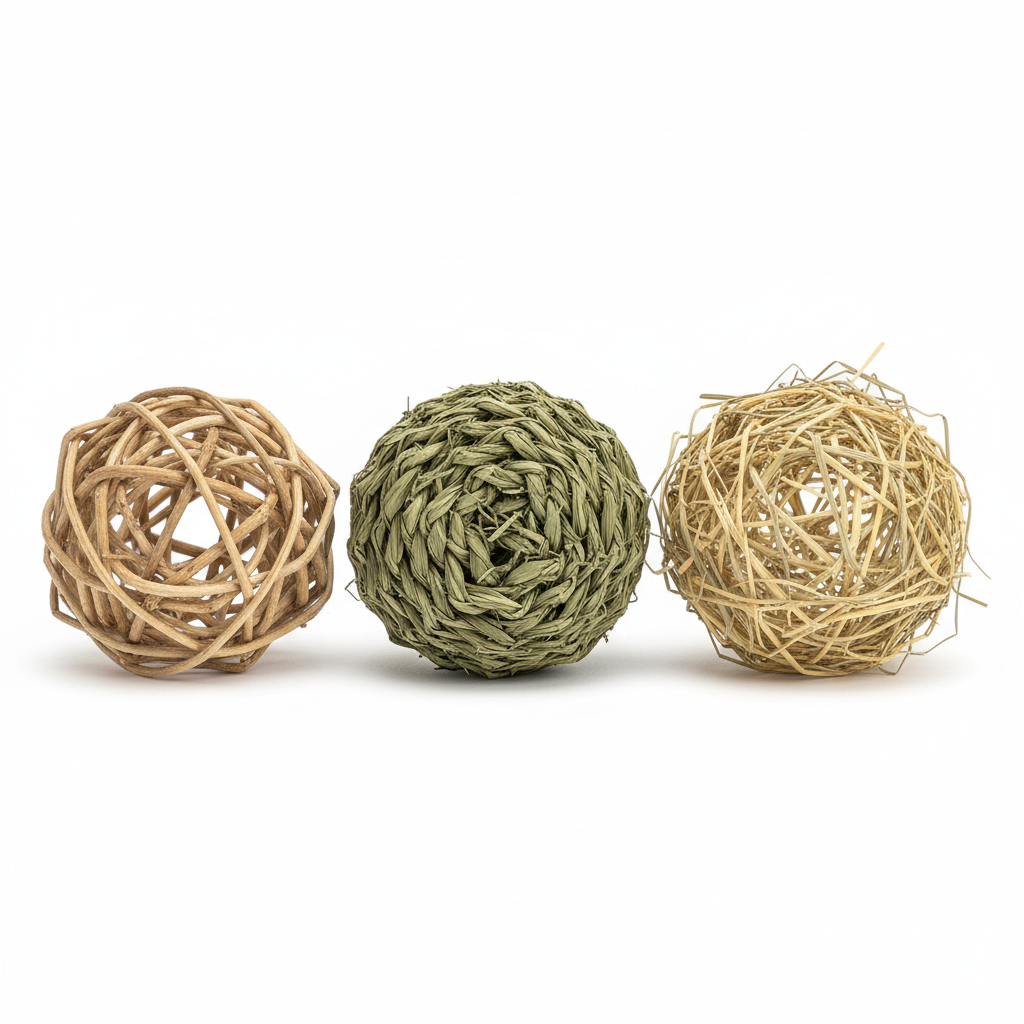
Not every ball marketed for rabbits holds up the same. If you’re shopping in the U.S., you’ll usually see woven grass, rattan/wicker, seagrass, willow, and sometimes plastic “treat balls.” For a rabbit chew ball hay stuffed setup, the safest picks tend to be simple plant fibers with minimal processing.
Materials that usually make sense
- Timothy-hay woven balls: Great match for hay stuffing, typically soft enough for consistent chewing.
- Seagrass mats/balls: Often sturdier, good for strong chewers, but check for tight, clean weaving.
- Willow: A classic rabbit-safe chew material, usually handles repeated bites well.
What to be cautious about
- Dyed fibers: Many are likely low-risk, but if dye transfers when damp, skip it.
- Glue-heavy construction: If you can see or smell adhesive, choose another option.
- Hard plastic treat balls: Some are fine for pellets, but they’re not always satisfying for chewing and can create noise stress for timid rabbits.
Size and “bite management”
Size matters more than people expect. Too small and your rabbit can crush it quickly, leaving sharp-ish ends or big fragments. Too large and they may ignore it. Many adult rabbits do well with a ball roughly the size of a softball, while smaller breeds may prefer slightly smaller.
Stuffing ideas that are actually rabbit-friendly (and what to skip)
The stuffing is where most owners accidentally overdo it. The safest baseline is simple: hay stays the main ingredient. Then you add tiny “high value” pieces for interest.
Go-to stuffing options
- Timothy hay (or your rabbit’s usual grass hay): The bulk, the texture, the habit-former.
- Small herb mix: A pinch of dried parsley, dill, or cilantro can increase interest.
- 1–2 pellets tucked deep: Not a handful, just a couple to encourage exploring.
- Dried flowers (small amount): Many rabbits love it, but keep it occasional if your rabbit gains weight easily.
Stuffing choices to avoid in many cases
- Sticky treats or yogurt drops: Often unnecessary, and not ideal for rabbit digestion.
- Nut/seed-heavy mixes: Common in “small animal” aisles, not always appropriate for rabbits.
- Fresh fruit pieces: Can make the ball messy, attract ants, and increase sugar intake fast.
According to the House Rabbit Society, hay should be the foundation of a rabbit’s diet, and most treats are best kept limited. That same logic works for stuffed toys: hay first, extras second.
Quick self-check: is this the right toy for your rabbit?
Some rabbits take to stuffed balls instantly, others stare at them like you just placed a weird tumbleweed in the living room. This checklist helps you decide if a rabbit chew ball hay stuffed toy is likely to land well.
- Your rabbit already chews cardboard, willow, or hay cubes with enthusiasm
- You see “boredom chewing” at predictable times, like early morning or evening
- Your rabbit is food-motivated and likes puzzle feeders
- You can supervise the first few sessions, especially with strong chewers
If your rabbit ignores toys across the board, try changing the “reward,” not the toy. A tiny pinch of fragrant herbs in the core often flips the switch.
Comparison table: ball types and what they’re best for
Here’s a realistic, not-perfect-but-useful view of what owners tend to notice with different options.
| Chew Ball Type | Durability (typical) | Best For | Watch Outs |
|---|---|---|---|
| Woven hay ball | Medium | Gentle chewers, daily foraging | Can shred quickly if your rabbit “power chews” |
| Willow ball | Medium to high | Chewers who like sticks and bark | Sharp splinters are uncommon, but check wear daily |
| Seagrass ball | High | Strong chewers, longer-lasting enrichment | Tight fibers can come loose in strips, remove if stringy |
| Plastic treat ball | High | Pellet dispensing and activity | Not a chew outlet, can frustrate some rabbits |
How to stuff a chew ball: a simple routine that holds up
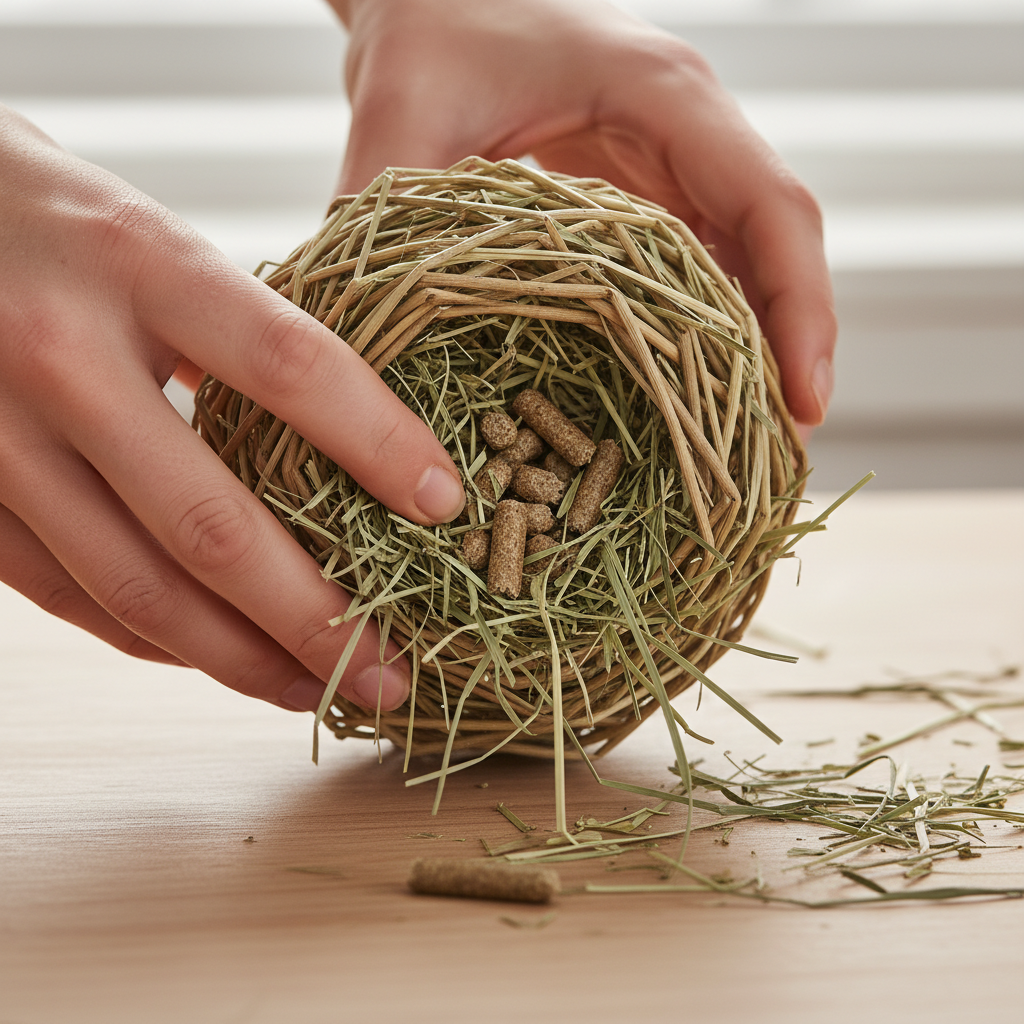
Good stuffing is firm enough to slow your rabbit down, but not so tight that they give up. The best setup usually takes 2 minutes.
Step-by-step stuffing
- Start with long hay strands: They “lock” better than chopped hay.
- Make a loose core: Twist a small hay bundle, then push it into the center.
- Add the incentive: Hide a couple pellets or a pinch of dried herbs deep inside.
- Finish with a hay cap: Pull a few strands through the openings so your rabbit gets an easy first win.
Key takeaways (save these)
- Hay is the structure, treats are the spark.
- If your rabbit empties it in 30 seconds, pack it a bit tighter next time.
- If your rabbit quits, loosen the stuffing and increase scent appeal with herbs.
Safety, cleanup, and when to replace the ball
This is the unglamorous part, but it’s what keeps enrichment from becoming a vet visit. Rabbits can ingest bits of toy material, and while many plant fibers pass without drama, there’s no reason to gamble.
Daily safety checks that take 10 seconds
- Look for long stringy strips: If fibers unravel into cords, remove the ball.
- Check for sharp, jagged ends: Especially with brittle willow pieces.
- Notice “obsessive eating” of the ball: If the toy becomes the meal, pause and reassess the material.
Cleaning reality
Most woven balls are not meant to be washed and reused for weeks. If it gets wet, soiled, or starts smelling “off,” toss it. You’re aiming for safe enrichment, not a science project in the corner of the pen.
According to the American Society for the Prevention of Cruelty to Animals (ASPCA), rabbits need constant access to fresh water and a clean environment; dirty toys and damp hay can work against that goal.
When it’s time to replace
- The structure collapses and can’t hold stuffing
- Fibers fray into long strands
- Your rabbit can break off large chunks quickly
- The ball becomes a litter box accessory, not a toy
When to ask a professional (and what to watch in your rabbit)
If chewing seems frantic, or your rabbit suddenly starts eating non-food items, don’t just buy more toys and hope it passes. Behavior changes can be stress, pain, diet imbalance, or boredom, and it’s not always obvious which one.
- Call a rabbit-savvy vet if you see reduced appetite, fewer droppings, tooth grinding, or repeated pawing at the mouth.
- Get guidance if your rabbit repeatedly swallows toy material, even “natural” fibers.
- Consider a consult if destructive chewing spikes after a move, new pet, or schedule change.
This article can’t diagnose health issues, and rabbits can decline fast when something is wrong, so when in doubt, it’s safer to ask a professional who knows rabbits.
Conclusion: a good chew ball is simple, the setup matters more
A rabbit chew ball hay stuffed toy works best when you keep it boring in the right way: mostly hay, a small hidden reward, and a ball material your rabbit can shred without turning it into strings or chunks. If you start with short, supervised sessions and replace worn balls early, you usually get the benefits people want, less boredom, less destructive chewing, and a rabbit who seems a little more “settled” in the house.
If you want to try this this week, do two things: pick one plant-fiber ball with clean weaving, then commit to a 5-day test where you adjust stuffing tightness and scent rather than switching products every day.
FAQ
How often should I give a hay-stuffed chew ball to my rabbit?
Many rabbits do well with daily access, but the stuffing “extras” should stay small. If you use pellets as the incentive, consider pulling those pellets from the regular bowl portion so calories don’t creep up.
Can rabbits eat the chew ball material if it’s natural?
They might nibble it, and small amounts of plant fiber often pass, but “natural” does not automatically mean “safe in any quantity.” If your rabbit actively consumes the ball, not just chews, switch materials and talk with a rabbit-savvy vet if it keeps happening.
What hay is best for stuffing a chew ball?
For many adult rabbits, timothy hay is a steady choice. Some rabbits prefer orchard grass for softness. Alfalfa is usually reserved for young rabbits or special cases, so it’s worth confirming with a professional if you’re unsure.
My rabbit ignores the ball. What’s the fastest way to make it interesting?
Use scent. Rub a tiny pinch of dried herbs into the hay core, then leave a few strands sticking out so your rabbit gets an easy first pull. If the ball is too big, sizing down can also help.
Is a rabbit chew ball hay stuffed toy good for dental health?
Chewing can support natural tooth wear, but it’s not a treatment for dental disease. If you notice drooling, selective eating, or weight loss, a vet check matters more than adding chew toys.
Are store-bought “treat-stuffed” balls better than DIY stuffing?
Convenience can be nice, but DIY gives you control over ingredients and portion size. Many owners land on a hybrid: buy a solid ball, then customize stuffing based on what their rabbit tolerates.
How do I know if my rabbit is chewing out of stress?
Look for patterns: pacing, hiding more than usual, thumping, aggression, or chewing that spikes after changes at home. Enrichment helps, but if stress signs persist, you may need to adjust the environment or ask a professional to rule out pain.
If you’re trying to reduce destructive chewing and want a more predictable, less messy routine, a simple chew ball plus a consistent hay-stuffing approach often feels easier than cycling through random toys, especially once you figure out what textures your rabbit actually enjoys.