
how to train a cat to use scratch post starts with accepting one thing: scratching is normal, your cat is not being “bad,” and your job is to make the post more appealing than the couch.
If you’ve tried buying a scratcher and your cat still ignores it, you’re not alone, many posts fail because they’re wobbly, too short, placed in the wrong spot, or just don’t “feel right” under paws. A little strategy beats buying five more random scratchers.
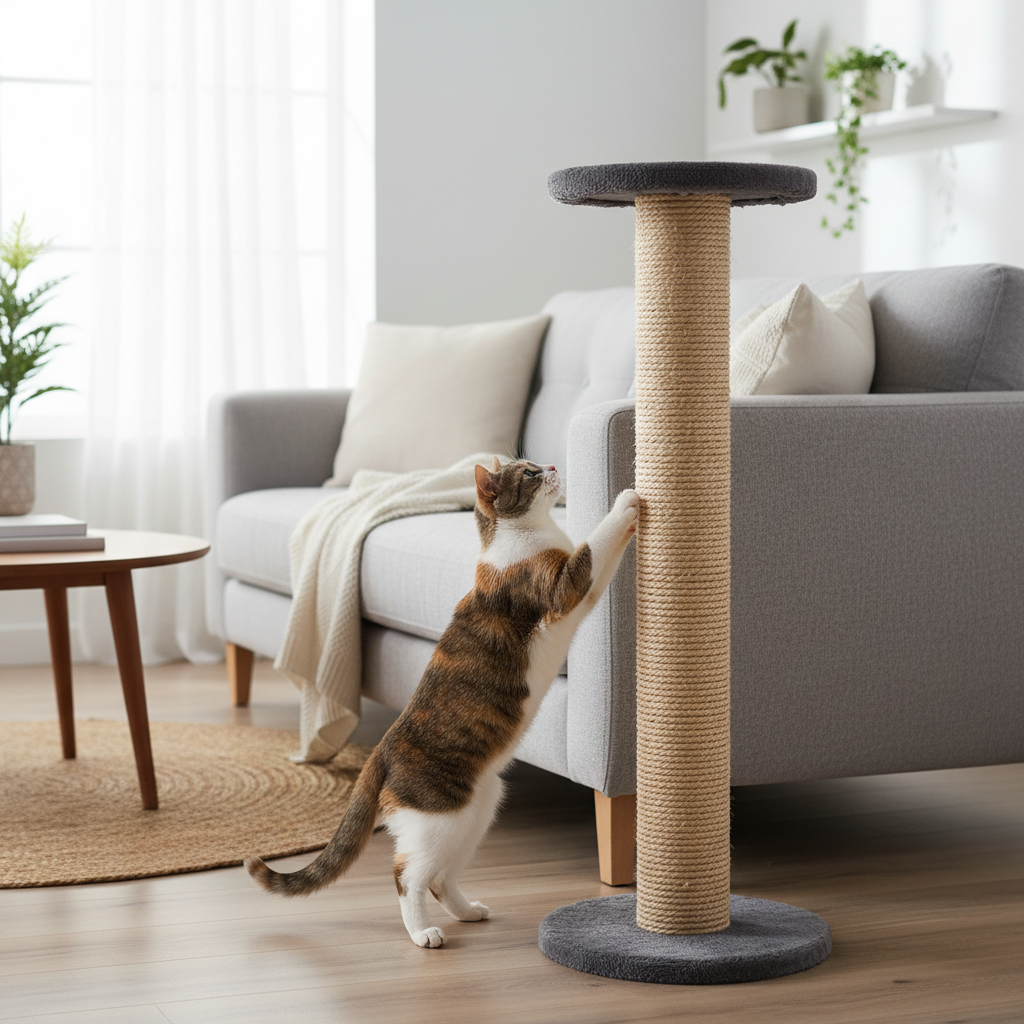
This guide walks through why cats scratch, how to pick and place the right post, and how to build a simple training loop with rewards. You’ll also get a quick troubleshooting table, because the “why won’t my cat use it” question usually comes down to a few fixable details.
Why cats scratch (and why punishment backfires)
Scratching does a few jobs at once: it conditions claws, stretches shoulders and back, and leaves visual and scent marks. That last part matters more than people think, scratching is partly communication.
According to the American Veterinary Medical Association (AVMA), punishment-based methods can increase fear and stress in pets, which often makes behavior issues harder to solve. In practice, scolding tends to teach “don’t do it when the human is here,” not “use the scratch post.”
- Stress relief: many cats scratch more during routine changes, new pets, moving, or loud environments.
- Territory signaling: posts near key pathways make sense to a cat, even if they look awkward to us.
- Body maintenance: a good scratch is a full-body stretch, not just claw filing.
Choose a scratch post your cat will actually accept
For most households, the wrong scratcher isn’t “low quality,” it’s just mismatched to the cat’s preferences. If you want how to train a cat to use scratch post to feel easy, start with a post that checks the basics.
Non-negotiables: stability, height, and surface
- Stable base: if it wobbles once, many cats mentally blacklist it.
- Tall enough: many adult cats prefer a post that lets them fully extend, often around 28–32 inches or taller.
- Texture your cat likes: sisal rope/fabric is common, some cats prefer cardboard, others like rough carpet-style (though carpet can confuse “what’s allowed”).
Vertical vs. horizontal: let your cat vote
Watch what your cat targets. If it’s sofa arms and door frames, a vertical post usually wins. If it’s rugs or flat mats, add a horizontal scratcher too.
Key point: don’t guess based on what looks nice in your living room, copy what your cat already “told” you.
Placement matters more than most “training tips”
Many people tuck the post in a corner, then wonder why it gets ignored. Cats often scratch where it’s socially relevant and physically convenient.

Start with one post in the “crime scene” area, within a few feet of the furniture your cat scratches. Add a second near a sleeping spot, many cats like a stretch-and-scratch right after waking.
- Near entry points: hallway corners, near doors, or room thresholds often work well.
- Near hangout zones: by a window perch, next to the couch where they nap, near the cat tree.
- Visible and easy: a post hidden behind plants is basically invisible to a cat in motion.
If your cat scratches multiple locations, don’t try to “make one post cover the whole house” on day one. Use temporary posts to build the habit, then consolidate later.
Quick self-check: why your cat ignores the post
Before you do more training, run this short checklist. It saves time and frustration.
- The post moves when touched, or the top sways.
- The post is too short for a full stretch.
- It’s placed far from where scratching already happens.
- The surface feels too soft, too smooth, or unfamiliar.
- Your cat is stressed or there’s competition with another pet near the post.
- You tried catnip once, it didn’t work, and you assumed your cat “doesn’t like scratchers.”
Step-by-step: train your cat to use the scratch post
how to train a cat to use scratch post usually works best with short, low-pressure repetitions. Think “create wins,” not “force practice.”
1) Make the post instantly interesting
- Rub a small amount of catnip or silver vine on the post surface, if your cat responds to it.
- Use a wand toy to guide paws toward the post, let your cat “catch” the toy near the scratcher.
- Place a treat on the base so your cat investigates without feeling trapped.
If your cat doesn’t react to catnip, that’s normal, some cats never do. Try toy play and food rewards instead.
2) Reward the behavior you want, immediately
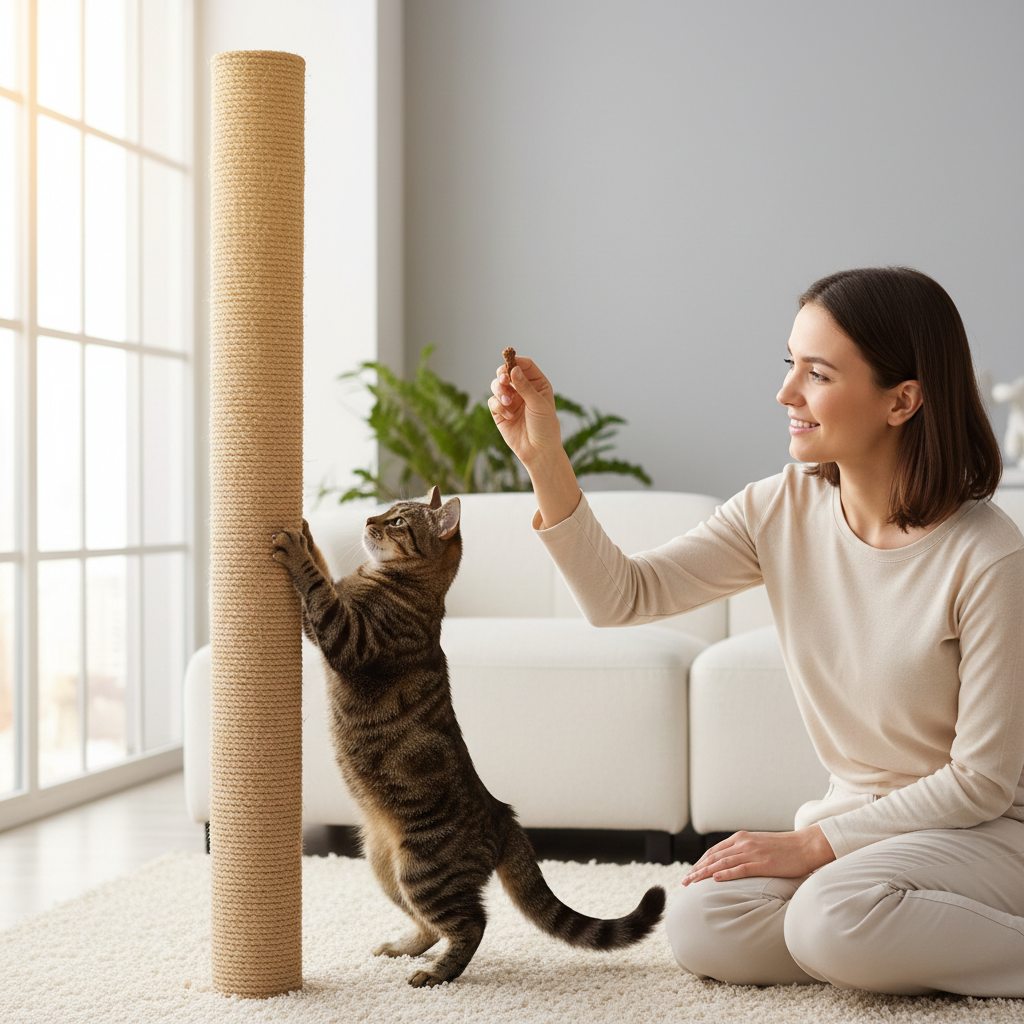
The moment your cat touches the post with intent, even one scratch, mark it with a calm “yes” and deliver a small treat. Timing is the whole game, late rewards teach nothing.
- Start easy: reward for looking, sniffing, or placing paws on the post.
- Then raise the bar: reward for 2–3 scratches, then a longer scratch session.
- Keep sessions short: 30–90 seconds is plenty, a few times a day.
3) Redirect, don’t wrestle
If your cat starts on the sofa, interrupt with a gentle sound or toy, then guide them to the post. Avoid physically dragging paws onto the post, many cats read that as coercion and avoid the post later.
4) Make the “wrong spot” less satisfying
This is where many owners get quick results, but it has to be done safely.
- Cover target areas with a temporary barrier like a throw blanket or a furniture cover.
- Use double-sided tape designed for pets on small areas, many cats dislike the sticky feel.
- Keep nails appropriately trimmed if your cat tolerates it, or ask a groomer or vet team for help.
According to the American Society for the Prevention of Cruelty to Animals (ASPCA), providing appropriate outlets and rewarding desired behavior is central to changing common cat behaviors. The combo of “better option” plus “less rewarding target” is often what clicks.
Troubleshooting table: match the fix to the problem
When training stalls, it’s usually one of these patterns.
| What you see | Likely reason | What to try next |
|---|---|---|
| Cat sniffs post, walks away | Texture or location mismatch | Move post next to scratched furniture, try cardboard or sisal surface |
| Cat scratches briefly, then returns to couch | Post feels unstable or too small | Heavier base, taller post, anchor to wall if needed |
| Cat uses post only when you’re watching | Reward timing too “human-present” | Leave treats nearby, reward randomly when you notice usage later |
| Multiple cats, one blocks the post | Resource guarding or tension | Add more posts in different rooms, reduce chokepoints |
| Scratching spikes suddenly | Stress, medical discomfort, or change at home | Stabilize routine, add enrichment, consult a vet if other signs appear |
Common mistakes that slow progress
These are the “looks logical, works poorly” moves that show up a lot.
- Buying a cute post and hiding it: if it’s not near the action, it’s not in the running.
- Only using catnip: scent helps, but most cats learn faster with play and food rewards.
- Expecting one post to solve everything: in bigger homes, you often need a few scratch options.
- Throwing the post away too soon: some cats take days to warm up, especially shy or anxious cats.
- Declawing as a “solution”: it’s controversial and restricted or banned in some places, and it can create welfare and behavior risks. If you feel stuck, ask a vet for guidance instead.
Key takeaway: if you fix stability and placement, training often becomes dramatically simpler, you’re no longer fighting your cat’s instincts.
When to get professional help
If scratching comes with other behavior changes, it may signal stress or a health issue. Consider reaching out if you notice overgrooming, hiding, appetite changes, aggression, or repeated urination outside the box, a veterinarian can rule out medical causes, and a qualified cat behavior professional can help with a plan.
Also get help if conflict between cats escalates around posts or favorite areas. Adding resources can help, but sometimes you need a more structured reintroduction and enrichment approach.
Conclusion: a simple plan that protects your furniture
how to train a cat to use scratch post comes down to three levers: a post that feels great to scratch, placement your cat agrees with, and fast rewards right when the behavior happens. If you do only two things this week, put a sturdy post directly next to the scratched furniture and reward the first few scratches like they’re a big deal.
Give it a short, consistent run for 10–14 days, adjust based on what your cat prefers, and you’ll usually see the habit start to stick.
Action step: today, test your post for wobble, then move it to the nearest “scratch hotspot” and start rewarding any interaction.