
How to clean dog ears naturally starts with one unglamorous truth, most ear problems get worse when we guess. The goal of a natural clean is simple, lift out normal wax and debris without stripping the ear or pushing gunk deeper.
If your dog has “corn-chip” smell, frequent head shaking, or constant scratching, cleaning can help, but it is not a cure-all. Some smells come from yeast or bacteria, and those need a vet-led plan, not more DIY rinsing.
This guide focuses on safe, gentle routines you can do at home, what “natural” actually means for ears, and how to tell when to stop and get professional help. You will also get an easy checklist and a quick table for choosing a cleaner.
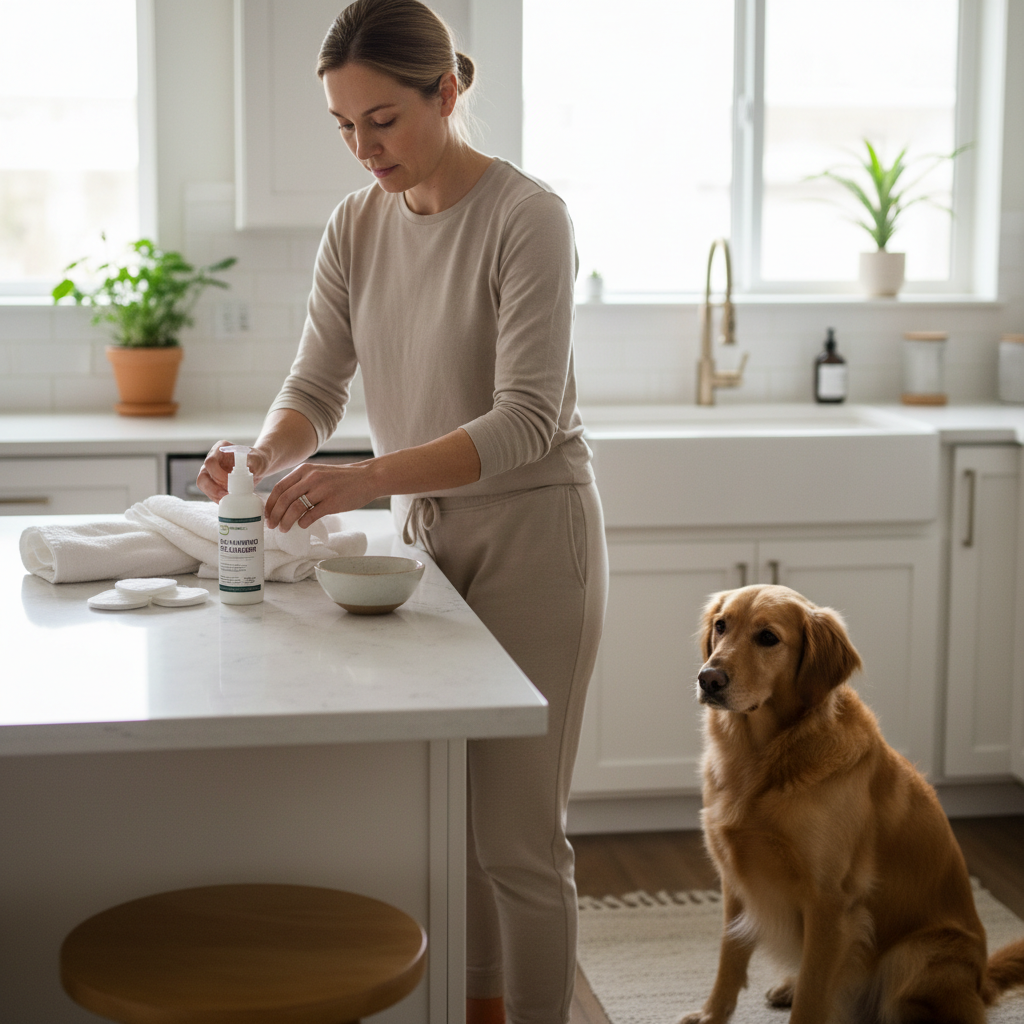
What “naturally” means for dog ear cleaning (and what it does not)
In practice, “natural” means low-irritation, pH-appropriate, and used gently, not “anything in your kitchen must be safe.” Dog ear canals are sensitive, and the wrong ingredient can inflame skin fast.
According to American Veterinary Medical Association (AVMA), ear infections are common in dogs and should be evaluated by a veterinarian when signs persist or worsen. That matters because an infected ear can look like “just dirty” until it is not.
- Reasonable natural approach: fragrance-free, alcohol-free ear cleanser, or vet-approved “natural” formulas, plus careful technique.
- Risky natural approach: pouring vinegar, hydrogen peroxide, essential oils, or random herbal infusions into the ear canal.
- Important boundary: cleaning is for routine maintenance or mild wax buildup, not for treating a suspected infection.
Why dog ears get dirty or smelly in the first place
If you keep needing to clean weekly “or it stinks again,” that usually points to an underlying driver. Fixing that driver often reduces how often you even need to touch the ears.
Common real-world causes
- Ear shape and airflow: floppy ears and hairy canals trap moisture and heat, yeast loves that.
- Water exposure: swimming, baths, humid climates, or even frequent wet wipes around the ear flap.
- Allergies: environmental or food-related allergies can inflame skin, then wax and microbes snowball.
- Wax overproduction: some dogs simply make more cerumen, and it holds onto debris.
- Foreign material: foxtails, grass seeds, dirt after hikes, or heavy ear hair mats.
- Ear mites: more common in puppies and multi-pet homes, often causes intense itch and dark debris.
According to American Kennel Club (AKC), regular ear checks help catch early irritation before it becomes a larger problem. Checks are underrated, because you can stop a lot of issues at the “mild redness” stage.
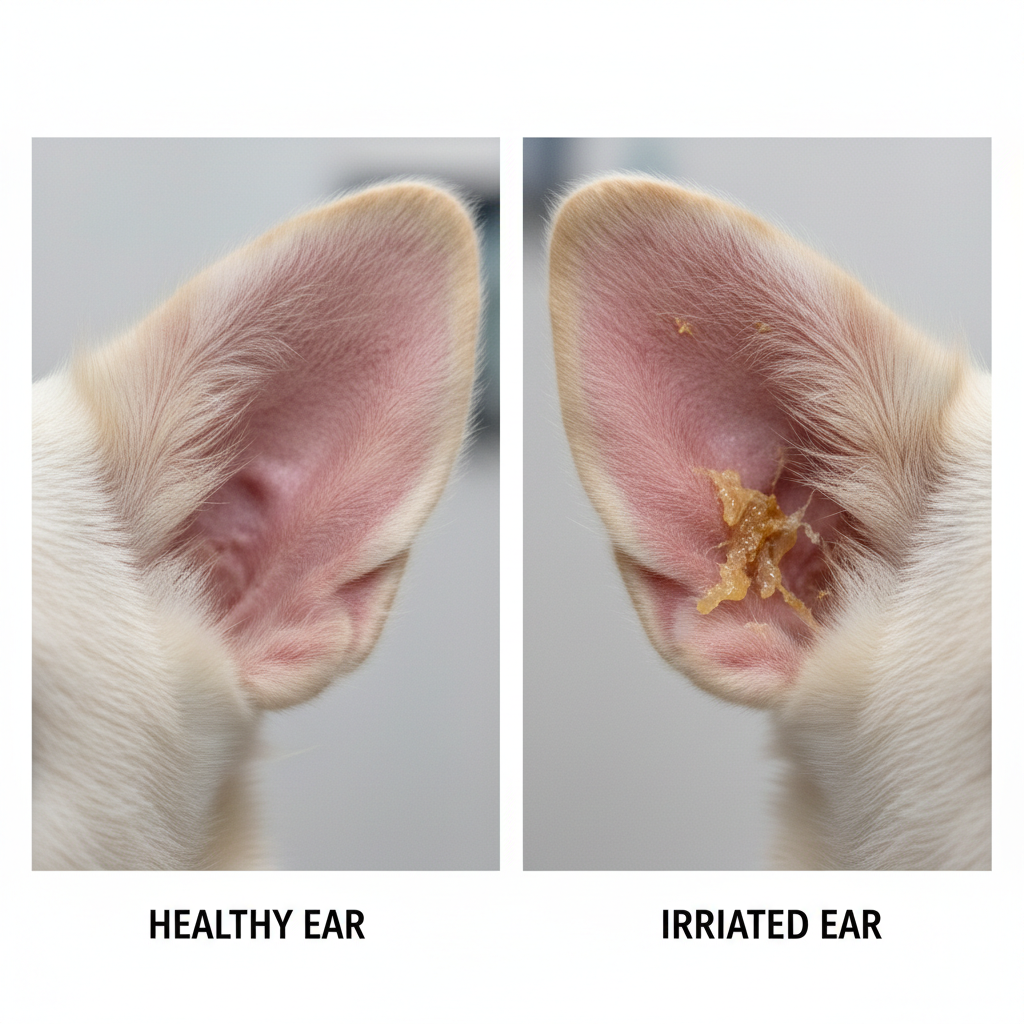
Quick self-check: should you clean at home or call the vet?
Before you reach for any “natural” solution, do a 30-second check. If you see red flags, skip cleaning and book a visit, because cleaning can sting and mask symptoms.
Home cleaning is usually reasonable when
- There is mild wax or dirt, and your dog seems comfortable
- No strong foul odor, just “doggy” smell
- No swelling, no bleeding, no open sores
- Your dog allows gentle handling without pain
Pause and contact a professional when
- Strong odor, thick discharge, or pus-like material
- Head tilt, balance issues, or sudden hearing changes
- Marked redness, swelling, heat, or the ear flap looks “puffy”
- Pain when you touch the ear, yelping, or pulling away hard
- Symptoms persist beyond a few days, or keep recurring
- You suspect a foreign body (foxtail risk after fields is a big one)
According to American Animal Hospital Association (AAHA), ear disease often needs an exam of the ear canal and eardrum, plus targeted treatment based on what is present. That is why recurring ear issues rarely improve long-term with repeated home cleaning alone.
Natural ear-cleaning options: what’s safe, what to avoid
People usually ask for a “natural” recipe, but for ears, the safest natural choice is often a vet-formulated cleanser with gentle ingredients. You still get a minimal-ingredient approach, without DIY surprises.
Comparison table: common options
| Option | Why people use it | Upside | Risk / when to avoid |
|---|---|---|---|
| Vet-approved ear cleanser (gentle, alcohol-free) | Routine wax and debris | Balanced for ears, predictable | Avoid if your vet advises against it for a specific condition |
| “Natural” ear cleanser from reputable pet brand | Prefer plant-based ingredients | Can be mild and effective | Check for essential oils/fragrance, stop if redness appears |
| Warm saline on a cotton pad (outer ear only) | Very minimal approach | Low sting, good for wiping folds | Not enough for sticky wax inside canal, do not pour in |
| Diluted vinegar solutions | Folk remedy for yeast | May lower pH | Often stings if skin inflamed, risky if ear drum status unknown |
| Hydrogen peroxide | “Bubbling” feels like cleaning | Breaks down debris | Can irritate tissue, not a go-to for routine ear care |
| Essential oils | Smell and “natural” appeal | None that outweighs risk for ears | High irritation/toxicity potential, generally a bad idea |
If you want to keep it “natural,” the practical rule is: avoid harsh oxidizers, strong acids, alcohol, and fragrance, and pick something made for dog ears, not for human ears.
Step-by-step: how to clean dog ears naturally & safely
This routine aims to reduce mess and reduce the “I think I pushed it deeper” feeling. Take your time, you want calm, not speed.
What you need
- Ear cleanser made for dogs (gentle, alcohol-free), or warm saline for the outer ear
- Cotton rounds or gauze squares
- A towel and a few treats
- Do not use: cotton swabs inside the canal
Method (canal + outer ear)
- Look first: lift the flap, check for redness, swelling, discharge, or odor changes.
- Add cleanser: fill the canal opening with the recommended amount, do not force the tip deep.
- Massage 20–30 seconds: you should hear a gentle squish, that loosens wax.
- Let the shake happen: step back, shaking helps bring debris outward.
- Wipe what you can see: use cotton rounds to clean folds and the visible canal entrance.
- Stop early if needed: if your dog shows pain, reassess and consider calling your vet.
Outer-ear-only method (for mild dirt)
If the canal looks clean but the flap has grime, dampen gauze with warm saline and wipe the ear leather and creases, then dry with a clean pad.
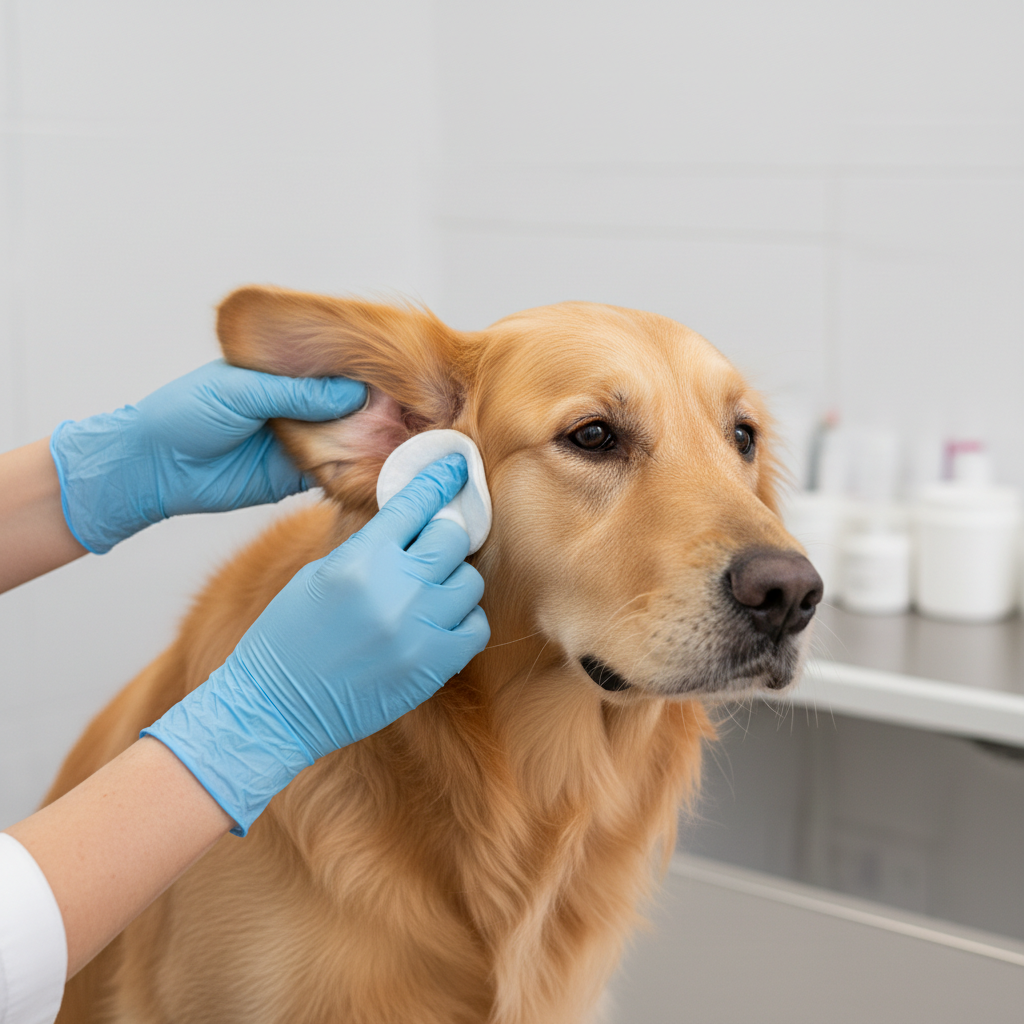
How often should you clean, and how to keep ears dry
For many dogs, “as needed” is the right answer. Over-cleaning can dry skin and trigger more wax, which is frustrating because it looks like the routine is “working” while it creates the next round.
- Low-risk dogs: check weekly, clean only when wax or debris builds up.
- Swimmers or floppy-eared dogs: you may need a post-swim wipe and a more regular schedule.
- Allergy-prone dogs: frequency often depends on flare-ups, your vet may recommend a plan.
Keeping moisture under control
- After baths or swims, dry the outer ear gently, do not pack the canal with cotton
- Avoid letting water stream directly into ears during rinsing
- If ear hair traps moisture, talk with a groomer or vet before plucking, some dogs get more irritation from plucking
Common mistakes that cause irritation (even with “natural” products)
A lot of ear drama comes from technique, not the cleanser. And yes, it feels unfair.
- Using cotton swabs in the canal: can push debris deeper and may injure delicate tissue.
- Cleaning too often: strips protective oils, then inflammation creeps in.
- Switching products constantly: makes it hard to tell what helps versus what irritates.
- Ignoring smell changes: “a little worse” can become “very infected” quickly in warm, moist ears.
- Using essential oils: even diluted oils can burn, and some can be toxic if licked.
If your dog has a history of ear infections, ask your vet what ingredients to avoid. Many dogs react to certain acids or drying agents, and you do not want to learn that the hard way.
When you should seek professional help (and what to expect)
If symptoms keep coming back, it is usually worth a vet visit even if your cleaning routine seems solid. Chronic ear issues often involve allergies, resistant microbes, or anatomy that traps debris.
- Your vet may look with an otoscope to assess the canal and eardrum
- They may take a swab for cytology, a quick microscope check to see yeast/bacteria
- Treatment could include prescription drops, oral meds, or a structured cleaning schedule
According to U.S. Food & Drug Administration (FDA), pet medications should be used as directed and adverse reactions should be reported. If your dog seems worse after any ear product, stop and contact a professional.
Key takeaways you can actually use
- How to clean dog ears naturally works best as gentle maintenance, not as infection treatment.
- Choose mild, dog-specific cleansers, and avoid harsh DIY ingredients in the canal.
- Massage, let your dog shake, then wipe what you can see, that sequence matters.
- If you see pain, swelling, strong odor, or thick discharge, skip home cleaning and call your vet.
Do one thing today: check both ears in good lighting and write down what “normal” looks and smells like for your dog. Next time something shifts, you will catch it earlier, and your dog will thank you in their own way.
FAQ
- How do I clean my dog’s ears naturally without causing irritation?
Use a gentle, alcohol-free dog ear cleanser or wipe the outer ear with warm saline, keep everything shallow, and stop if your dog shows pain or the ear looks inflamed. - Is apple cider vinegar safe for cleaning dog ears?
In many cases it can sting, especially if skin already irritated, and it is risky if you do not know what is happening deeper in the canal. If you suspect yeast or infection, a vet-guided plan is safer. - Can I use hydrogen peroxide to clean dog ears?
It can irritate ear tissue and is not ideal for routine care. If debris is heavy, a dog-formulated cleanser is usually the safer first pick. - What is the best way to remove ear wax from a dog at home?
Fill the canal opening with a dog ear cleanser, massage 20–30 seconds, let your dog shake, then wipe visible wax with cotton rounds. Avoid cotton swabs inside the canal. - How often should I clean my dog’s ears if they swim a lot?
Many swimmers benefit from a post-swim wipe and periodic cleaning, but the exact schedule varies by breed and ear health. If you notice recurring smell or redness, check with your vet. - Why do my dog’s ears smell even after cleaning?
Persistent odor often suggests yeast, bacteria, or allergy-driven inflammation, cleaning may temporarily reduce debris but not fix the cause. If the smell returns fast, it is time for an exam. - Do groomers pluck ear hair, and should I do that at home?
Some groomers do, but it is not universally recommended. Plucking can irritate some dogs, so it is better to ask your vet what fits your dog’s ear type and history.
If you are trying to keep ear care simple, it can help to choose one gentle cleanser, stick with a consistent routine, and ask your vet what “normal maintenance” looks like for your dog’s breed and history, that way you spend less time experimenting and more time preventing flare-ups.