
Best cat food for weight management usually means a diet that helps your cat lose (or maintain) weight without leaving them hungry, weak, or missing key nutrients.
If you’ve ever tried “just feed less,” you already know the problem: some cats act starving, beg nonstop, or start scavenging, and owners understandably give in. Weight management works better when the food does more of the work—higher satiety, smart calories, and consistent measuring.
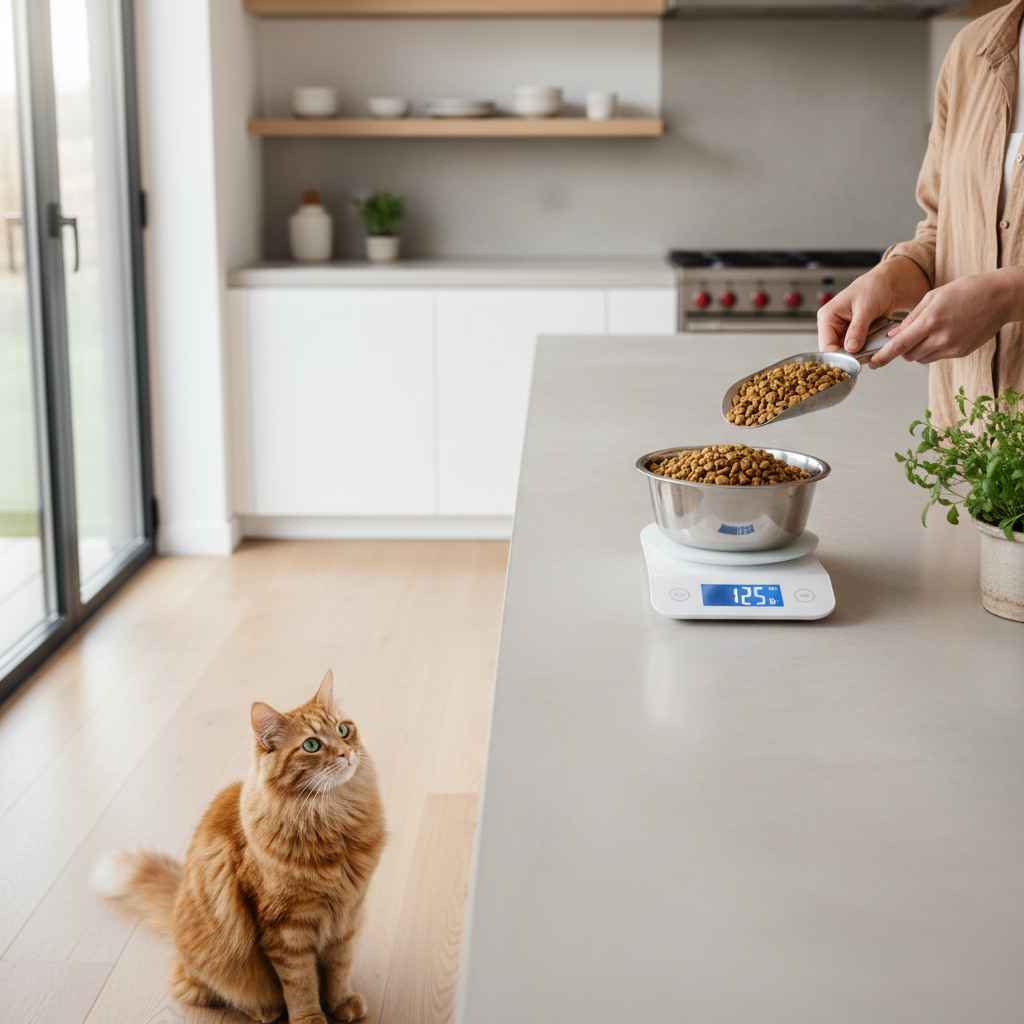
This guide focuses on practical selection—what to look for on the label, how to match food type to your cat’s habits, and a feeding plan you can actually stick to. I’ll also call out the common traps (like “grain-free” automatically meaning “diet”).
What “weight management” cat food really does (and what it can’t)
Weight-loss food isn’t magic, it just makes calorie control easier. Most formulas lean on a few levers: fewer calories per cup, more protein to protect muscle, and added fiber to improve fullness.
According to the Association for Pet Obesity Prevention (APOP), excess weight is a common health issue in pets, and long-term management typically requires consistent portions, monitoring, and veterinary guidance for individualized goals.
- What it can do: help you feed a satisfying volume while lowering calories, reduce begging in many cats, support lean muscle during weight loss.
- What it can’t do: “cancel out” treats, free-feeding, or inaccurate measuring, and it won’t fix an underlying medical cause of weight gain.
Quick checklist: is your cat a good candidate for a weight-management formula?
Not every cat needs a labeled diet food. Some need a measured portion of their current complete-and-balanced diet, others need a medical workup.
- Your cat is indoor-only, less active, and slowly gaining year over year
- Body looks rounder from above, ribs are hard to feel without pressing
- They beg often even after meals, especially on lower-calorie portions
- You rely on “a scoop” rather than a measured gram weight
- They’re on treats, dental snacks, lickables, or table scraps most days
If your cat has sudden weight gain, extreme hunger, vomiting, diarrhea, or lethargy, it’s smarter to talk with a veterinarian before changing foods. Conditions like hypothyroidism are uncommon in cats, but other issues can mimic simple overfeeding, and the plan may need adjustment.
How to compare foods: the label details that matter most
When people search for the best cat food for weight management, they often focus on brand names. In practice, the numbers and ingredients matter more than the marketing, and you can compare across brands quickly once you know what to scan.
1) Calories (kcal) per cup or per can
Look for calorie content on the bag/can or the manufacturer website. Lower kcal per cup helps, but remember: cats eat by habit and texture, not math. A very low-calorie kibble can still be easy to overpour.
2) Protein level and protein source
Higher protein often supports satiety and helps preserve lean mass during weight loss. Many cats do well when meat, poultry, or fish meals appear early in the ingredient list, but ingredient lists don’t show quality by themselves.
3) Fiber and “satiety” ingredients
Fiber sources (like beet pulp, cellulose, psyllium, certain legumes) can help some cats feel full. Too much fiber can cause looser stools in some households, so watch the litter box when transitioning.
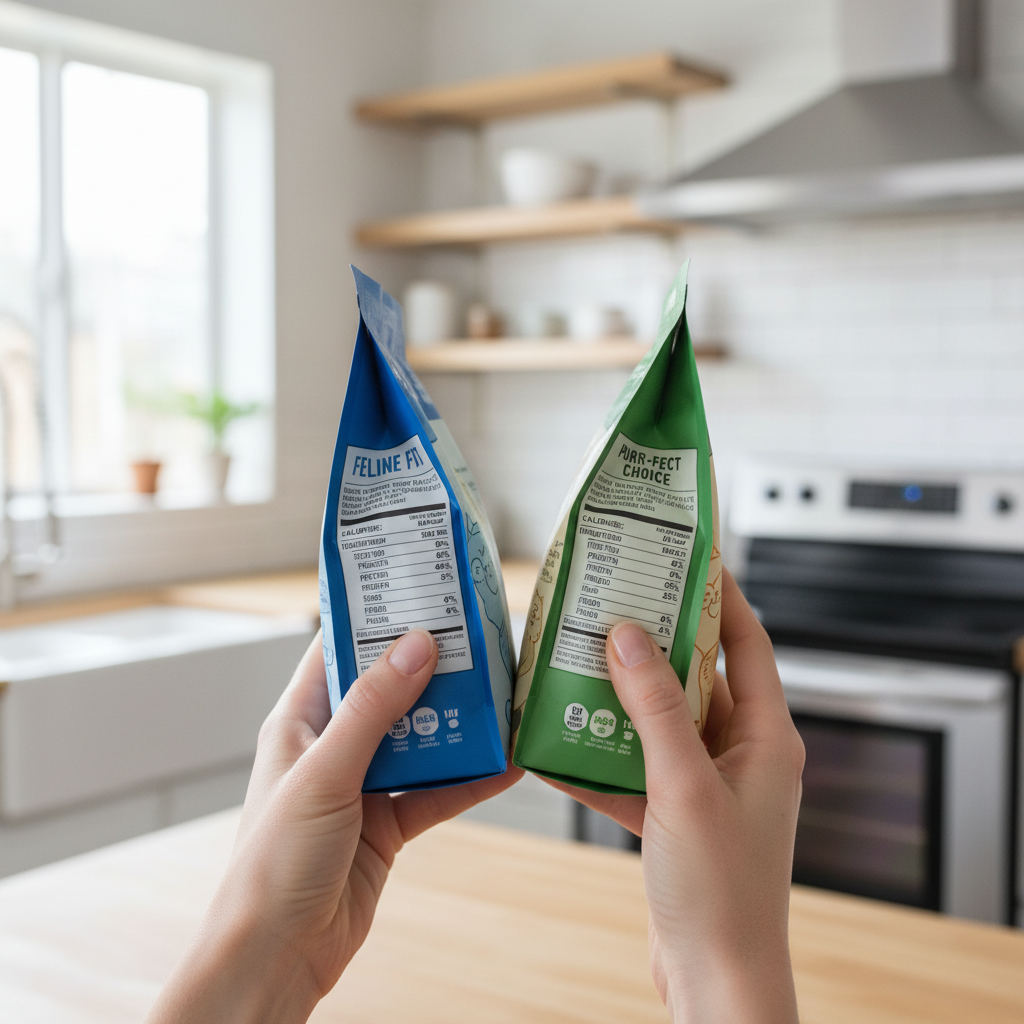
4) “Complete and balanced” statement
Make sure the food is complete and balanced for your cat’s life stage. According to the American Association of Feed Control Officials (AAFCO), diets should meet nutrient profiles (or pass feeding trials) for the intended life stage; that statement is a basic safety check when you’re restricting calories.
Wet vs. dry for weight loss: what usually works better
There’s no single rule, but many cats lose weight more comfortably with some wet food because it increases water intake and often reduces calories per bite. Dry can still work well if you measure accurately and choose a formula with appropriate calories and protein.
- Wet food tends to help if: your cat acts ravenous, you want larger meal volume, or your cat benefits from more hydration.
- Dry food tends to help if: your budget is tight, your cat refuses wet textures, or you need a feeder for multi-cat homes (with portion control).
- Mixed feeding often fits real life: wet meals morning/evening, measured dry in a puzzle feeder midday.
For many owners, the best cat food for weight management ends up being the one their cat will eat consistently while you can still measure it precisely.
A practical comparison table (use this when shopping)
This isn’t a brand ranking, it’s a shopping cheat sheet you can apply to any label or product page.
| What to check | Good sign | Potential downside |
|---|---|---|
| Calories listed clearly | kcal per cup/can easy to find | If calories are hard to find, planning gets messy |
| Protein emphasis | Higher protein, named animal sources | Some cats with medical issues may need different targets |
| Fiber / satiety support | Moderate fiber, stool stays normal | Too much fiber can cause gas or loose stool |
| Feeding guide and portions | Provides weight-loss guidance or kcal targets | Guides can still overfeed, you may need to adjust |
| AAFCO statement | Complete and balanced for life stage | “Treat,” “supplement,” or missing statement is a red flag |
| Palatability in your home | Cat eats without stress, no food strikes | Frequent switching can cause GI upset and refusal |
How to switch and portion the food (the part that actually changes weight)
Food choice matters, but the routine matters more. If your cat is overweight, slow and steady tends to be safer; rapid loss can be risky in cats. According to the American Veterinary Medical Association (AVMA), obesity can impact feline health, and weight loss should be approached thoughtfully with professional guidance when needed.
Step-by-step plan you can follow
- Pick one main diet (wet, dry, or mixed) and commit for a few weeks unless your vet advises otherwise.
- Transition over 7–10 days, mixing increasing amounts of the new food to reduce stomach upset.
- Measure by grams if possible. A kitchen scale beats a scoop, especially for kibble.
- Split into 2–4 meals. More frequent meals reduce the “I’m starving” drama for many cats.
- Cap treats. Keep treats small and counted, or use a portion of the daily kibble as treats.
- Weigh-ins matter. Weekly checks (same day/time) tell you if the plan works.
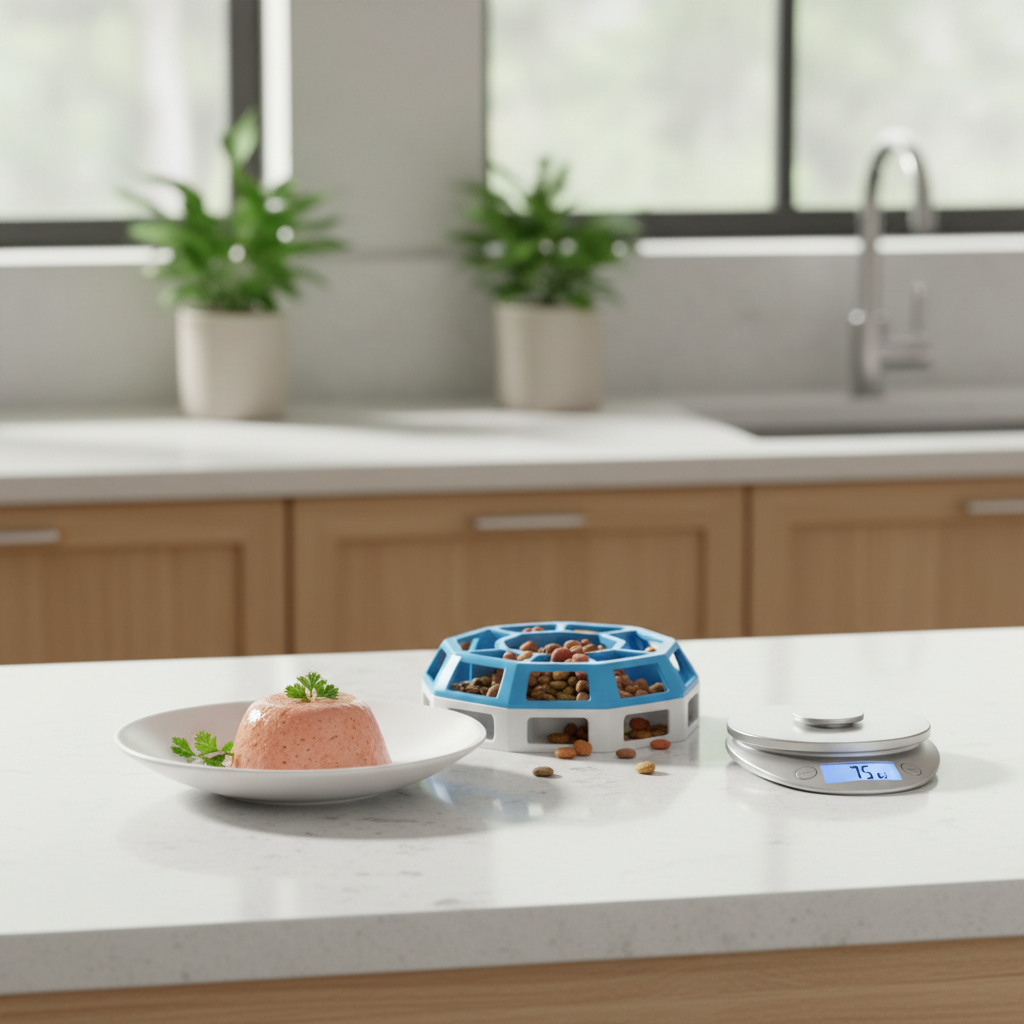
Key point: if weight does not move after 2–3 weeks of consistent measuring, the portion is probably still too high, treats are sneaking in, or another issue is at play. Adjust slowly and consider professional input.
Common mistakes that quietly stall progress
- Free-feeding “just a little” while also doing meals. Small top-offs add up fast.
- Using a measuring cup for kibble and assuming it’s accurate. Different kibble shapes pack differently.
- Over-relying on “light” labels. “Weight management” varies a lot by product; calories matter.
- Too many liquid treats. Lickable treats can be calorie-dense for the volume.
- Switching foods every week because it “isn’t working.” Many times the issue is portion control, not the formula.
If you’re shopping for the best cat food for weight management, it’s worth checking whether your current routine would still overfeed even with a better formula, because that’s a common frustration loop.
When to involve a veterinarian (and what to ask)
You don’t need a crisis to get help. A short visit can save months of trial-and-error, especially for seniors or cats with other conditions.
- Weight loss is not happening despite consistent portions for a few weeks
- Your cat has diabetes, kidney disease, urinary issues, or is on medication
- They lose weight very quickly, refuse food, or seem unwell
- Multi-cat household makes portion control hard
Bring the food label (or a link), your exact daily amounts, and treat details. Ask for a target calorie intake and a safe rate of loss for your cat. If a therapeutic prescription diet is recommended, follow guidance closely, since those formulas are designed for specific medical contexts.
Conclusion: choose a food you can measure and your cat can live with
The best cat food for weight management is the one that makes portion control realistic, keeps protein strong, and helps your cat feel satisfied—without creating food refusal or stomach upset. If you pick a formula with clear calories, transition slowly, and measure consistently, you’re already ahead of most weight-loss attempts.
Action to take today: check the kcal on your current food, weigh one “normal scoop” on a kitchen scale, then decide whether you need a lower-calorie formula or simply a tighter portion plan. If anything feels off medically, loop your veterinarian in early.
FAQ
What is the best cat food for weight management if my cat is always hungry?
Many cats do better with higher-protein, higher-moisture meals and a schedule of smaller, more frequent feedings. Wet food (or a mixed plan) can help with satiety, and puzzle feeders can slow eating without adding calories.
Is wet food always better than dry food for cat weight loss?
Not always. Wet often makes calorie control easier, but a measured dry diet can work well if you weigh portions and avoid free-feeding. The “best” choice is usually the one you can measure consistently and your cat tolerates.
How fast should a cat lose weight?
Many veterinarians aim for gradual loss, because rapid weight loss can be risky for cats. Your vet can recommend a safe pace based on body condition, age, and medical history.
Can I just feed less of my current food instead of buying a diet formula?
Sometimes yes, especially if the food is already complete and balanced and your cat tolerates smaller portions. If your cat becomes miserable, begs constantly, or weight won’t budge, a weight-management formula can make the plan easier to maintain.
Should I choose grain-free food for weight management?
Grain-free is not automatically lower calorie, and it’s not a reliable weight-loss signal. Focus on calories, protein, and how well your cat maintains muscle and stool quality during the change.
Do treats ruin a weight-loss plan?
They can, mainly because they’re easy to underestimate. A workable approach is to set a small daily treat budget or use a portion of measured kibble as training rewards.
What if I have multiple cats and one needs to lose weight?
That’s a common challenge. Microchip feeders, separate feeding rooms, or timed meals can help prevent the overweight cat from “grazing” off other bowls, which is often the hidden reason diets fail.
If you’re trying to pick a more practical routine, start with a short list of foods you can accurately portion and your cat reliably eats, then refine with your veterinarian if weight loss stalls or medical issues complicate the plan.